


Customers are more aware and tech-savvy than ever. This presents unique challenges for organizations and customer support managers.
Did you know that, according to HubSpot, 43% of support agents and 51% of companies say their biggest challenge is not having enough time in the day?
This lack of time makes handling issues like angry customers, serving multiple clients simultaneously, evolving customer expectations, service outages, and needing the right tools even harder.
The challenges don’t end—answering satisfactorily, understanding customer needs, and managing ticket backlogs—they continue.
These challenges keep support customer service representatives on their toes to ensure their customers have a great experience.
In this article, we’ll discuss the ten primary customer support challenges and what you can do to solve them and streamline your support operations.
How to Solve Common Customer Service Challenges
- 10 Customer Service Challenges and Solutions
- 1. Juggling multiple customers at once can be overwhelming
- 2. Not knowing the answer to a question breaks customer trust
- 3. Dealing with upset customers is never easy
- 4. Support requests often get lost in silos
- 5. Handling service outages can be a nightmare
- 6. Your customer wants a feature that you don’t offer
- 7. Slow response times frustrate customers
- 8. Broken customer journeys lead to frustration
- 9. Choosing the right tools and software for your support team
- 10. Using too many tools can be overwhelming
- ClickUp: The Ultimate AI Solution Tailored for You
- Take the Next Step: Elevate Your Customer Service with ClickUp

 Summarize this article for me please
10 Customer Service Challenges and Solutions
The job of a customer success manager is full of struggles, constant hurdles, and various tasks, from resolving complex issues to managing customer retention.
From handling irate customers to keeping up with evolving expectations, here are the 10 biggest customer service challenges and their solutions to help you enhance your customer experience.
Read more about what a day in the life of a customer success manager looks like here
1. Juggling multiple customers at once can be overwhelming
According to research, customers consider speed of response (89%), speed of resolution (89%), and friendliness (82%) the most important aspects of their customer service experience.
This is tricky for support teams. Teams must respond quickly and handle multiple customers simultaneously, which stretches your reps thin and makes it hard to provide the quality service each customer expects.
Solution: Use a multichannel help desk software
To manage multiple customer interactions, consider implementing robust customer success software for multichannel communication. Tools like live chat, chatbots, and automated ticketing help streamline this process.
Train your customer service team on prioritization techniques, such as addressing urgent queries first and using template responses for everyday issues to save time. Additionally, maintaining an updated knowledge base empowers customers to find answers independently, reducing the load on your customer service agents.
2. Not knowing the answer to a question breaks customer trust
Imagine a customer asking a question your agent doesn’t know the answer to—or worse, they give the wrong answer. There goes your customer’s trust in your brand.
This leads to frustration and a potential loss of confidence in your service. When agents lack the knowledge to provide accurate answers, it reflects poorly on your company and drives customers away.
Solution: Equip your agents with tools like a knowledge base
Ensure your team has access to a comprehensive knowledge base regularly updated with accurate information. Invest in continuous training programs to inform your agents about new products, services, and policies.
Implementing a system for tracking common questions and their answers helps agents respond more efficiently. Modern support software leverages AI to do this task. An AI knowledge manager helps your agents find answers within seconds.
3. Dealing with upset customers is never easy
After more than one bad experience, around 80% of consumers say they would do business with a competitor instead.
Customers can be challenging to communicate with when upset, making resolving their issues difficult. For example, a customer who has repeatedly faced delays in their service might vent their frustration at your agent, making the situation tense and demanding swift, empathetic action.
Solution: Turn frustration into satisfaction
To manage frustrated customers effectively, here are a few things you could do:
- Train your customer service team in active listening and taking customer feedback empathetically
- Encourage agents to acknowledge the customer’s feelings and apologize for any inconvenience caused
- Provide clear, concise solutions and set realistic expectations for resolution times
- Empower your agents with the authority to offer compensations that immediately address the customer’s concerns
4. Support requests often get lost in silos
One frustrating experience for customers is starting from scratch when interacting with a new agent. When support requests are handled in silos, customers often need to repeat their issue because their query is assigned to a different agent each time.
Solution: Adopt unified customer support tools
To address this issue, implement a unified customer support system that tracks and logs all interactions. This way, any agent can access the customer’s history and continue from where the previous interaction left off.
Use CRM software that integrates with your support tools to view each customer’s journey. Train your agents to review past interactions before responding to new queries. Additionally, assign dedicated account managers for high-value customers to ensure continuity and a personalized experience.
5. Handling service outages can be a nightmare
Service outages are unavoidable and leave customers feeling frustrated and helpless. When your service unexpectedly drops, customers quickly become anxious and need immediate answers.
For instance, during a sudden server outage, your support team may be inundated with calls and messages from panicked users who cannot access their accounts. This creates a chaotic and stressful situation.
Solution: Communicate clearly and transparently
Ensure your support team is equipped to provide timely updates about the issue and its progress. Use multiple channels to keep customers informed, such as email, social media, and your website.
Encourage your reps to acknowledge the frustration customers are experiencing and apologize sincerely. Avoid making promises; instead, provide honest updates, even if there is no estimated time for resolution yet. Additionally, set up automated responses and status pages that offer real-time updates on the outage.
6. Your customer wants a feature that you don’t offer
Customers often request things that are beyond current offerings or capabilities.
They might ask for discounts you can’t provide, features you don’t offer, or customizations that are out of scope. The customer service challenge lies in saying no while maintaining a positive relationship.
Solution: Handle unfeasible requests with creativity and clarity
Before outright declining a request, take a moment to see if there is a creative workaround. Evaluate if the request can be met with minor adjustments or if it aligns with plans.
Consider the resources, time, and costs involved. It might be worth accommodating if it’s feasible and the benefits outweigh the costs. If not, politely and factually explain to the customer why the request is unachievable.
Always aim to offer alternative solutions or compromises that might satisfy their needs.
This approach helps maintain a positive customer relationship and demonstrates your willingness to explore every possible avenue to meet their needs.
7. Slow response times frustrate customers
Slow response times frustrate customers, impacting their loyalty and satisfaction. Studies reveal concerning trends:
- Slow response times cause 52% of customers to stop purchasing from a company
- 90% of customers consider instant customer service crucial
- 85% expect a company to respond within 6 hours
Customers feel neglected and unimportant when your support team takes too long to respond. For instance, if tickets or calls bounce around from one department to another or chats pile up in the queue, customer patience wears thin, and they start looking for alternatives.
Solution: Streamline your support processes for faster responses
To tackle slow response times, you need to streamline your internal processes by implementing the following changes:
- Ensure queries are directed to the appropriate specialist right away
- Establish clear service level agreements (SLAs) to set response time expectations and ensure accountability
- Use chatbots and automation to manage common queries and provide immediate assistance
- Empower customers with self-help options like an updated knowledge base and FAQs
8. Broken customer journeys lead to frustration
Ensuring customer service is aligned with the customer journey can be challenging. When different parts of the journey are coordinated, it leads to customer consistency and satisfaction.
Customer service representatives need to handle each interaction in a way that matches the customer’s lifecycle stage and touchpoint.
Solution: Map and align your customer journey
To address this challenge, start by mapping out your customer journey:
- Identify all the touchpoints customers interact with, including your website, social media channels, outbound marketing, sales team, and customer service department
- Highlight critical moments and ensure your customer service processes are aligned with these stages
- Use research and data to understand the customer experience better and train your agents to be aware of the entire journey
9. Choosing the right tools and software for your support team
Customer support is costly, and picking the right tools and software is crucial. Simply using the same tools as your competition doesn’t guarantee success.
If the tools you choose don’t meet your unique business needs, they complicate processes, slow support times, and frustrate your customer service reps and customers. For instance, an advanced tool might be overkill for a smaller support team, causing unnecessary complexity and inefficiency.
Solution: Collaborate and select the right tools
To find the perfect tools for excellent customer service, ensure collaboration between sales, marketing, and customer support teams. Identify technologies that enhance the customer journey, from initial interaction to post-sales support.
To streamline customer interactions, consider support channels like phone, email, live chat, self-service, and community forums. Determine which channels best fit your team’s needs and select adequate support and engagement tools. Look for solutions that offer in-app guidance, user nudges, chatbot integration, and personalized self-help options.
10. Using too many tools can be overwhelming
Many customer service teams rely on multiple, often outdated, software systems. This forces customer service representatives to juggle 8-10 programs to resolve a single issue, complicating the entire support process.
Plus, outdated technology makes it challenging for agents to provide quality service, leading to frustration with customers and support staff.
Solution: Simplify your technology stack
To streamline your support process, you need to reconsider your technology stack. Instead of relying on numerous disjointed tools, adopt a modern platform that integrates multiple solutions.
Look for software that combines essential features like ticketing, live chat, and customer relationship management into one user-friendly interface. This integration reduces the need for agents to switch between programs, saving time and improving efficiency.
Summarize this article for me pleaseClickUp: The Ultimate AI Solution Tailored for You
Discover ClickUp – the AI-driven platform custom-built to optimize your productivity. From task automation to data integration, ClickUp adapts to your workflow, enhancing efficiency across your organization.
Let’s look at its offerings and features for customer support teams in detail:
1. ClickUp for Customer Support Teams
ClickUp’s Customer Support platform transforms your support staff into client success champions, enabling seamless management of inquiries, efficient problem resolution, and enhanced team collaboration, all geared towards delivering exceptional customer service. Some of its best features include:
- Efficiently track, manage, and resolve client inquiries with ClickUp’s Task Management features. These features allow you to detail each task with statuses, assignees, and deadlines, maintaining clear oversight of responsibilities and timelines
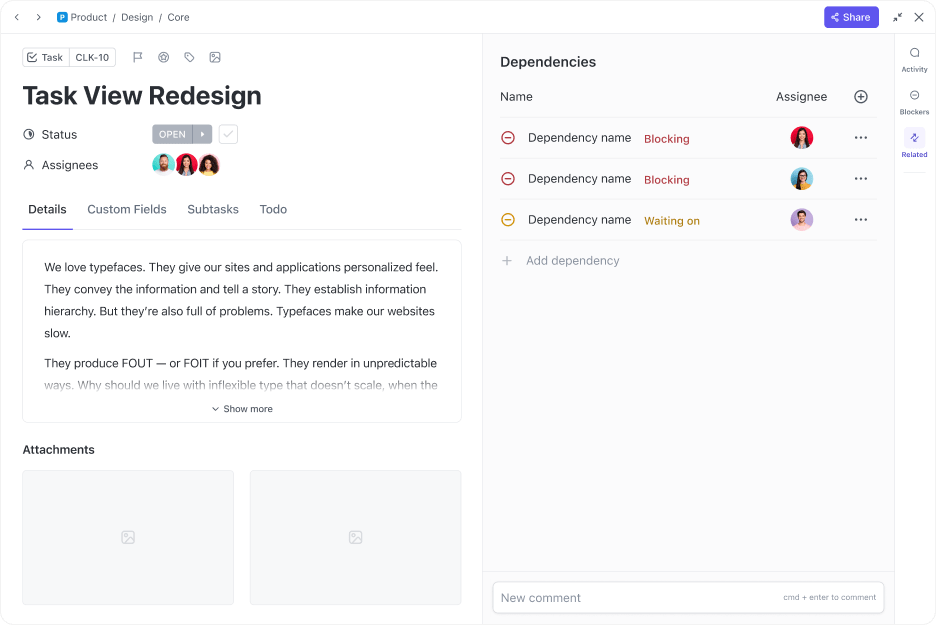
- For tasks that require diverse skills or more workforce, ClickUp’s Multiple Assignees feature allows you to collaborate effectively, customizing settings based on project needs

- Add custom tags specific to your business using ClickUp’s Task Tagging feature. These tags are easy to add and manage, enabling a clutter-free approach to task organization in different project environments

- Prioritize tasks clearly with ClickUp’s Task Priorities feature. It offers four levels: Urgent, High, Normal, and Low. This simple system allows your team to recognize task importance and address critical issues on priority instantly

- ClickUp Automation helps you automate mundane tasks, like assigning tickets to the right agents, setting reminders, sending follow-up emails, and more. This enables you to save time and reduce overall customer churn
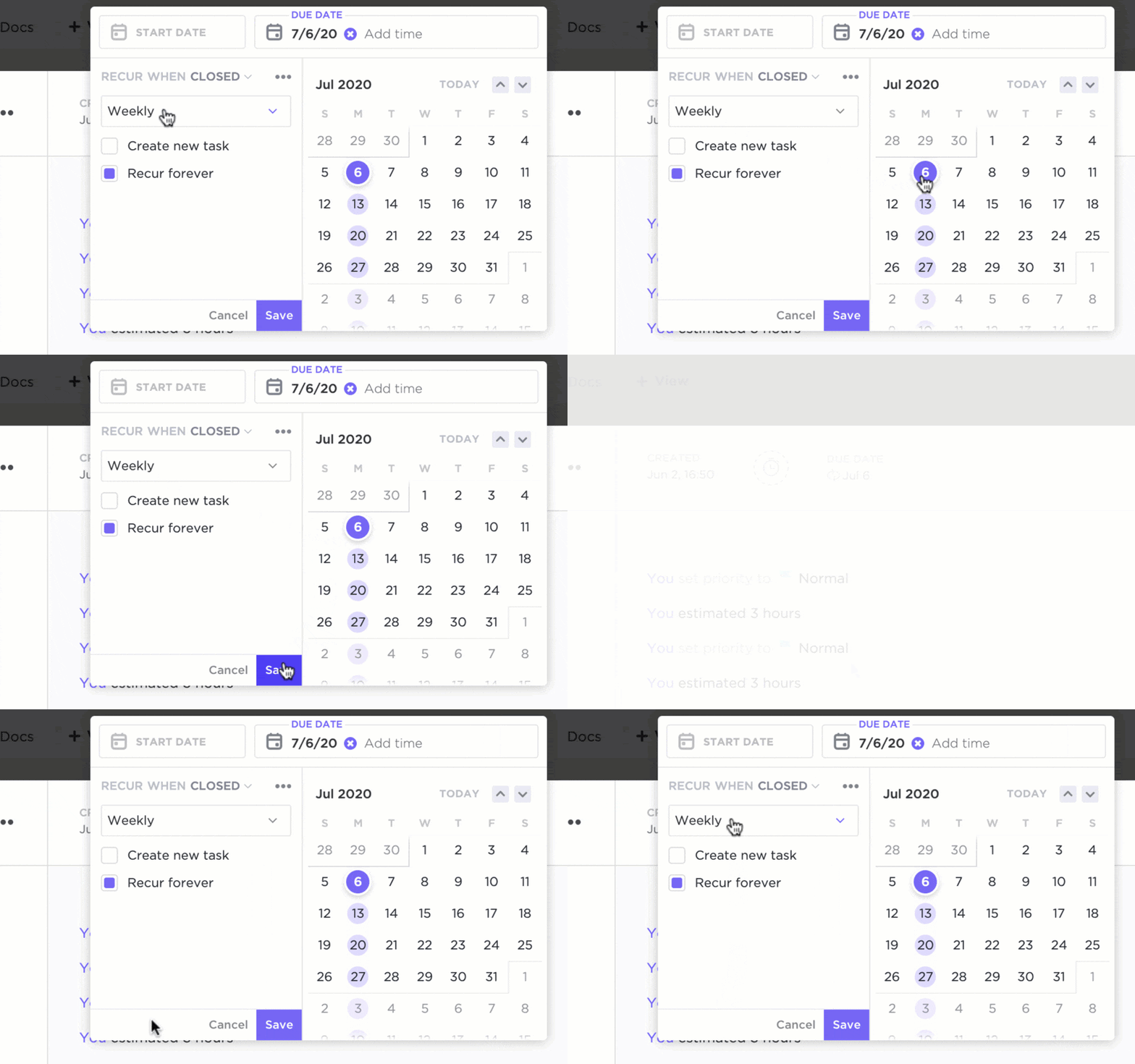
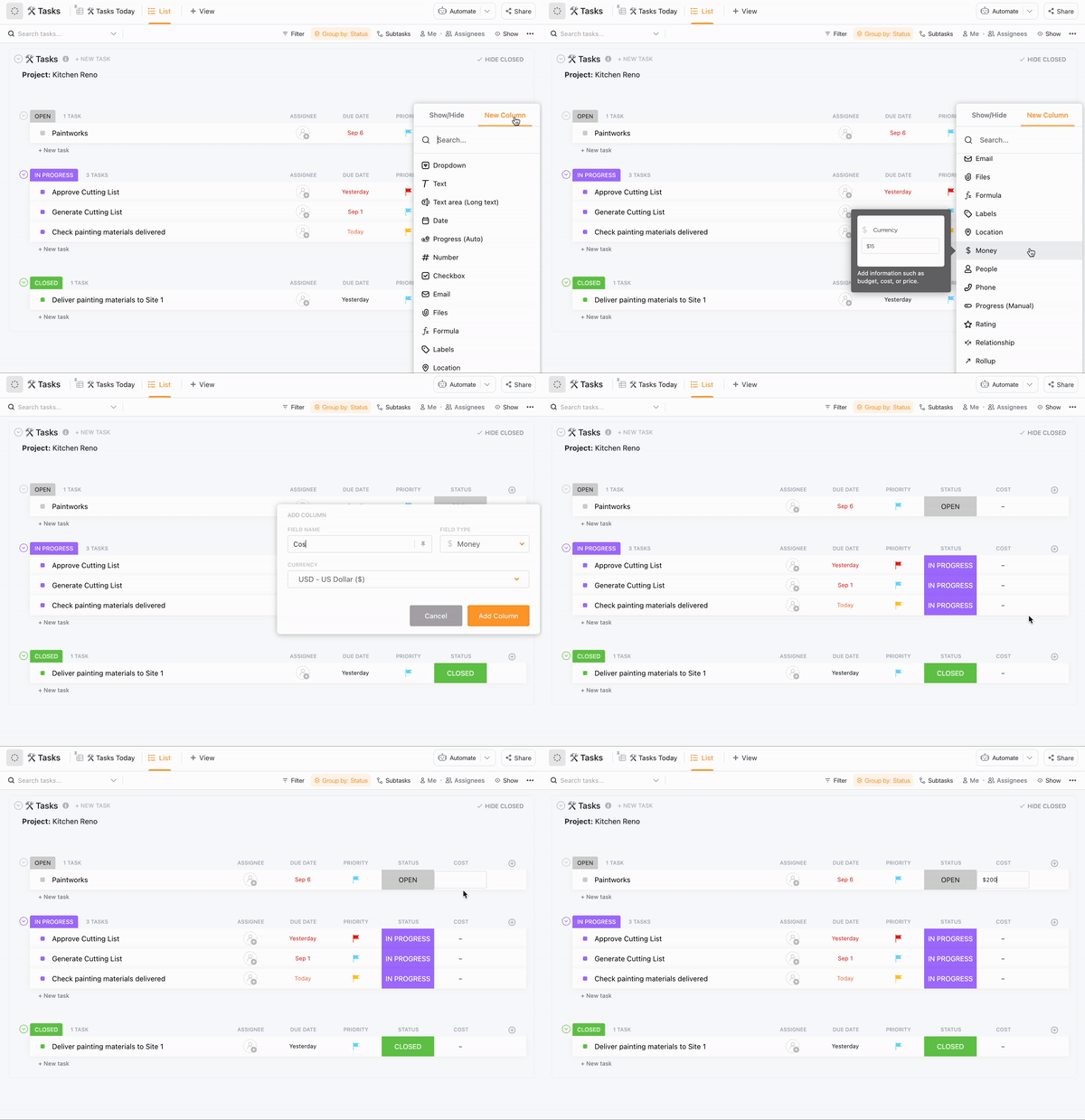
- ClickUp also lets you customize your workflows. Create specific custom fields tailored to different clients, issues, or ticket types using ClickUp’s Custom Field features
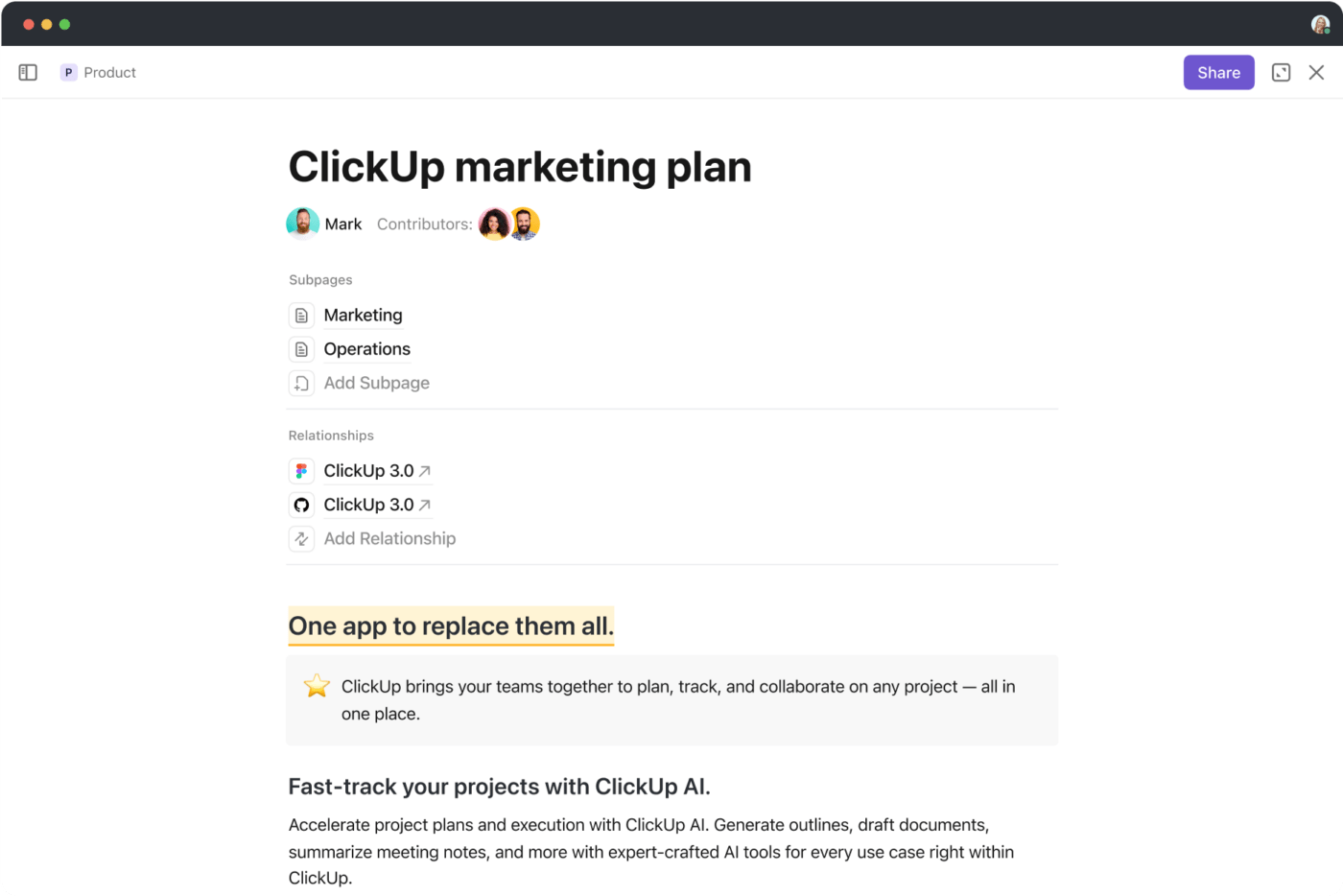
- Use ClickUp Docs to maintain a centralized documentation repository, including FAQs, internal knowledge bases, and troubleshooting guides. This ensures all team members quickly access the information needed to assist clients effectively
2. ClickUp Automation and Brain AI
ClickUp’s AI, Brain, revolutionizes customer support operations by integrating advanced AI capabilities across your company’s entire ecosystem of tasks, documents, and communications.
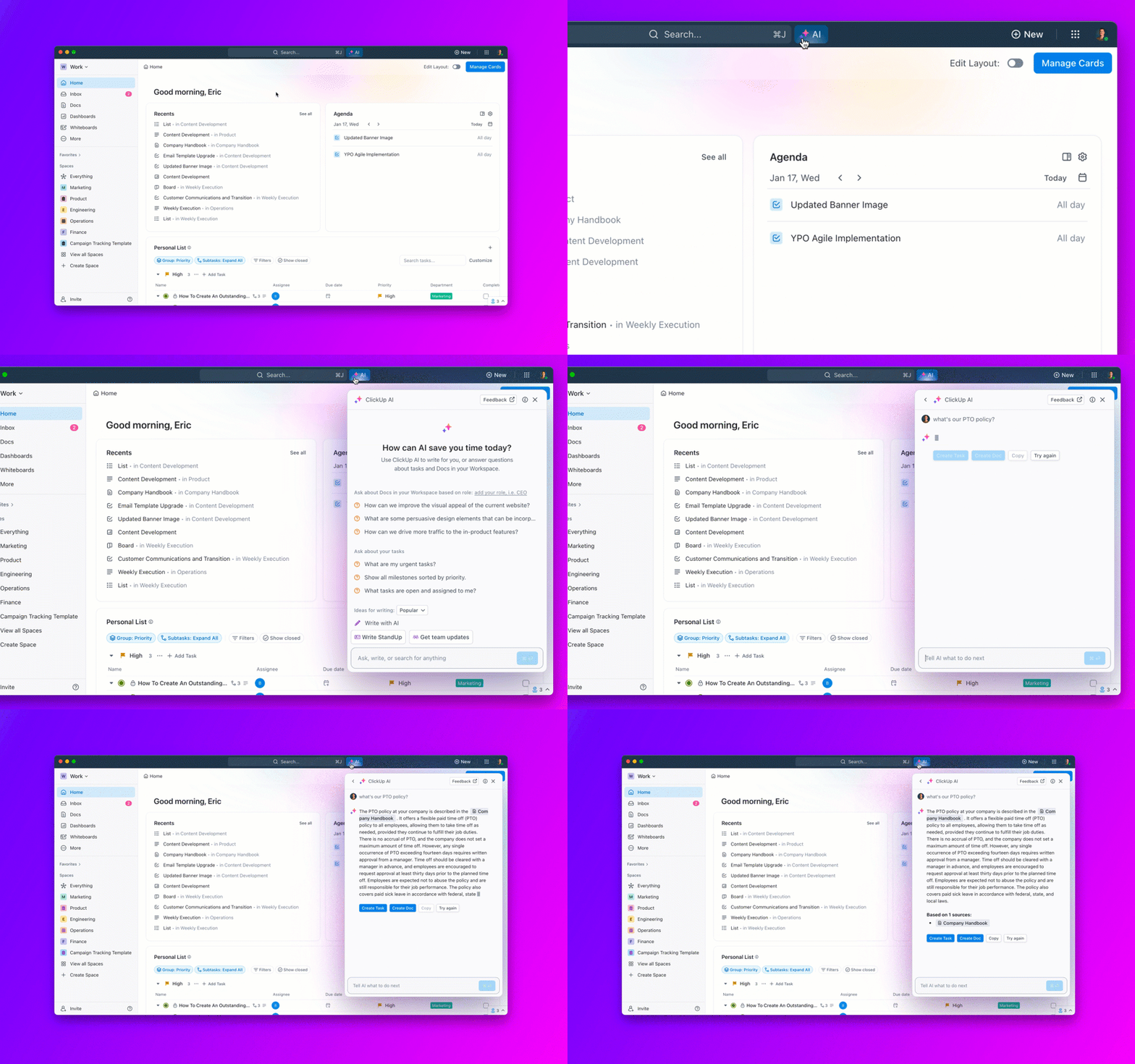
This cutting-edge tool offers several powerful features, including:
- AI Knowledge Manager: Instantly access a centralized knowledge hub that answers questions about tasks, documents, and personnel without manual searching. Your support team quickly retrieves the necessary information to address customer inquiries, reducing response times and improving customer satisfaction
- AI Project Manager: Automate routine support tasks such as updating progress on customer issues, summarizing project statuses, and planning subtasks. This automation frees up your team to focus more on personalized customer interactions rather than administrative work
- AI Writer for Work: Enhance your team’s communication with tools designed for the workplace. From crafting perfectly toned responses to generating detailed reports and emails, this feature ensures all written communication is clear, professional, and timely
3. ClickUp CRM
ClickUp CRM centralizes your customer outreach, eliminating communication silos and accelerating interactions.

It lets you build a comprehensive customer database to store and analyze contact information, customers, and deal details. It also allows you to link tasks, documents, and other elements, making tracking all related work in one place easy.
Additionally, you enhance your team’s efficiency by utilizing various CRM templates available within ClickUp.
4. ClickUp Integrations
ClickUp’s extensive integrations ecosystem enhances functionality and streamlines workflows. With over 1,000+ tools to connect for free, ClickUp facilitates integration with popular applications like Slack, GitHub, Google Drive, and HubSpot.

These integrations facilitate automated updates and streamline task creation, turning ClickUp into the hub for all project and client management needs.
5. ClickUp Templates
ClickUp Templates offer a versatile range of pre-designed frameworks that help streamline your projects and processes. Whether you’re looking to enhance workflow efficiency or improve team collaboration, these customizable customer service templates are designed to meet the diverse needs of any team or project.
1. Client Success Collaboration Template
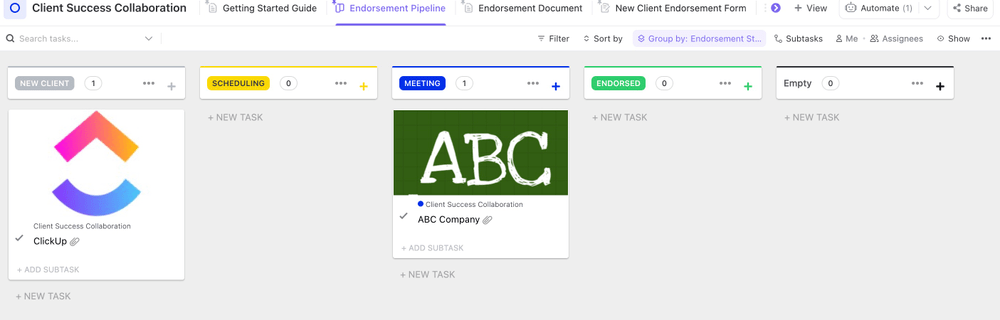
The ClickUp Client Success Collaboration template is designed to streamline the customer journey from sales to onboarding and support. It’s fully customizable to effectively align your sales and support teams, optimizing the customer experience.
With predefined views and statuses, plus an automation feature, this template directly supports team collaboration and workflow efficiency. It’s beneficial for support teams looking to enhance client satisfaction and improve productivity by keeping your customer support team on the same page throughout the customer lifecycle.
2. Customer Success Plan Template

The ClickUp Customer Success Plan Template is tailored to help businesses enhance their ability to retain and expand their customer base by ensuring exceptional customer experiences from the outset. This fully customizable template allows you to set specific success criteria for each customer, streamline onboarding and training processes, and monitor ongoing progress throughout the customer lifecycle management.
It includes custom statuses, fields, and various views to manage customer relationships efficiently. This template clarifies team roles and expectations and helps identify opportunities to meet customer needs.
Summarize this article for me pleaseTake the Next Step: Elevate Your Customer Service with ClickUp
Businesses must embrace modern customer management strategies, streamlined processes, integrated technologies, and a customer-focused approach to solve customer service challenges.
And ClickUp embraces all of that, all at once. Leveraging ClickUp’s comprehensive suite of features—from task management to AI-driven support— enhances team efficiency and significantly improves the customer experience.
Ready to transform and set your organization up for excellent customer service?
Sign up for ClickUp today and start your journey towards exceptional customer support.


Everything you need to stay organized and get work done.

Recent Articles
ClickUp Custom Fields: How I Built a Connected Property Management System for Vendors and Work Orders 
ClickUp Custom Fields: How I Built a Connected Property Management System for Vendors and Work Orders

Ideal Client Roster: Build & Maintain Your Best Client Base 
Ideal Client Roster: Build & Maintain Your Best Client Base
