


Implementing a physical asset tracking system involves numerous interconnected tasks, from hardware installation to software integration and staff training. Breaking down this complex project into manageable components is essential for clarity and control. Our specialized Work Breakdown Structure (WBS) Template for Physical Asset Tracking Systems is designed to streamline this process.
This template helps you:
- Segment the project into clear phases such as asset inventory, hardware deployment, software configuration, and user training
- Assign specific tasks to team members with expertise in IT, operations, and logistics to ensure accountability
- Monitor progress with real-time updates, enabling proactive management of potential delays or issues
Best of all, this template requires no coding or complex software knowledge—just use ClickUp to get started and maintain full control over your asset tracking system implementation.
Benefits of a Work Breakdown Structure Template for Physical Asset Tracking
Using a WBS tailored for physical asset tracking projects offers several advantages:
- Clearly defines project deliverables such as RFID tag deployment, database setup, and reporting dashboards
- Clarifies roles and responsibilities among cross-functional teams including IT specialists, warehouse staff, and project managers
- Enhances communication between stakeholders by providing a shared visual roadmap of project tasks and milestones
- Improves efficiency by identifying dependencies and optimizing task sequences to reduce downtime during implementation
Main Elements of the Physical Asset Tracking Work Breakdown Structure Template
This WBS template is structured around key project components:
- Project Initiation:
Define scope, objectives, and key stakeholders for the asset tracking system
- Asset Inventory and Tagging:
Catalog existing assets, select appropriate tagging technology, and attach tags
- Hardware Installation:
Deploy scanners, readers, and network infrastructure required for tracking
- Software Configuration:
Set up asset management software, integrate with existing systems, and customize reporting tools
- Testing and Validation:
Conduct system tests to ensure accuracy and reliability of asset tracking
- Training and Support:
Educate end-users on system operation and establish support protocols
- Project Closure:
Finalize documentation, obtain stakeholder sign-off, and transition to operational maintenance
By following this structured approach, your team can effectively manage the deployment of a physical asset tracking system, ensuring all critical tasks are addressed and project goals are met on time and within budget.
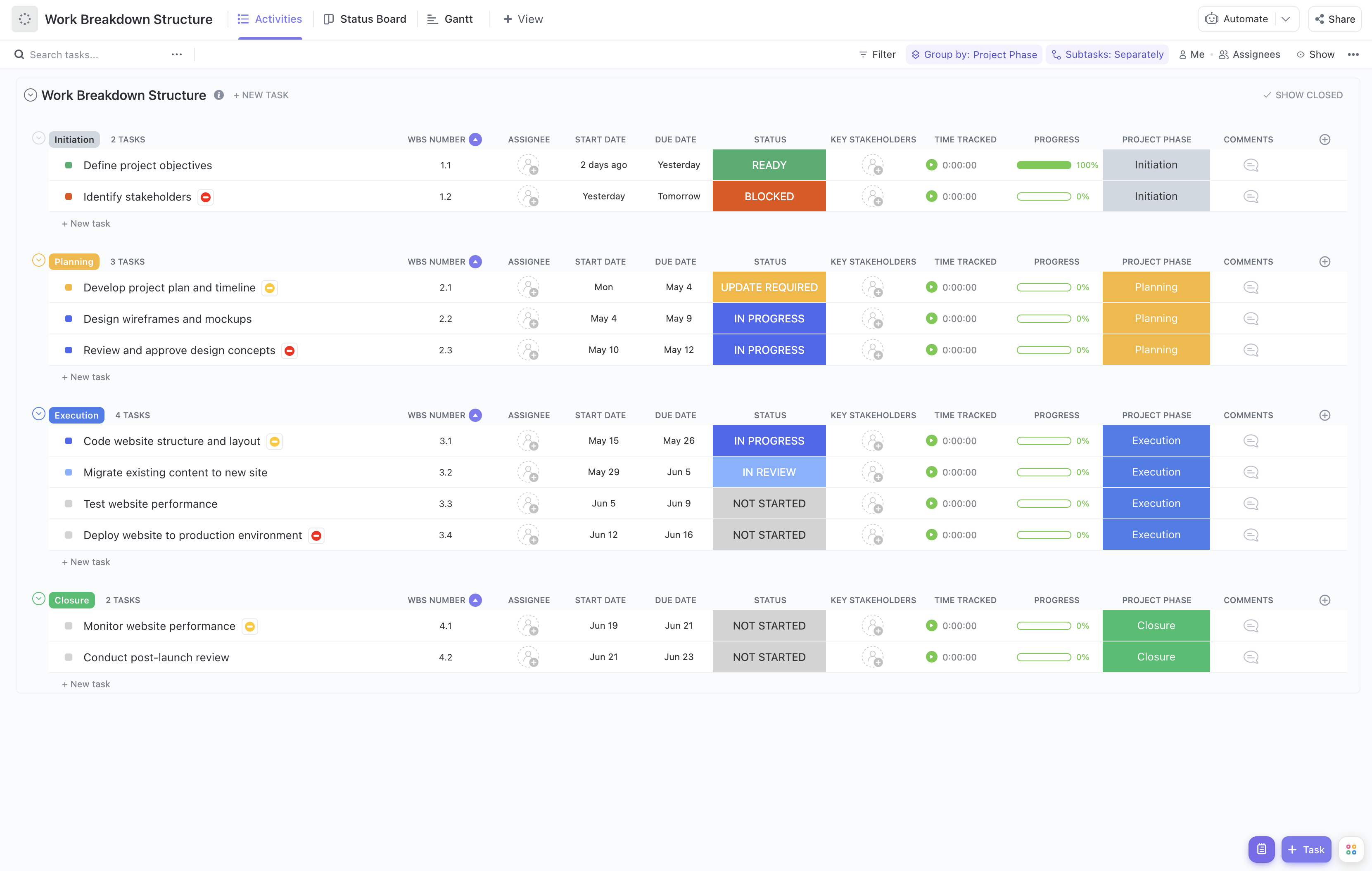
Utilize this template within ClickUp to assign tasks, set deadlines, and track progress seamlessly across your project team.












