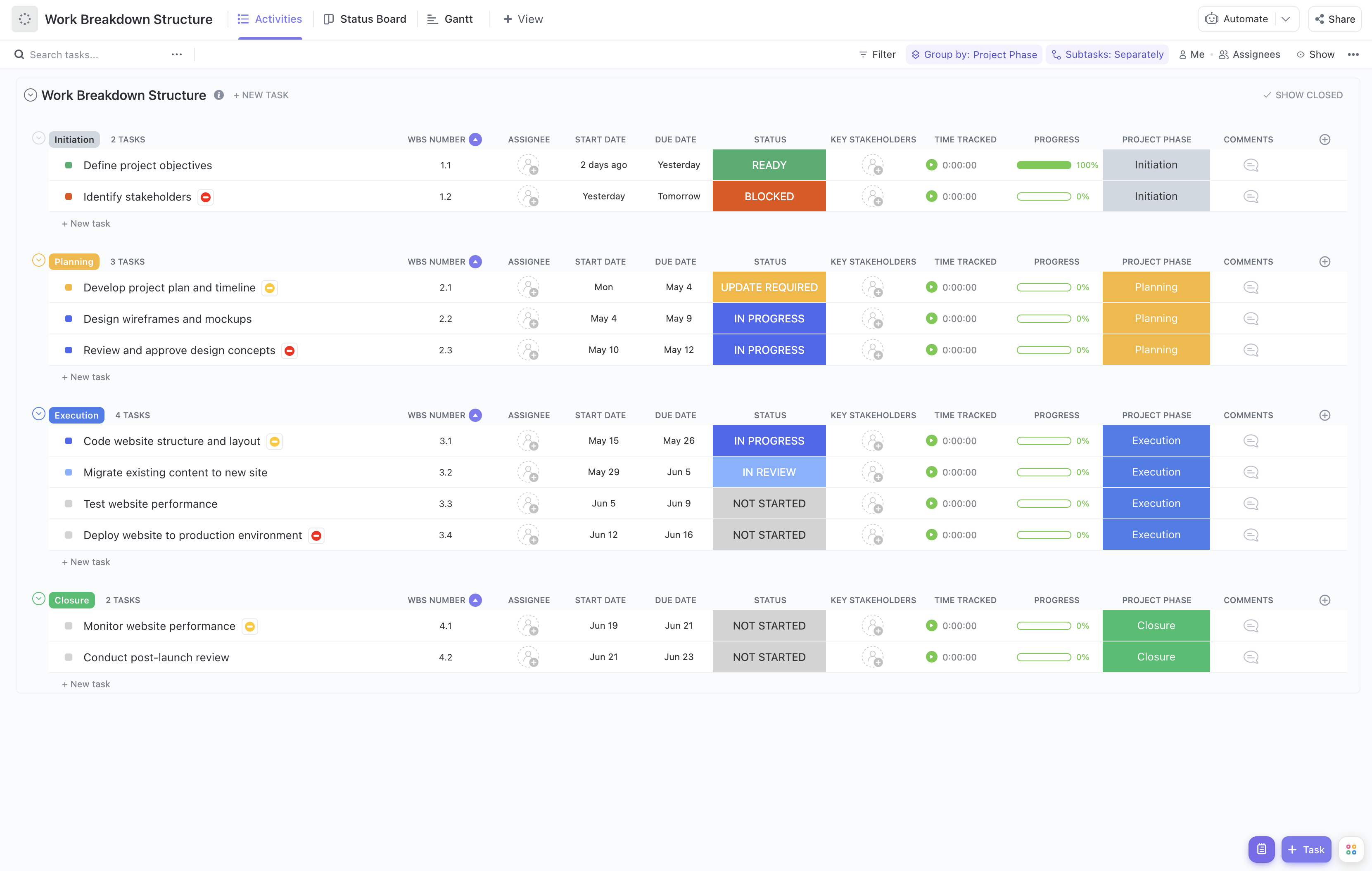
Implementing an Electronic Health Record system is a complex, multi-phase project that requires careful coordination across clinical, technical, and administrative teams. To ensure a smooth transition and successful adoption, breaking down the project into clear, manageable components is essential. This Electronic Health Record Implementation Work Breakdown Structure (WBS) Template is tailored to help healthcare organizations navigate this challenge with confidence.
This specialized template helps you:
- Organize EHR implementation tasks into structured phases such as assessment, design, testing, training, and go-live support for better clarity and control
- Align clinical staff, IT professionals, vendors, and administrators to their specific responsibilities quickly and efficiently
- Track progress and milestones with real-time updates to ensure compliance with healthcare regulations and project timelines
Best of all, this template requires no coding or specialized software knowledge—just ClickUp and your project team to break down the EHR implementation into actionable steps.
Benefits of an Electronic Health Record Implementation Work Breakdown Structure
Using a WBS template specifically designed for EHR projects offers numerous advantages for healthcare providers and project managers. Key benefits include:
- Clearly defines and organizes deliverables such as system configuration, data migration, user training, and regulatory compliance checkpoints
- Provides clarity for multidisciplinary teams on their roles and responsibilities during each phase of the EHR rollout
- Enhances communication between clinical departments, IT teams, vendors, and stakeholders to minimize disruptions to patient care
- Improves overall efficiency by identifying dependencies and potential bottlenecks early in the project lifecycle
Main Elements of the Electronic Health Record Implementation WBS Template
This template breaks down the EHR implementation into the following core components:
- Project Initiation: Define project scope, identify key stakeholders including clinical leaders and IT staff, and establish governance structures.
- Requirements Analysis: Gather clinical workflows, compliance requirements (e.g., HIPAA), and technical specifications.
- System Design and Configuration: Customize EHR modules, set up interfaces with existing systems, and configure security settings.
- Data Migration: Plan and execute transfer of patient records, ensuring data integrity and privacy.
- Testing: Conduct unit, integration, and user acceptance testing with clinical and administrative users.
- Training and Change Management: Develop training materials, conduct sessions for end-users, and manage adoption strategies.
- Go-Live and Support: Execute system launch, provide on-site support, and monitor system performance.
- Project Closure: Review project outcomes, document lessons learned, and ensure ongoing maintenance plans are in place.
By following this structured approach, healthcare organizations can mitigate risks, ensure compliance, and deliver a successful EHR implementation that enhances patient care and operational efficiency.