
Sorry, there were no results found for “”
Sorry, there were no results found for “”
Sorry, there were no results found for “”
Most teams record videos to communicate faster.
But not all of them achieve this goal. The video gets shared via email. The feedback lands in messages. The follow-up task lives somewhere else entirely.
And the noise is already deafening: according to Microsoft’s 2025 Work Trend Index, the average professional receives 117 emails and 153 chat messages every single day. Unconnected video links just pile onto that chaos.
Instead of quicker communication, you end up with context sprawl.
Luckily, the right tools can fix it.
Loom and Vidyard are two of the most popular async video tools out there. In this guide, we’ll compare Loom vs. Vidyard to show where each one wins and falls short, and how to connect video communication directly to your work instead of treating it as another disconnected tool.
Choosing between async video tools can feel overwhelming when feature lists look nearly identical.
Loom excels at quick internal team communication, while Vidyard is a powerhouse built for sales prospecting and marketing outreach. It’s ideal for sales and marketing teams who need to track video engagement and tie it to revenue.
The core difference isn’t just in the features themselves, but in the workflows they support. Understanding this distinction up front saves you from a costly switch down the road.
Let’s break down the essential differences between Loom and Vidyard to help you see which platform aligns best with your team’s goals:
| Feature / Category | Loom | Vidyard |
|---|---|---|
| Best for | Internal communication, quick demos | Sales prospecting, marketing outreach |
| Recording experience | Quick, browser-based capture | Longer-form, higher-resolution capture |
| Video hosting | Basic library storage | Full video hosting platform |
| Analytics | Basic viewer insights, emoji reactions | In-depth engagement tracking, heatmaps |
| CRM integration | Limited | Native Salesforce/HubSpot sync |
| AI features | Filler word removal, auto-titles | AI avatars, script generation |
| Team size | Individuals to mid-size teams | Sales teams, enterprise marketing |
📮 ClickUp Insight: 27% of our survey respondents believe weekly updates could be replaced with asynchronous alternatives, while 25% say the same for daily standups. However, this may involve juggling multiple specialized tools, creating scattered information, and incurring additional costs.
ClickUp revolutionizes teamwork by centralizing discussions via comment threads, enabling quick recorded updates through ClickUp Clips, and more—all within one platform. 💫 Real Results: Teams like Trinetrix have reduced unnecessary meetings by 50% with ClickUp!
Your product and engineering teams are tired of writing lengthy bug reports. Or spending hours in meetings just to give simple feedback.
What should be a quick explanation turns into a day-long email chain, killing productivity and momentum.
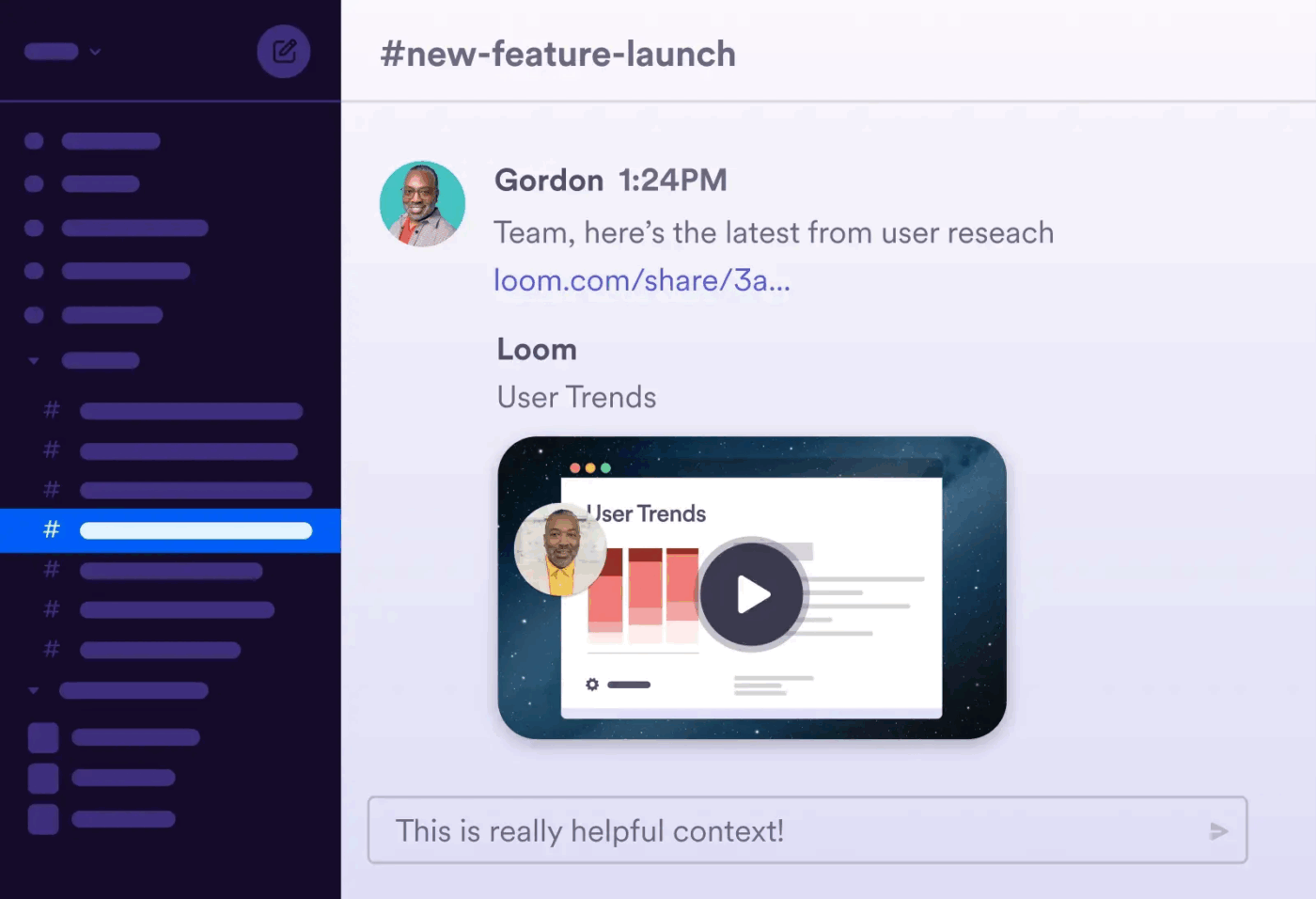
Loom is a screen recording and video messaging tool designed to solve this exact problem with speed and simplicity. It lets you record your screen, your camera, or both simultaneously and instantly share the video via a link. There’s no rendering or upload time, so you can go from recording to sharing in seconds.
It’s perfect for creating quick product walkthroughs, providing visual feedback on a design, filing detailed bug reports, or sending a welcome video to a new hire. You can use Loom directly from your browser with an extension or through its desktop and mobile apps.
👀 Did You Know? According to a survey by Loom’s parent company, Atlassian, 76% of employees believe a short recorded video message can help prevent workplace miscommunication by conveying tone, intent, and context more effectively.
📹 Bonus: When it comes to async video comms, Loom is not your only option. Check this video out for our recommendations of the best Loom alternatives:
Imagine this: your sales team is sending out video messages but flying blind. They have no idea if prospects are actually watching them, which parts of the demo they find interesting, or who the most engaged leads are.
Not ideal, right?
This lack of insight means they waste valuable time following up with uninterested prospects while hot leads go cold.
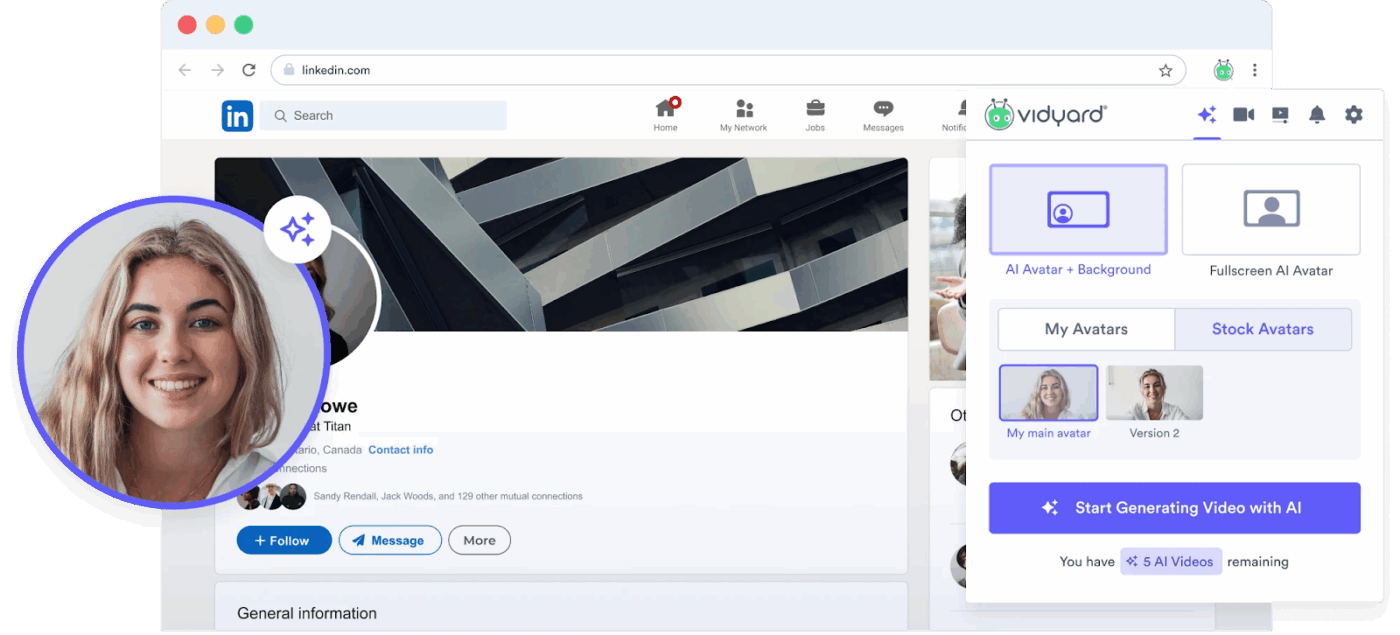
Vidyard is a video platform that helps sales and marketing teams solve this visibility problem. It lets you record, host, and track your videos with powerful analytics and deep CRM integrations. While it can be used for internal communications, its main purpose is to help you generate and qualify leads.
Vidyard’s strength lies in its ability to track viewer engagement and push that data directly into your sales tools. Sales reps can then identify and prioritize the most engaged prospects based on their video-watching behavior.
🧠 Fun Fact: 9 out of every 10 businesses use video as a marketing tool.
On the surface, both Loom and Vidyard seem to do the same thing: record videos. But when you dig into the specifics, their capabilities diverge to serve very different needs. Let’s compare them head-to-head to help you understand which tool is truly the right fit for your team’s workflow.
Recording a quick demo sounds simple until you’re on your fifth take because you stumbled over one sentence. Or worse, you finish a long recording only to realize the quality is too low for a client-facing presentation. The recording and video editing experience can make or break a video tool’s usefulness.
Both Loom and Vidyard let you record your screen, webcam, or both. However, their approaches to the recording and editing process are tailored to different outcomes.
When it comes to editing, Loom offers simple trimming and an AI tool that automatically removes filler words on the Business + AI plan. Vidyard provides similar trimming tools but adds more options for annotations and on-screen branding.
🏆 The verdict: Loom is the winner for quick, informal recordings where getting things done fast is the top priority. Vidyard is the better choice when you need to create longer, higher-quality videos for external audiences.
Spending too much time on manual work related to video creation, like writing scripts, editing out mistakes, and summarizing key points? The administrative overhead slows down communication and takes focus away from more important work. To solve this, you need AI that automates these tedious parts of the workflow.
Loom and Vidyard both use AI, but they apply it to solve different problems.
🏆 The verdict: Vidyard’s AI avatars offer a unique advantage for sales teams doing high-volume prospecting. Loom’s AI is more practical for general users who want to make their individual recordings cleaner and faster.
📚 Also Read: HeyGen Alternatives
A tool’s true power comes from how well it fits into your existing workflow. Here, Loom and Vidyard serve completely different ecosystems.
The difference is critical. Loom is built to embed into your internal collaboration workflow. Vidyard is built to embed into your customer-facing sales process, pushing valuable viewer data directly into your CRM.
🏆 The verdict: Your choice should mirror your team’s current toolset. If your team mostly uses Slack and Notion, Loom is the natural fit. If they live in Salesforce and Outreach, Vidyard is the clear winner.
You’re sending out videos, but you have no idea what happens after you hit “share.” Are people watching? What parts are they skipping? Lack of data makes it impossible to know if your message is landing or if you’re just talking into the void. For sales teams, this is a critical blind spot that can cost them deals.
Both Loom and Vidyard make sharing easy with instant links, but their analytics capabilities are worlds apart.
The most significant difference between the two tools is that Loom tells you if someone watched your video; Vidyard tells you how they watched it.
🏆 The verdict: Vidyard is the undisputed champion for any team that needs to track video engagement to make business decisions. Loom’s basic analytics are sufficient for casual, internal communication.
Even the best video tool leaves one problem unsolved: your videos are disconnected from your work. A Loom link for a bug report gets buried in chats, a Vidyard demo for a client is lost in an email thread, and a training video lives in a folder no one can find. The resulting Work Sprawl forces your team to waste time hunting for information and toggling between apps.
Recording a video is the easy part. Connecting it to an actionable outcome is where most teams fall short.
This is where a Converged Workspace becomes essential: a single platform where projects, documents, conversations, and analytics live together.
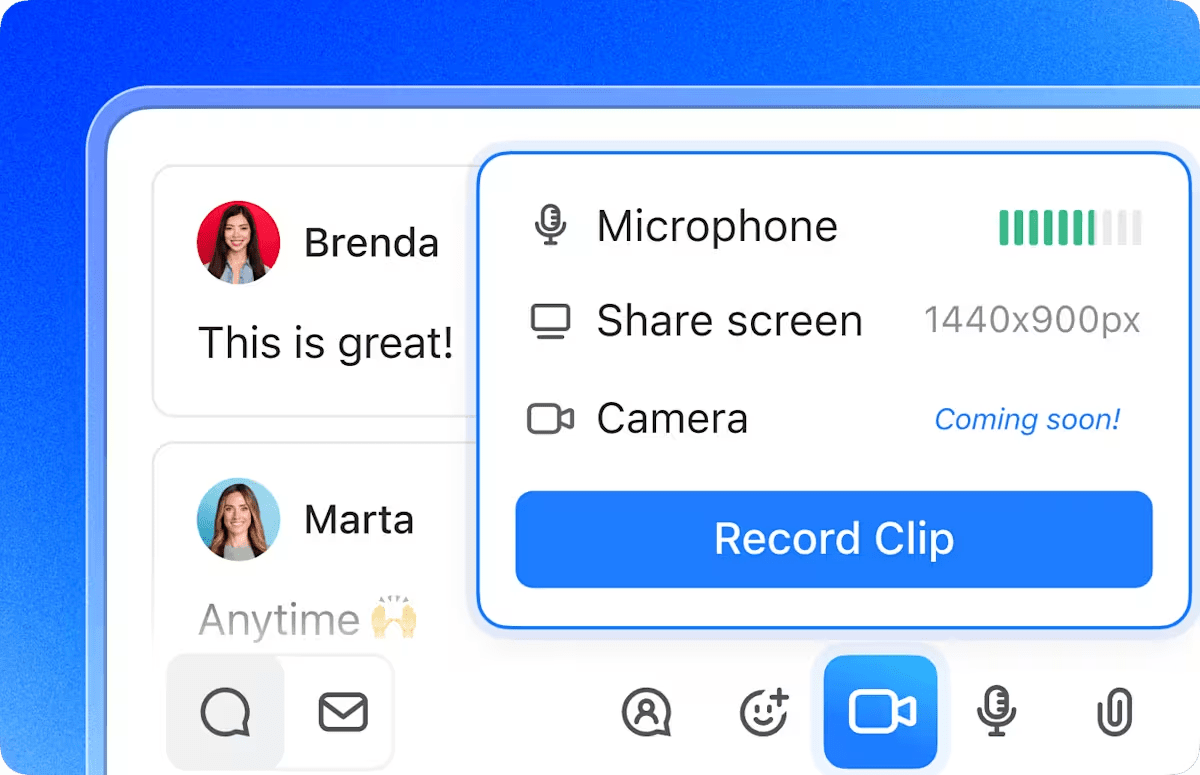
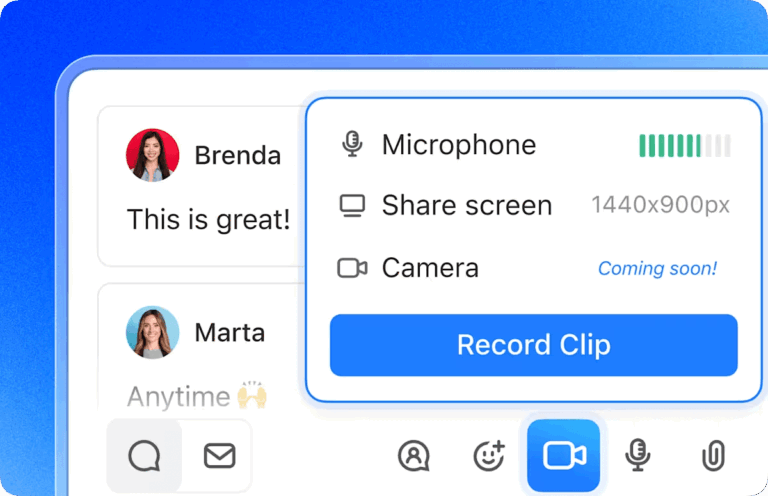
Stop the tool-juggling and bring your video communication directly into your workflow with ClickUp. 🛠️
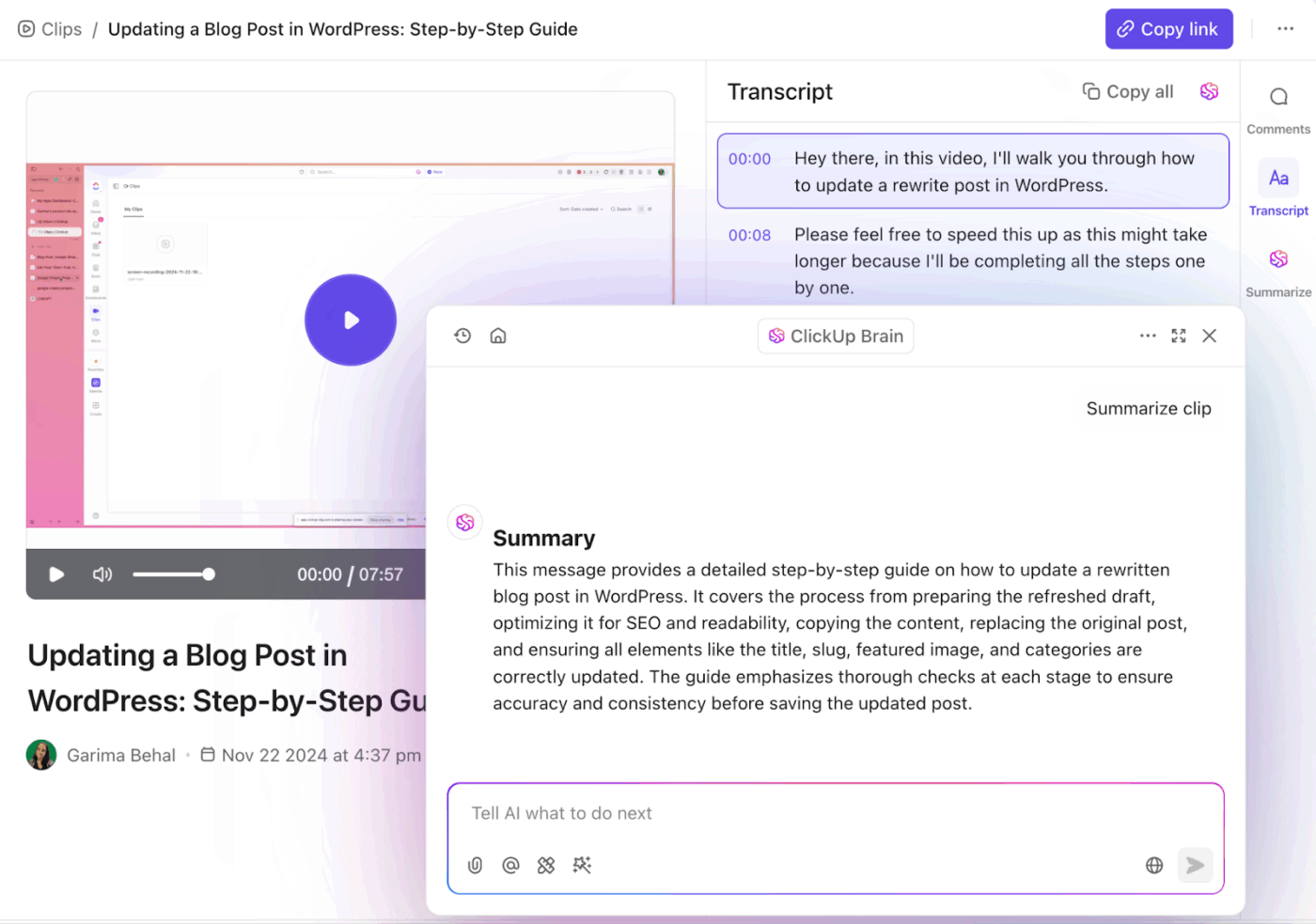
Eliminate the async communication chaos caused by tool sprawl. Instead of switching between a video tool, a chat app, and a project manager, consolidate them all in ClickUp—the world’s first Converged AI Workspace.
The features look similar on paper. Your use case is what sets them apart.
Choose Loom if:
Choose Vidyard if:
🌟 Consider ClickUp if:
For fast internal updates, Loom’s simplicity is a winner. For tracking sales engagement, Vidyard’s depth is unmatched. But for teams that want to integrate video into their workflow and eliminate tool sprawl, ClickUp offers a fundamentally better way to work.
Ready to see how integrated video can transform your team’s productivity? Get started for free with ClickUp and stop losing important videos to chat threads and forgotten folders.
Yes, Loom has a native integration that lets you record and play videos directly inside ClickUp tasks. Vidyard doesn’t have a built-in app, so you’ll need to use Zapier or manually paste links to connect them. For a truly native experience, record and attach videos directly within your ClickUp project management workspace using ClickUp Clips.
Teams record short videos to explain complex tasks, provide visual feedback on designs, or demonstrate a bug, then attach the video directly to the relevant task. This practice reduces the need for live meetings and creates a permanent, visual record of the conversation that anyone can refer back to later. ClickUp Clips enables this workflow natively within your ClickUp workspace—no need to switch between tools.
Some common alternatives include Screencastify, Vimeo Record, CloudApp, and Snagit, which offer similar screen recording functionalities. However, building video recording directly into a comprehensive project management platform is a different approach that ClickUp offers, treating video as a core part of the workflow rather than a standalone utility.

Arya P Dinesh
Max 15min read

Manasi Nair
Max 15min read
Manasi Nair
Max 19min read

© 2026 ClickUp




