



The 8 Best BPM Tools, Compared by Category 2026

Sorry, there were no results found for “”

Most BPM shortlists have a category problem. They compare tools for drawing processes, routing approvals, automating app-to-app work, and orchestrating complex operations as though they solve the same job.
That gets expensive once the process moves beyond a diagram. Camunda’s State of Agentic Orchestration and Automation report found that organizations now manage an average of 50 endpoints across their business processes, with that number growing 14% year over year. As more apps, people, APIs, and AI agents enter the workflow, choosing the wrong type of BPM (business process management) software leaves gaps that are hard to patch later.
A team that only needs to map an approval flow doesn’t need the same platform as a bank coordinating long-running processes across dozens of systems. And a company trying to automate employee requests may be better served by a no-code workflow builder than an enterprise orchestration engine.
For this guide, we’ve grouped eight of the best BPM tools by the job they’re strongest at: process modeling, workflow and approval management, process orchestration, or cross-app automation. You’ll also find current pricing, user ratings, standout features, and the limits worth knowing before you buy.
| Tool | Best for | Standout feature | Starting price* | Where it taps out |
|---|---|---|---|---|
| Kissflow | Business teams standardizing approval workflows | No-code workflow building, conditional routing, parallel approvals, SLA tracking, process analytics, and AI-assisted setup | Custom pricing | Struggles once process logic needs custom code or deep system-to-system integration |
| Pipefy | Finance and HR request queues | Request-based pipes, connected databases, Process Map, automations, self-hosted iPaaS, and AI Agents | Free; paid plans have custom pricing | Starts to strain under complex multi-process setups, and its request-queue model doesn’t suit stateful backend orchestration |
| ClickUp | Processes that turn into project work | Forms, Automations, Dashboards, Brain, Super Agents, AI Automation Builder, Whiteboards, and Mind Maps | Free; paid from $7/user/mo | It isn’t a formal BPMN engine and won’t provide executable process models or token simulation |
| Camunda | Developer-led orchestration across core systems | Executable BPMN and DMN, Zeebe, process testing, human task orchestration, MCP/A2A support, and live process monitoring | Free for non-production self-managed use; production pricing is custom | Engineers still need to build and maintain workers, integrations, error handling, and operational monitoring |
| Appian | Regulated enterprise case management | Low-code case apps, Process Modeler, Data Fabric, Process HQ, AI-built process models, and automatic error handling | Custom pricing | Complex deployments still need Appian-specific expertise, and licensing can get harder to predict at scale |
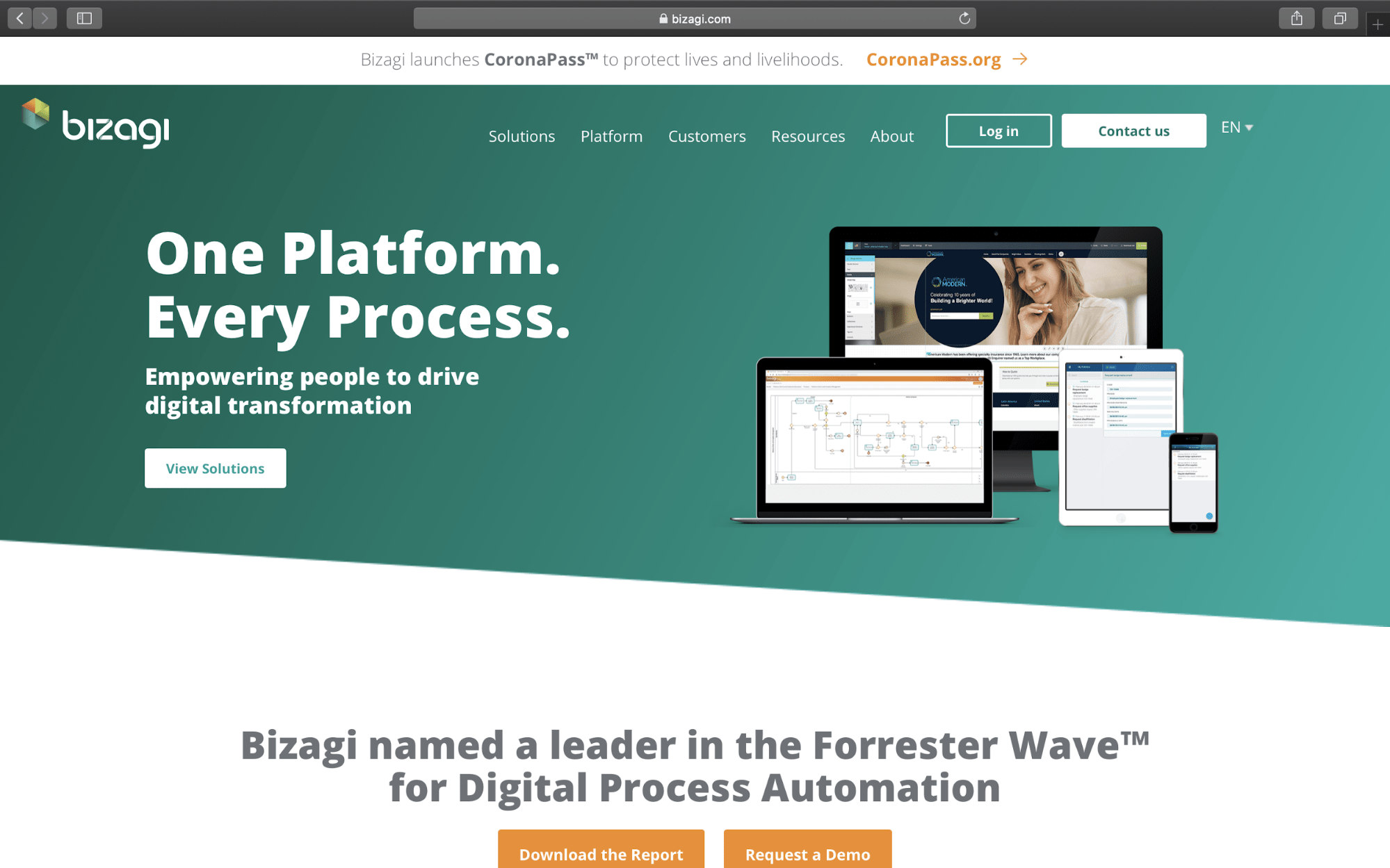
| Bizagi | Modeling a process before automating it | BPMN 2.0 modeling, simulation, what-if analysis, process governance, documentation, and publishing | Free for individual modeling; platform pricing is custom | Taking a model into production requires the broader platform and a more involved implementation |
| Microsoft Power Automate | Automating processes across Microsoft 365 | Cloud flows, desktop RPA, work queues, child flows, connectors, and process mining | Free trial; paid from $15/user/mo | Large flows become harder to manage, and licensing gets more complex as premium connectors and RPA enter the picture |
| Process Street | Recurring SOPs and human checklists | Enforced task order, conditional logic, dynamic due dates, approvals, assignments, and AI workflow importing | Custom pricing | It isn’t designed to orchestrate large numbers of backend services, and complex human workflows can take time to configure |
Our editorial team follows a transparent, research-backed, and vendor-neutral process, so you can trust that our recommendations are based on real product value.
Here’s a detailed rundown of how we review software at ClickUp.
Business process management (BPM) tools are software platforms that help teams design, run, track, and improve repeatable business processes. A process is a defined sequence of work with rules, owners, decisions, and handoffs, such as vendor onboarding, invoice approval, employee provisioning, or claims review.
The BPM market covers several overlapping product types, but four lanes are useful when you’re building a shortlist:
These categories overlap, but the distinction still matters when you buy. A finance team trying to replace email-based approvals may only need a configurable process platform. A bank coordinating a loan application across several core systems may need durable orchestration to maintain process state, handle failures, and track every step.
For a sense of what these processes look like written out, our roundup of business process management examples walks through several end-to-end processes.
Here’s a short walkthrough of how BPM plays out across real teams:
Once you know which BPM lane you fit into, compare tools on what matters after launch. We used six criteria to build this list: how deeply it models a process, how flexibly it routes and escalates work, how much structured data it captures inside the flow, how clearly it surfaces bottlenecks and cycle times, how securely it connects to surrounding systems, and whether its AI actually acts inside the process or just describes it.
Pricing deserves its own check because this category leans sales-led.
In short, the sticker price tells you less than the licensing model does. In demos, ask what counts as a paid user and whether outside participants need licenses. Also ask how automation or process volume is metered, and which governance features sit behind custom pricing.
The eight strongest options are Kissflow, Pipefy, ClickUp, Camunda, Appian, Bizagi, Microsoft Power Automate, and Process Street. Each wins a different job, from no-code approval routing to executable BPMN orchestration to human checklists where a skipped step creates real risk. The entries below cover standout features, pricing, real user reviews, and where each tool taps out.

Kissflow is a no-code process platform for business teams that own their workflows but don’t want to queue every change with IT. Think operations, finance, or procurement. A purchase request can start with a form, route to a manager based on its value, escalate when an approval sits too long, and close with a record of who approved what.
That focus on business users runs through the platform. Teams build workflows visually, add conditional routes and role-based approvals, and track requests as they move between people. The same setup works for vendor onboarding, expense requests, employee access, procurement, and other processes that have a clear path but enough exceptions to make email unreliable.
AI helps at the build stage too. Describe a process in plain English, and Kissflow drafts a starting workflow. You then adjust the fields, rules, and routing before anyone runs it. The first version gets built faster, and the process owner stays in control.
A G2 user said:
The drag‑and‑drop workflow builder, clean layout, and self‑explanatory form builders make it easy, even for non‑technical users, to set up and use. Users appreciate being able to automate processes, build forms and workflows without writing code. This speeds up implementation and reduces dependence on IT or developers.
Where it taps out: Kissflow gets less comfortable when most of the process logic belongs in code or depends on highly customized integrations across core systems.
Best for: Operations, finance, procurement, and shared-services teams that want to build and maintain structured approval workflows themselves.
Skip it if: You need executable BPMN orchestration across backend systems.

Pipefy is a request-driven workflow platform built around queues: work that starts with a form and moves through defined stages until it’s done. An employee submits an onboarding request, or finance receives a reimbursement claim. Pipefy converts each one into a card that holds the form data, owner, status, documents, and history, then moves that card from stage to stage until the request is resolved.
This structure pays off when a team handles many requests at once. Everyone sees the full queue on one board, called a pipe. Automation rules fire when a card reaches a stage, so the next step occurs automatically. Requesters can check the status of their submission at any time, sparing the process owner the constant “any update?” pings.
Smaller teams also get a practical entry point. Pipefy still offers a free plan, so you can test a request process with a small group before a wider rollout. The platform now includes AI Agents too. They can respond to process events, read information, analyze documents, update data, and carry out defined actions inside a workflow.
A G2 user said:
I adore Pipefy’s ability to simplify the process of creating and automating organized workflows without requiring technical knowledge. Approvals, onboarding, and service requests were among the repetitive chores that were made easier by the visual interface, conditional logic, and automation rules.
Where it taps out: Pipefy gets heavier as you add connected processes, shared databases, automations, and integration logic. Its request-driven structure is also less natural for technical processes that must maintain state across backend systems.
Best for: Finance, HR, procurement, and shared-services teams handling a steady flow of repeatable requests.
Skip it if: Your main workload is lengthy system-to-system orchestration.

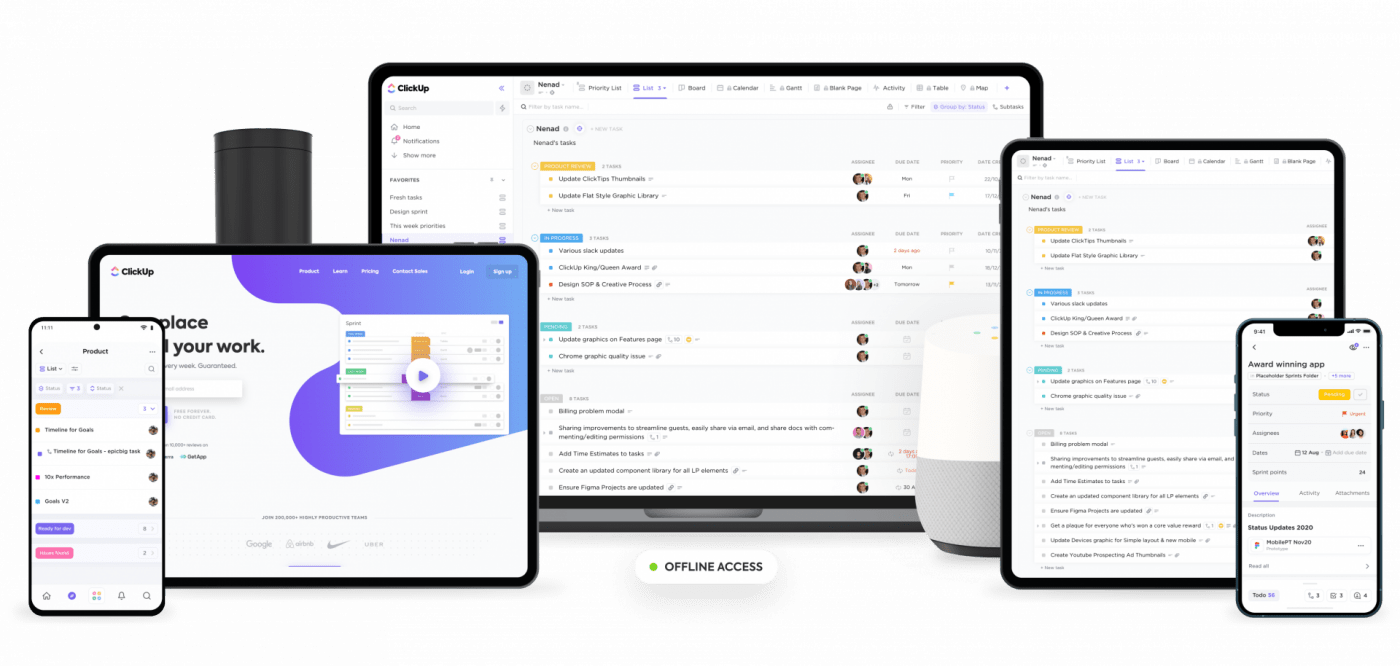
ClickUp is a work management platform with process automation, and it fits a BPM shortlist when the approved request still needs to be delivered as actual work. An approved marketing request becomes a campaign with tasks, owners, and due dates. A client intake becomes a project with deliverables. Where many BPM tools hand that work off to a separate project tool, ClickUp keeps the process and the resulting work in one place.
The process starts at intake. ClickUp Forms collect requests with conditional fields, and each submission becomes a task that carries its form data into the workflow. ClickUp Automations take over from there. They watch for triggers and conditions, then assign work, change statuses, update fields, send emails, or push the request to the next stage. Start from more than 100 templates, or describe the rule in plain English and let the builder set it up.
ClickUp Dashboards handle the monitoring side. They track cycle times, workloads, and Custom Fields behind the live workflow, so an operations lead can spot bottlenecks and stalled requests without exporting data to another tool.
A G2 user described:
The flexibility is what stands out most. I can manage tasks, recurring workflows, client projects, notes, deadlines, and SOPs all in one place, while still customizing each workspace to match how the business actually operates. The different views, templates, automations, and assignment options are especially helpful for keeping multi-step projects organized and making sure nothing slips through the cracks.
Where it taps out: ClickUp can run complex operational workflows, but it isn’t a formal BPMN engine. You won’t get executable process models, token simulation, or the same orchestration control over long-running backend processes.
Best for: Operations, marketing, product, and PMO teams whose business processes lead directly into projects and assigned work.
Skip it if: Formal BPMN execution or process simulation is a requirement.

Some processes grow into technical systems, and that’s when Camunda comes into play. It’s a process orchestration platform for workflows that has become part of the software architecture. Picture a loan application. It calls several services, waits for a human risk review, triggers another check, survives a failed API call, and picks up days later without losing its place. That’s a far cry from routing a purchase request between two managers.
Camunda handles it with BPMN you can run. Teams model the process visually, then run that model on the Zeebe engine. The diagram becomes part of the software itself. Technical and business teams share one view of the flow, and the engine tracks each running case.
Teams also get visibility after launch. Operate lets them inspect live process runs and troubleshoot failures. Optimize turns process data into reports, dashboards, KPIs, and alerts. Camunda has also brought AI agents into the same model. Agents, people, systems, and fixed rules all sit within a single governed process.
A G2 user said:
What I like about Camunda is the modern architecture, highly scalable, and the ability to design using graphical tools, teach and test the workflows. The ability to monitor them during their process helps me understand where there are bottlenecks and constraints in execution. I like the ease with which I can adapt the workflows to the business thanks to a large number of available plugins and the ability to call typical business procedures.
Where it taps out: Camunda expects teams to treat processes as part of their software architecture. Engineers still need to build workers, integrations, error handling, and operational monitoring around the process model.
Best for: Engineering and architecture teams orchestrating business-critical processes across APIs, services, people, and legacy systems.
Skip it if: Business teams need to maintain straightforward internal workflows without regular engineering support.

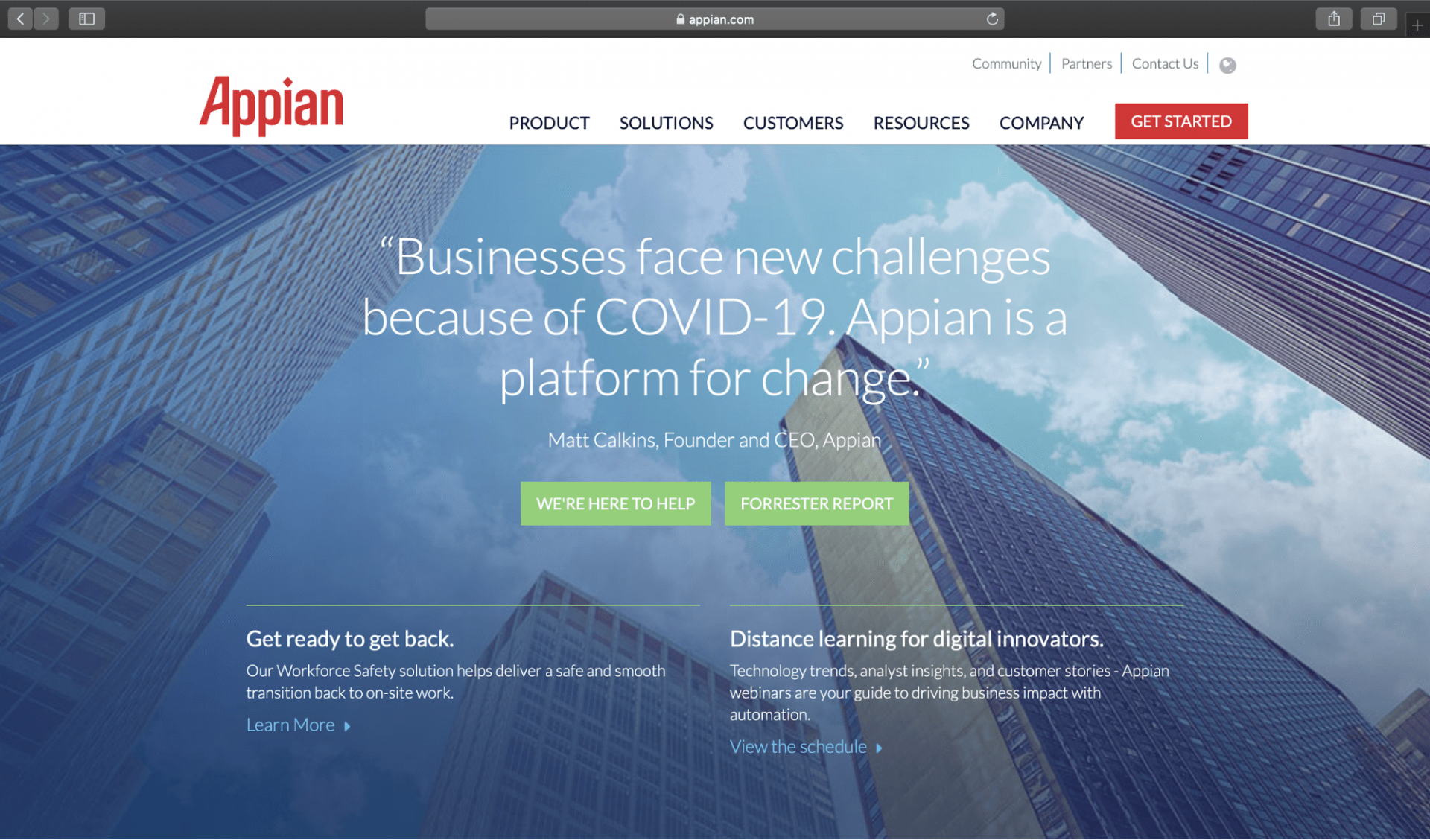
Appian is a low-code process and case management platform for building applications around complex, variable processes. It shines when every process instance can develop its own story. An insurance claim may need fraud review. A government case may require a new document halfway through. A banking investigation may branch based on the customer, region, or risk level. The process has structure, but no single fixed path fits every case.
Appian wraps that work inside process-driven apps. Case workers get one screen for the case, its data, documents, history, tasks, and next steps, while the platform runs the workflow underneath. Case Management Studio provides business users with no-code controls to set up case types, forms, fields, and workflows.
Data is the other advantage. Appian’s Data Fabric pulls information from several source systems into the app, and teams keep those systems where they are. Process HQ then blends process data with process mining, machine learning, and generative AI to help business users find patterns and areas to improve.
A G2 user shared:
I support the management and automation of business processes using Appian. I find the initial setup extremely easy when used with their cloud service.
Where it taps out: Appian’s low-code layer still requires platform-specific expertise as enterprise applications grow in complexity. Licensing also deserves close scrutiny when a process serves a large pool of occasional users.
Best for: Banks, insurers, government agencies, and other enterprises managing complex cases with strict process and data requirements.
Skip it if: You need a lightweight departmental workflow with simple administration and predictable per-user costs.

Bizagi sits in the process modeling and automation lane, and it’s useful when the problem starts before automation. Say the team knows that approvals are slow or that too much work vanishes between departments. Nobody has mapped the current flow well enough to agree on what should change.
Bizagi Modeler gives that work a formal home. Business analysts map the process in BPMN 2.0, add notes, validate the diagram, and share the model with the people who do the work. The notation spells out roles, handoffs, decisions, events, and subprocesses. That exposes the messy parts a basic flowchart can hide.
Simulation takes the model a step further. Bizagi runs scenarios against process models to show how changes in volume, timing, and staffing affect results before a team redesigns the live process. If the company later wants to automate what it mapped, Bizagi’s wider platform extends into process apps and business orchestration.
A G2 user described:
Bizagi helps bridge the gap between business management and IT development. By using standard BPMN 2.0, non-technical analysts can map complex workflows visually, while technical teams can turn those models into functional applications with minimal coding.
One of its biggest strengths is Bizagi Modeler, a free desktop application that lets teams design, document, and publish workflows, with built-in error checking to keep diagrams aligned with BPMN 2.0 standards.
Where it taps out: Bizagi Modeler handles process design, documentation, and simulation well, but putting that model into production requires the broader Bizagi platform and a more involved implementation.
Best for: Business analysts and process improvement teams that want to formalize, test, and agree on a process before automating it.
Skip it if: You need to launch a simple approval workflow quickly without a separate modeling phase.
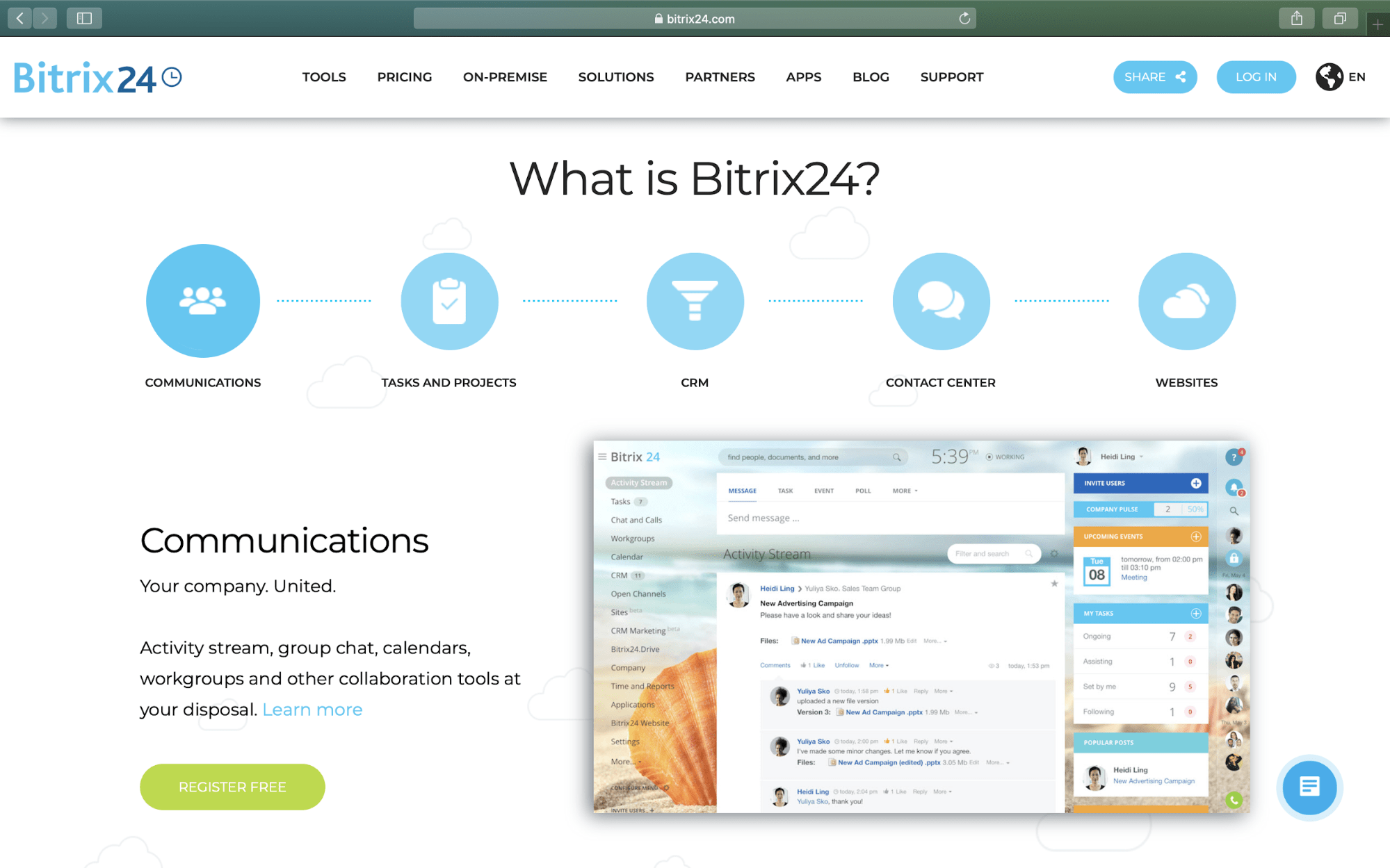
If most of your process already lives in Microsoft, Power Automate makes an easy case. A typical flow might start with a Microsoft Forms submission that gets stored in SharePoint, then move through an Outlook notification and a Teams approval before the result lands in Excel or Dynamics. Power Automate connects those steps, and the department never leaves its current tools.
Cloud flows handle that app-to-app work. A trigger starts the flow, conditions decide what happens next, and connectors pass data between services. That’s handy for the small but constant work that grows around Microsoft 365: document approvals, alerts, employee requests, data updates, and scheduled admin chores.
Desktop flows extend the same platform into RPA. They automate work through a Windows screen when an older app lacks the API or connector you need. Microsoft-heavy companies get one path for cloud flows and some of the legacy desktop work beneath them.
A G2 user said:
What I like most is that it lets me automate repetitive tasks without having to write much code. There are plenty of ready-made connectors, so it’s straightforward to build workflows between Microsoft applications and other services. Automations like sending notifications, updating files, moving data, or triggering actions automatically can save a lot of manual effort.
I also appreciate how well it fits into the Microsoft ecosystem. Since I already use tools like Outlook, Teams, SharePoint, Excel, and other Microsoft services, creating workflows between them feels natural. The interface is easy to follow, and once you’ve built a couple of flows, putting together new ones becomes much faster.
Where it taps out: Power Automate becomes harder to manage as flows grow across many branches, premium connectors, retries, and RPA steps. Its licensing also gets more complex once you move beyond basic user-based automation.
Best for: IT and operations teams already standardized on Microsoft 365, SharePoint, Teams, Dynamics, or other Microsoft services.
Skip it if: Your stack sits mostly outside Microsoft, or you need one formal BPMN model to govern a multi-day process across many systems.

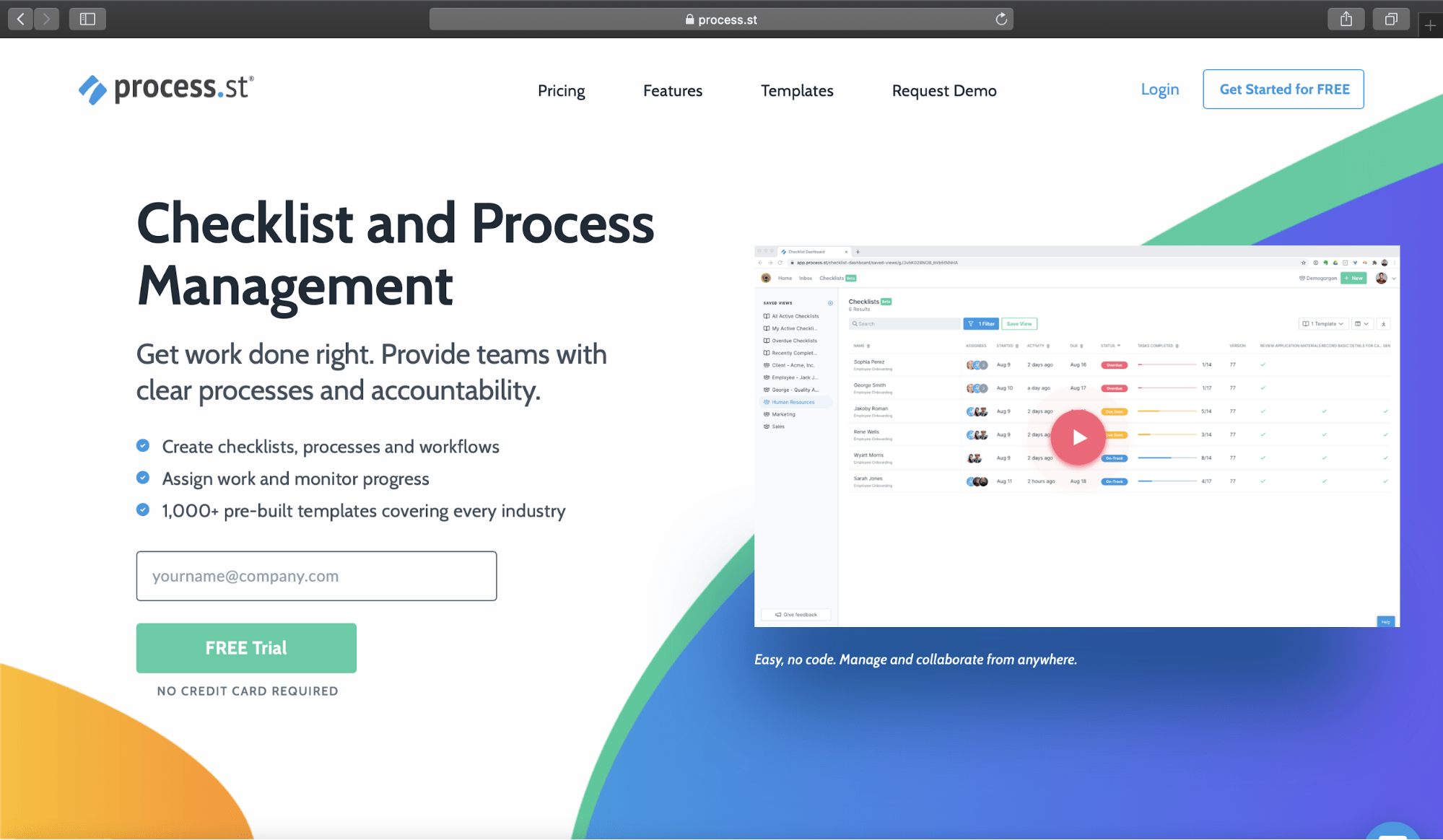
Everyone knows the process; people just don’t always follow it. That’s the BPM problem Process Street solves. Put simply, it’s a human-centric workflow and SOP platform for repeatable processes where people need to follow the same procedure every time. Client onboarding, employee offboarding, security reviews, inspections, and laptop provisioning can all fail when a step is skipped or when no one knows who owns the next task.
Process Street turns the SOP itself into the workflow. The procedure stops living in a document that people may or may not follow. The team runs a fresh instance with tasks, instructions, assignments, due dates, form fields, approvals, and conditional paths built in.
That works especially well for procedures with a lot of human activity. A new client checklist can change based on the client’s answers, require a manager’s approval before the account opens, assign tasks to different roles, and record what each person completed. The result is far easier to audit than a static checklist passed around by email.
A G2 user mentioned:
Process Street is well designed and simple to use. If you want to standardize your business processes into an SOP and then run them as recurring workflows, this is the software I would recommend. We used Process Street for many years for things like onboarding new clients, onboarding and offboarding users from our managed clients. You can have form fields, add conditional logic and approvals at key steps – the options are almost limitless! There are integrations via Zapier and native webhooks and we experimented with integrating Process Street with our PSA at the time.
Where it taps out: Process Street centers on people carrying out repeatable procedures. It has APIs, webhooks, and integrations, but it wasn’t built to be the main orchestration layer for dozens of backend services. Complex workflows can also take time to set up when they hold many branches and rules.
Best for: Operations, IT, HR, and compliance teams running recurring procedures where skipped steps create risk.
Skip it if: Most of your process runs machine-to-machine across APIs, databases, microservices, and other backend systems.
The right BPM tool depends on who owns the process, where the work happens, and how technical it needs to be. Business-owned approval flows point to Kissflow, Pipefy, ClickUp, or Process Street; engineering-owned, system-heavy processes point to Camunda or Appian. Start with the process you need to fix.
The products also split along one useful line. Kissflow, Pipefy, ClickUp, and Process Street make more sense when people carry most of the process. Camunda and Appian fit better as technical and data complexity rises. Bizagi is strongest before execution, and Power Automate sits between business workflow and app-to-app automation.
If two tools still look equally good, check the end of the process. What happens after approval, after an exception, or after a system fails? That handoff often shows which platform fits the workflow.
Also Read: Process Improvement Templates
A BPM project can look solid on paper and still fall apart in practice. Teams may map every handoff, agree on the ideal flow, and document who owns each step, only to find that the real work keeps happening through email, spreadsheets, and side conversations.
That gap is common. In PRIME BPM’s 2026 Global BPM Survey, 48% of 4,979 BPM professionals said their organizations lacked a defined business process improvement methodology. Another 6% said their approach was only partial or ad hoc.
That matters because a process map has limited value if the team has no consistent way to run, review, and improve the process after launch. Over time, people create workarounds, approvals drift, and the documented flow no longer matches what actually happens.
AI and automation can make that drift more visible, but they don’t fix the underlying process. If ownership is unclear, rules are missing, or handoffs are weak, those problems carry straight into the automated workflow.
From there, buy for the gap you actually have. If the process is still unclear, start with modeling. If people keep bypassing an agreed workflow, focus on execution and approvals. And if the process breaks as it crosses systems, you need stronger orchestration.
Before you buy anything, work through a few business process automation examples and map one of your own processes from intake to completion. Look at where work waits, who makes each decision, what data changes hands, and what happens when a step fails. Those details will tell you more about the BPM tool you need than a long feature checklist.
A BPM tool earns its place when the process keeps moving after someone submits a request, approves a step, or hands work to the next team.
That’s where you can explore ClickUp. Forms capture the intake, Automations move work through the right stages, Dashboards show where requests are slowing down, and ClickUp Brain can answer questions across the live workspace. Super Agents can also take on defined parts of the process, while the resulting tasks, Docs, owners, and deadlines stay connected to the same workflow.
So if your business processes already turn into projects and assigned work, try ClickUp for free and keep the workflow and the work it creates in one place.
BPM is the broader discipline of designing, running, measuring, and improving business processes. BPMN, or Business Process Model and Notation, is a standard visual language for describing those processes. BPMN 2.0 uses shared symbols for events, tasks, gateways, pools, and lanes, which lets business and technical teams read the same process model. Some BPM platforms, such as Camunda and Bizagi, work directly with BPMN. Others, including Kissflow and Pipefy, let teams run business processes without using formal BPMN notation.
A BPMS, or Business Process Management System, is software that supports several parts of the BPM lifecycle on a single platform. This can include process modeling, workflow execution, business rules, forms, monitoring, and process analytics. The term overlaps heavily with “BPM software.” In practice, BPMS often refers to broader platforms that can both design and run processes, while narrower BPM tools may focus mainly on modeling, workflow automation, or orchestration.
Microsoft Power Automate is primarily a workflow automation and RPA platform, but it can handle many BPM use cases. Teams can use it to route approvals, move data between applications, automate recurring tasks, manage work queues, and analyze processes with process mining.
It doesn’t offer the same BPMN-based process modeling and execution as Camunda or Bizagi. That makes it a better fit when the main job is to automate work across Microsoft 365 and connected systems rather than to run a formal BPMN process.
Flowable, jBPM, Bonita, Operaton, and Activiti are among the better-known open-source options for teams that want to build around BPMN or process engines. The right choice depends on whether you need a full-process platform, an embeddable engine, or primarily BPMN tooling. Be careful with Camunda in this comparison. Current Camunda 8 isn’t simply a free open-source production BPM platform. Camunda allows free Self-Managed use for development and non-production work, while production deployments require an Enterprise license.
Workflow automation handles a defined sequence of tasks, such as routing an expense request for approval or updating a CRM after a form is submitted. BPM covers the wider lifecycle: finding the process, modeling it, improving it, running it, measuring results, and changing it over time.
That means workflow automation can be one part of BPM. If the process is already clear and you mainly want to remove manual handoffs, workflow automation may be enough. If the process itself needs redesign, governance, measurement, or end-to-end coordination, BPM has the wider scope.
Jira is an issue tracker with configurable workflows, not a dedicated BPM tool. Teams do run business processes on it, since Jira workflows support custom statuses, transitions, and automation rules. It lacks BPMN 2.0 modeling, process simulation, and conformance checking. Jira works well for engineering-adjacent processes and is a weaker fit for finance or HR approval chains.
BPM manages an end-to-end business process, while robotic process automation, or RPA, automates individual repetitive tasks within that process. The two technologies are often used together. For example, BPM software could govern an invoice process from receipt through approval and payment. An RPA bot might handle one step by copying invoice data into an older application that has no API. Microsoft Power Automate combines workflow automation with desktop RPA for this reason.

Arya P Dinesh
Max 15min read

Manasi Nair
Max 15min read

Manasi Nair
Max 19min read

© 2026 ClickUp