Top AI Courses to Help Develop Your AI Knowledge in 2025

Sorry, there were no results found for “”
Artificial intelligence (AI) is the simulation of human intelligence capable of performing tasks and processes that previously required human intervention.
AI can read, write, create, analyze, and chat with you.
If you’re new to AI, here’s a breakdown.
Artificial intelligence includes branches like Machine Learning and Big Data. Machine Learning enables computers to learn from data and improve performance without explicit (direct) programming.
Meanwhile, Big Data refers to large sets of information that AI systems examine to find patterns and insights.
Also extending from the same branch are Strong and Weak AI. Strong AI is capable of human-like cognition, and weak AI is designed to perform specific tasks with human input.
The advances in AI may seem challenging to keep up with. But don’t worry; there are dedicated artificial intelligence courses that’ll help you understand these concepts.
This article’ll introduce you to the top 10 courses that will educate you about artificial intelligence and its various applications.
Artificial Intelligence (AI) courses carry in-depth knowledge about artificial intelligence, its applications, ethical considerations, and career advice.
Below, we’ve handpicked the best AI courses for beginners, intermediates, and experts in 2024.

The Introduction to Artificial Intelligence course is self-paced and offers a detailed overview of AI, covering its fundamentals, applications, and societal impacts. The course educates you in simple language on terms like machine learning, deep learning, and neural networks.
You will also have access to real-world use cases of AI and how artificial intelligence reshapes various industries—from healthcare to finance. You’ll learn about AI’s ethical concerns, such as bias in algorithms, privacy issues, and the impact on employment.
In this course, you’ll also get advice on how to start a career in AI. By the end, you’ll better understand artificial intelligence, its concepts, and what it means for the future.

The IBM Applied AI Professional Certificate course teaches you how to create AI chatbots and virtual assistants for websites without writing a single line of code.
The artificial intelligence course begins with an introduction to basic prompt engineering and then deep dives into building AI solutions using IBM Watson AI services, APIs, and Python with minimal or no coding.
Through practical exercises, the course also teaches you how to apply computer vision techniques using Python, OpenCV, and Watson to build and deploy custom image classification models on the cloud.
This course is about learning and career advancement. With professional-level training directly from IBM (a leading authority in AI), students can create personalized AI tools based on their learning speed and needs to enhance their learning experience.
At the end of the course, you’ll get exclusive access to career resources, like personalized feedback on resumes, interactive tools and mock interviews, and hands-on career support with Coursera’s job search guide.

Image Source: Medium
Machine Learning Specialization is a 3-course specialization program created in collaboration between DeepLearning.AI and Stanford Online.
The course provides a broad introduction to modern machine learning—from creating predictive learning models using NumPy and sci-kit-learn to training neural networks with TensorFlow. Also, the course covers decision trees and ensemble methods.
However, you need basic coding skills to take this course. The specialization program is divided into three courses:
By the end of this specialization, you’ll have a deep understanding of key ML concepts and techniques with practical skills you’ll gain that are ready to be implemented in real-world scenarios.

You’ll learn to build and train advanced neural networks in Deep Learning Specialization. The course will help you understand how to adjust necessary settings for better performance and apply these techniques in practical situations.
The course teaches recurrent neural networks (RNNs), natural language processing (NLP), and word embeddings, allowing you to work with text data effectively.
Then, it deep dives into advanced techniques like using HuggingFace tokenizers and transformer models for tasks like named entity recognition (NER) and question answering.
You’ll discover ways to improve your models’ accuracy using TensorFlow. This artificial intelligence (AI) course is designed to give you a solid grasp of deep learning with plenty of hands-on experience.

This course taught by Joseph Santarcangelo, an experienced Data Scientist at IBM, helps you master Python (the leading language in Data Science and Software Development).
The course explains fundamental programming concepts like variables, data structures, and functions—essential for any Python project. You’ll also learn about web scraping techniques using APIs and tools like Beautiful Soup.
Besides, the course offers 20+ assessments and quizzes for course takers to embark on cognitive learning theory. By the end, you’ll be proficient in utilizing Python libraries like Pandas and NumPy—essential data manipulation and analysis tools.

The IBM AI Engineering Professional Certificate course will help you grasp the fundamentals of machine learning and deep learning. You’ll learn to deploy machine learning algorithms and pipelines on Apache Spark for scalable processing.
Moreover, you’ll learn about popular frameworks like Keras, PyTorch, and TensorFlow and how they help you build deep-learning models and neural networks. This course will equip you with all the essential skills for AI engineering.

The AI Product Management Specialization course by Duke University is a 3-course series. The course introduces how machine learning works and then dives deep into using ML to solve problems.
Taught by Jon Reifschneider, the Director of Master Studies for AI, this course focuses on applying human-centered design principles to develop AI products that prioritize privacy and adhere to ethical standards.
The entire course is divided into three mini-courses:
By the end of this specialization, you’ll gain insight into leading machine learning projects using industry-standard data science processes and best practices.

This course helps you master essential analytical skills such as data cleaning, analysis, and visualization using popular tools like spreadsheets, SQL, R programming, and Tableau.
You’ll learn to clean and organize data efficiently for analysis and visualize findings using dashboards and presentations.
Portfolio-ready projects will help you demonstrate your proficiency to potential employers and earn an employer-recognized certificate from Google–qualifying you for in-demand job titles such as Data Analyst, Junior Data Analyst, or Associate Data Analyst.

The AI Foundations for Everyone Specialization course is self-paced for individuals with little or no AI background. The course aims to provide a solid understanding of AI, its applications, and critical terms like Machine Learning, Deep Learning, and Neural Networks.
Practical experience with IBM Watson AI services will help you create virtual assistants for different purposes. You’ll successfully develop and implement an AI chatbot on a website without coding by the course’s end.

The AI For Business Specialization course by the University of Pennsylvania educates you on the fundamentals of AI and Machine Learning and how to use the technologies for various applications in your business.
Topics like ethics and risks of AI, designing fair governance frameworks for its use, and managing people within Machine Learning-driven HR functions are broadly covered in this course.
By the end of this course, you’ll earn a career certificate from the University of Pennsylvania and be well-equipped with valuable tools to succeed in the business world.
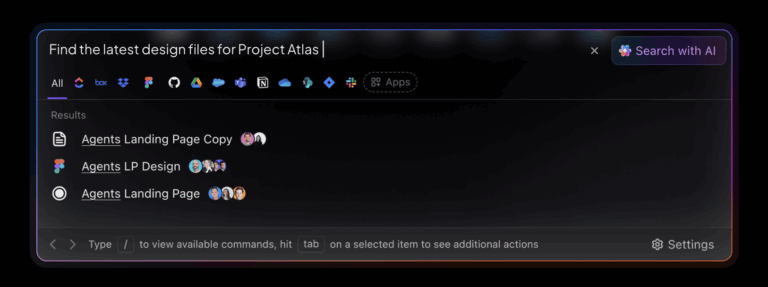
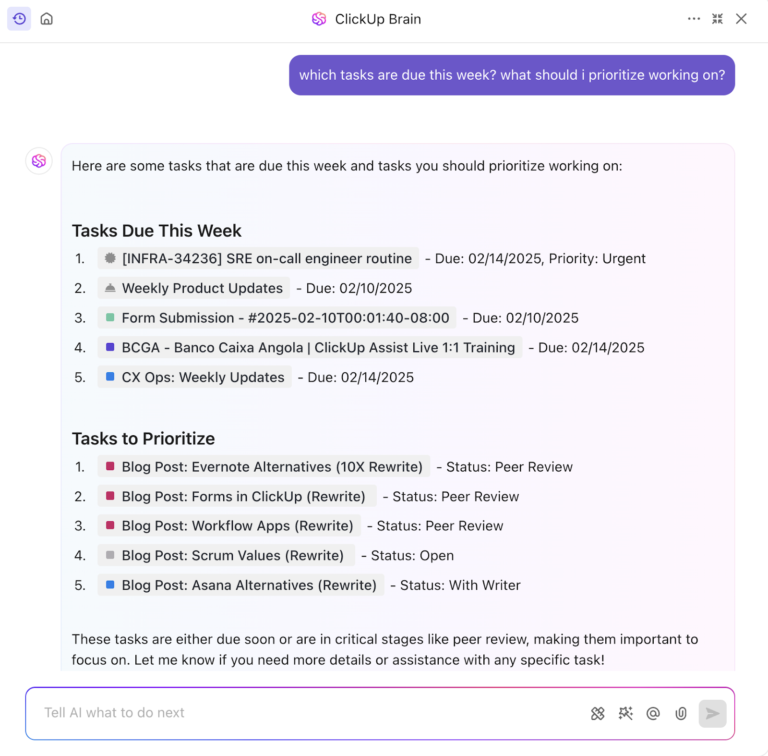
As you expand your skill set in AI, exploring various AI tools can significantly elevate your career opportunities. One such tool worth considering is ClickUp Brain.
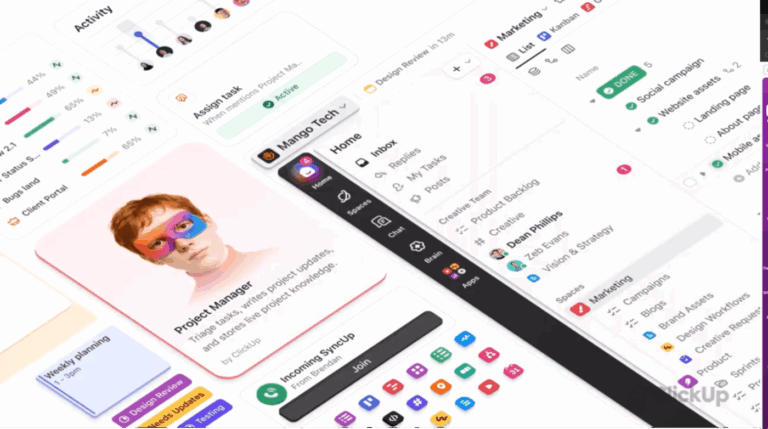
ClickUp Brain is the world’s first neural network connecting tasks, docs, people, and your company’s knowledge with AI. It’s designed to make it easier for everyone in your organization to communicate, work together, and find the necessary information.

Here’s how ClickUp Brain supports your business in managing projects:
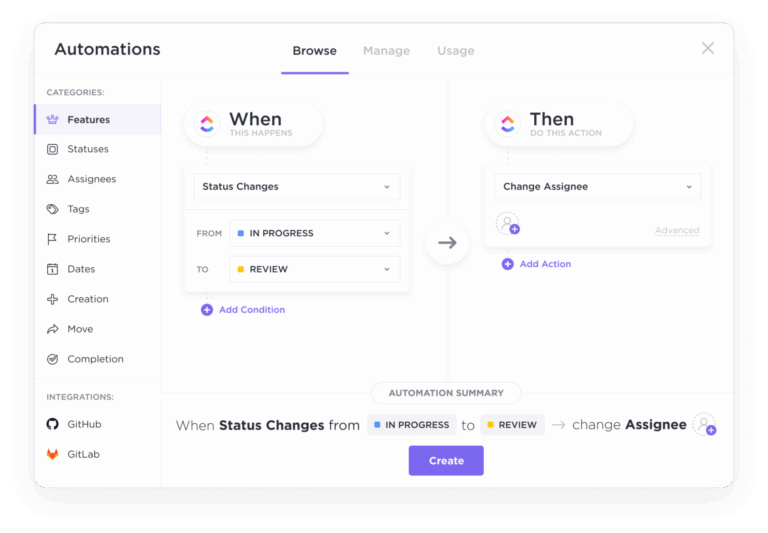
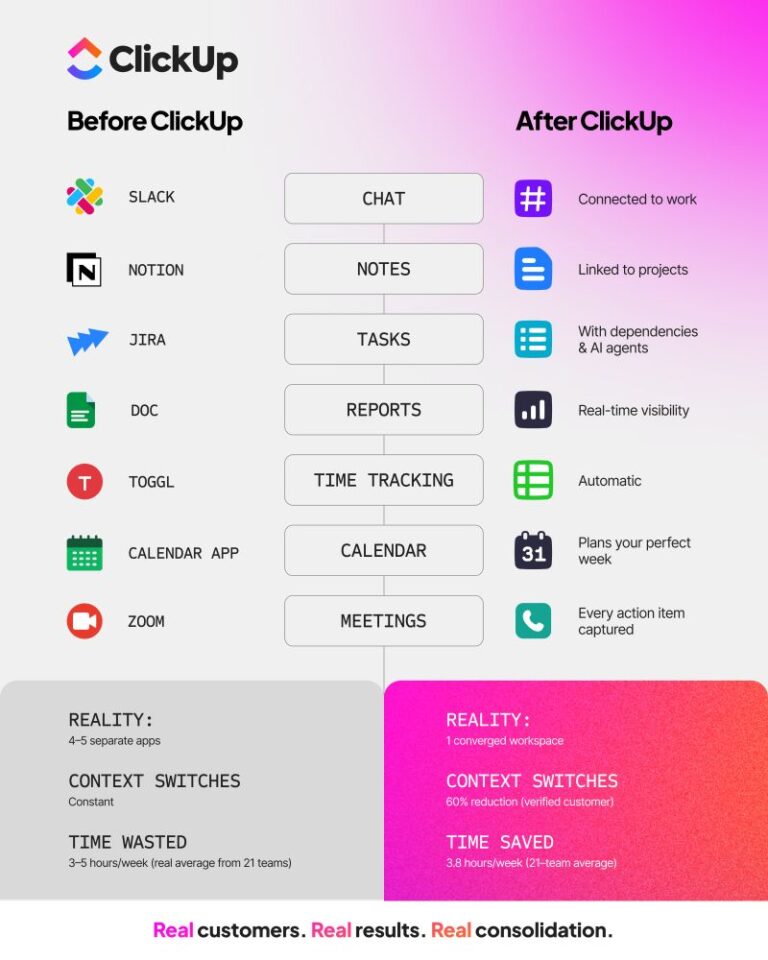
Moreover, ClickUp brings 100+ built-in AI tools to streamline and automate work. Try ClickUp Brain today!
The best course for you depends on your learning goals, background, and preferences. Each course offers unique content and focuses on different aspects of AI.
For example, if you’re new to AI and want a broad introduction—AI Foundations for Everyone Specialization or AI For Business Specialization is an excellent course.
Similarly, if you’re interested in deep learning—Deep Learning Specialization should be your go-to choice. But again, you need to consider your interests, level of expertise, and desired outcomes when selecting the best course for you.
Online courses are the best way to learn artificial intelligence. Research and understand which online courses are best for you. See what fits in your budget, and hand-pick the ideal program.
Practice coding in Python or R and engage with AI communities for support. Work on projects to apply your AI skills and explore specialized areas like natural language processing.
Artificial Intelligence (AI) uses human intelligence in computer systems. AI courses cover machine learning, deep learning, and natural language processing.
AI courses educate you on creating AI systems that can learn from data, understand human language, and make decisions. By taking AI courses, you can gain valuable skills for a career in AI and be prepared to work on projects in various industries.
© 2025 ClickUp