Sorry, there were no results found for “”
Sorry, there were no results found for “”
Sorry, there were no results found for “”
Pinterest has plenty of inspiration for your next to-do list: neat grids, hand-lettered headings, pastel boxes, and carefully placed stickers. As you choose a style, think about how much room you’ll need for tasks and how often your plans change.
The design can be part of the appeal. In a 2025 University College London study on planning with digital pens, participants described wanting their plans to look appealing. One bought Goodnotes templates to improve their planner’s appearance. Others appreciated being able to decorate their handwritten lists and keep them tidy.
A layout you enjoy using also needs room for everyday changes, from a new deadline to a task that takes longer than expected.
We’ve gathered 20 aesthetic to-do list ideas for daily planning, weekly and monthly schedules, bullet journals, digital apps, and study or work. Each includes instructions for recreating the layout, practical examples, and guidance on when to use it.
TL;DR: An aesthetic to-do list works when its design carries information. Use a top-three box for daily priority, color for context, symbols for status, and white space so the list stays readable.
Pick one style, cap it at four colors, and keep it for two weeks before redesigning.
| To-do list idea | How to set it up | Best for |
| Top-three daily list | Give your 3 main tasks a prominent space, with optional tasks below | Keeping daily priorities visible |
| Time-blocked column | Place tasks beside the hours you plan to work on them | Planning around meetings or classes |
| Energy-coded list | Use colors to separate focus work, routine tasks, and quick tasks | Choosing work that fits your energy |
| Done list | Record completed tasks as you go | Seeing progress on unpredictable days |
| Seven-column weekly spread | Give each day its own column | Reviewing the week on one page |
| Pastel priority grid | Sort tasks into Do, Schedule, Delegate, and Delete quadrants | Deciding what needs attention first |
| Theme-day list | Assign a type of work to each day | Grouping similar tasks |
| Monthly goals spread | Break monthly goals into smaller actions | Connecting daily work to longer-term goals |
| Monthly checklist calendar | Add checkboxes to dated tasks and keep undated tasks alongside | Tracking deadlines and recurring commitments |
| Rapid-log symbols | Use a consistent key for tasks, events, and notes | Capturing information quickly |
| Washi-tab sections | Mark categories or pages with labeled washi tabs | Finding sections in a paper planner |
| Doodle-and-sticker list | Add small decorations around a readable task list | Personalizing a simple checklist |
| Dark-mode list | Pair a dark background with readable text and restrained accent colors | Creating a darker digital layout |
| Mini Kanban board | Move task cards through To Do, Doing, and Done | Tracking work through stages |
| Gallery-card list | Give projects visual cards with covers and clear labels | Browsing several projects |
| Home-screen widget | Display a short task list on your phone’s home screen | Checking priorities without opening an app |
| Assignment countdown | Show assignments alongside due dates and time remaining | Planning schoolwork |
| Subject-color list | Give each subject a consistent color and written label | Separating coursework at a glance |
| Shared team checklist | Add owners and deadlines to shared tasks | Coordinating work with other people |
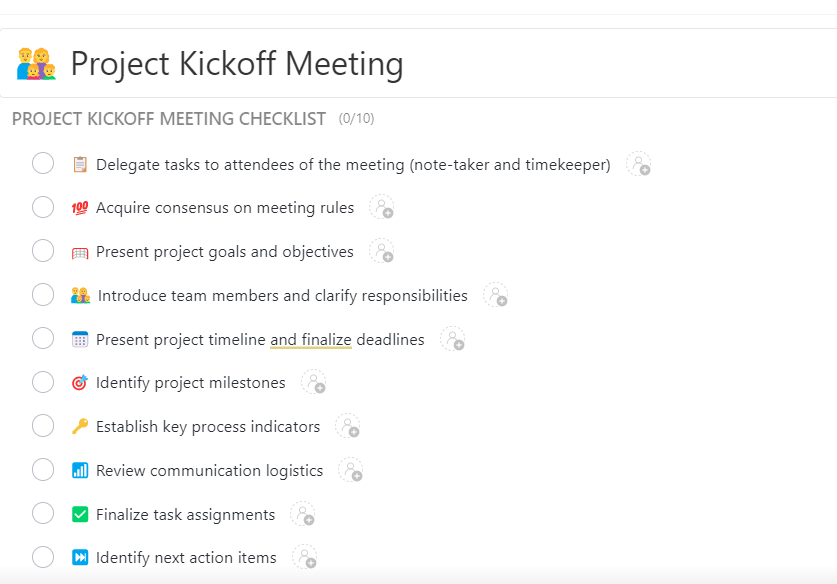
| Project kickoff checklist | Group the decisions and tasks needed to start a project | Preparing for a project launch |
An aesthetic to-do list is a task list with a consistent visual system that makes priorities and progress easy to see at a glance. A simple way to test one: a consistent style + a priority signal + room to finish.
In contrast, a decorated list has the first part only. A useful aesthetic list has all three, so the design speeds up reading the list instead of slowing it down.
| Category | Decorated list | Aesthetic list that works |
|---|---|---|
| Color | Chosen for looks, changes daily | 3–4 colors, each tied to one context |
| Layout | Rebuilt every day | Same structure every day or week |
| Priority | Every task looks equal | Top tasks sit in a box, a row, or a bigger font |
| Status | Crossed out or left alone | Clear symbols for done, moved, and waiting |
You’ll return to your daily to-do list throughout the day, whether you’re checking off a finished task or deciding what to tackle next. An easy-on-the-eyes layout can make those little check-ins more enjoyable, especially when it keeps your priorities in sight.
Here are four ideas you can recreate in a notebook, planner, or digital app.
If your daily to-do list keeps growing faster than you can finish it, try giving your three biggest priorities a space of their own.
Draw a rounded box at the top of your page and write three tasks you want to finish that day. You can give the box a soft pastel background, add a handwritten heading, or use a different color for each checkbox. Keep your remaining tasks in a simple list underneath, with enough space to add new ones as they come up.
For example, your top three might include finishing a presentation, reviewing a proposal, and sending an invoice. Smaller tasks, such as organizing files or replying to routine emails, can go below.
The separate box helps you find your priorities at a glance, even when the rest of your list gets crowded. You can also recreate this digitally by placing your top tasks in a dedicated section or marking them with a priority label.
Best for: People who tend to fill their days with smaller tasks while larger priorities get pushed back
Skip it if: You need to track a long sequence of time-sensitive tasks, where the order and timing are equally important
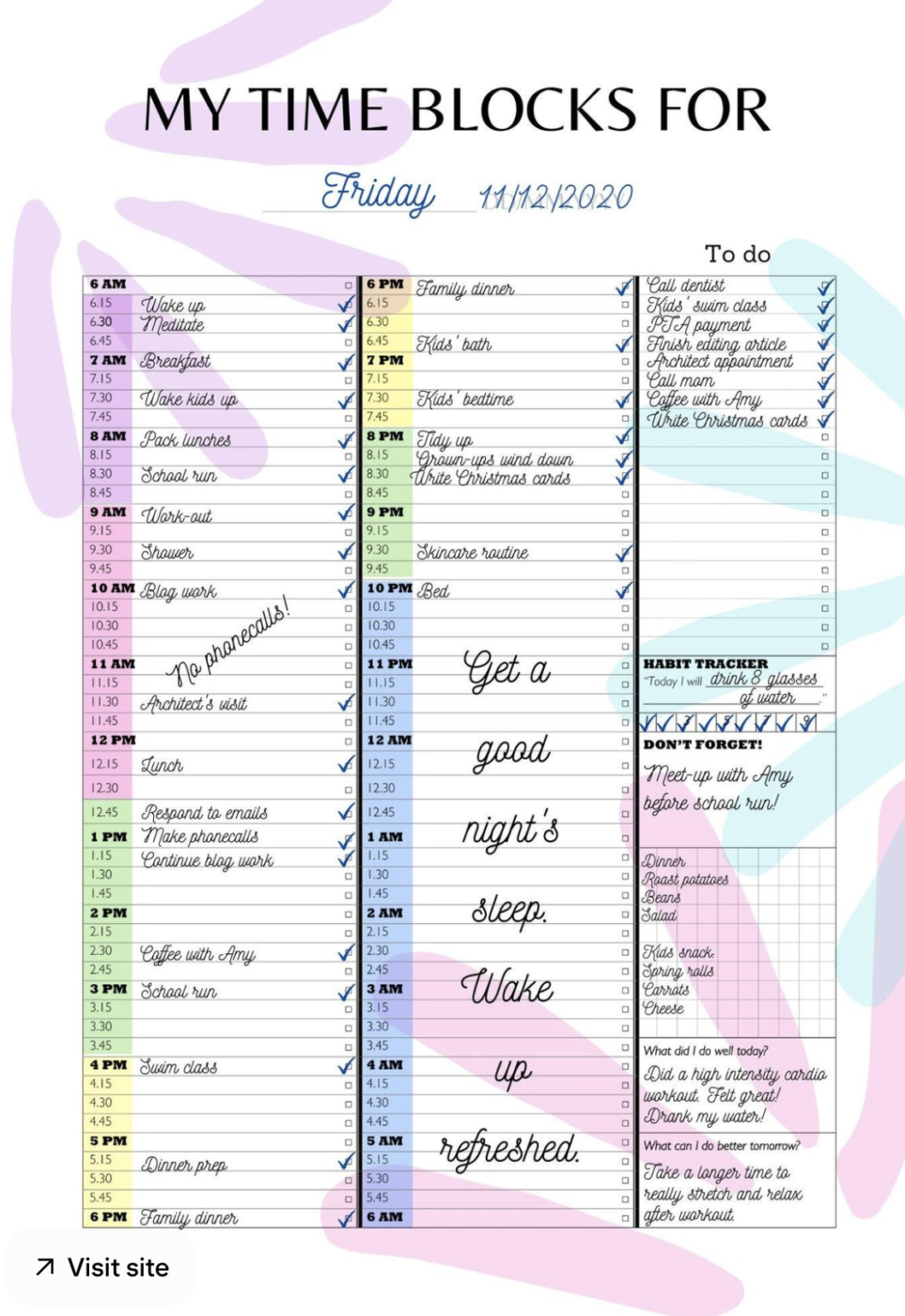
A time-blocked to-do list is a good choice when you want to see how your tasks fit into your available hours.
Start with a vertical timeline along one side of the page, using the hours that match your schedule. Then draw colored blocks beside it for the tasks you plan to work on. Use lavender for focused work, peach for meetings, and sage for breaks or personal time.
Say you have a meeting at 11 a.m., a report to finish, and two client calls in the afternoon. Placing them on a timeline helps you see where the report can fit and whether you’ve left enough room for breaks or unexpected work.
You can create the same layout in a daily planner or calendar app. Keep a little open space between commitments, since tasks often take longer than expected.
For a closer look at the method, this guide to time blocking explains how to plan tasks around your available time.
Best for: Students, freelancers, and professionals who need to balance focused work with fixed commitments
Skip it if: Your schedule changes constantly and keeping the blocks updated would become another task
This video on time blocking apps shows how the same idea looks in digital tools:
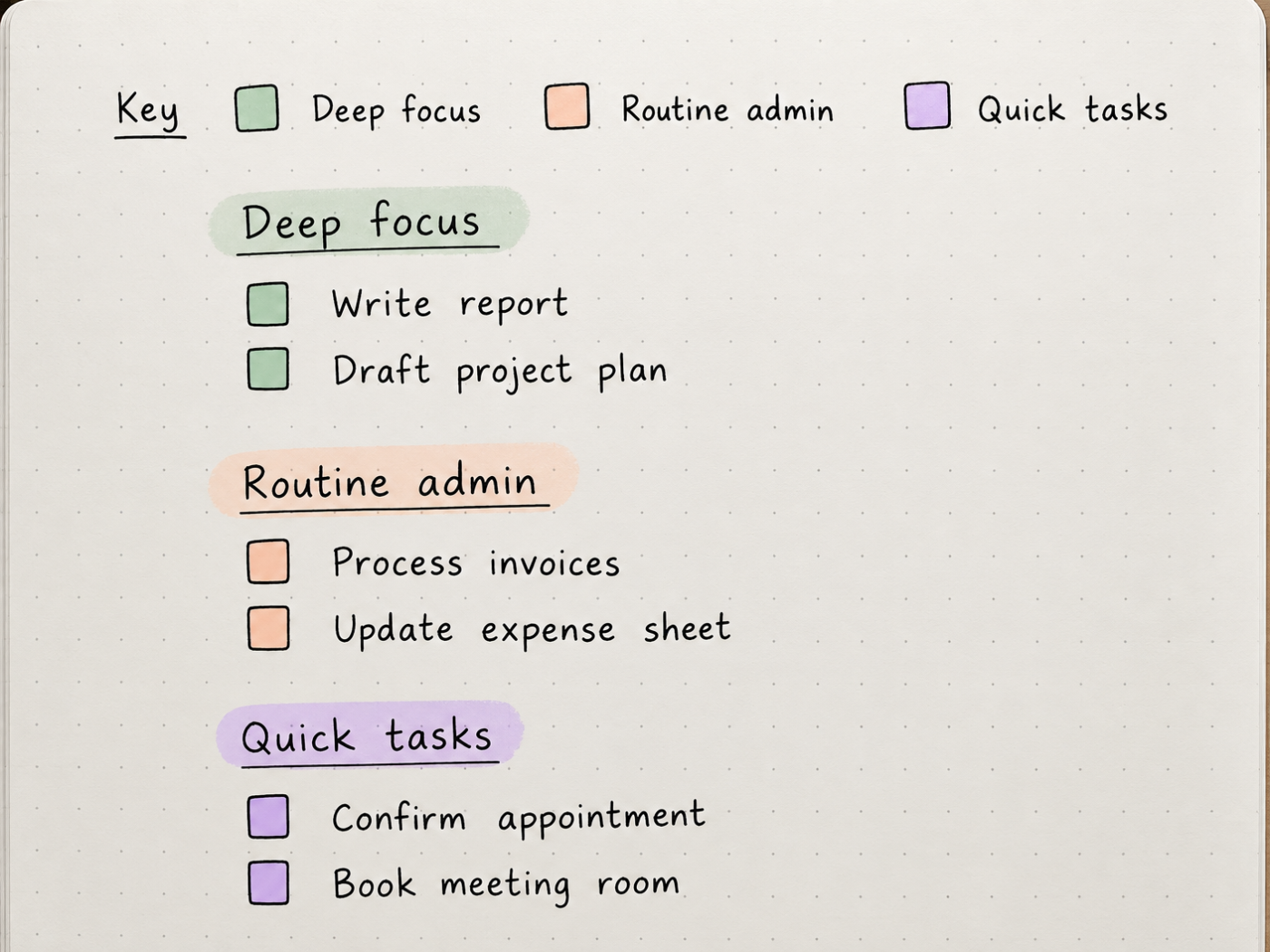
Some tasks need your full attention, while others are easy to handle when you have a few minutes to spare. An energy-coded list helps you tell them apart without having to rethink your entire plan.
Choose three colors and give each one a meaning. For example, sage can represent deep-focus work, peach can mark routine admin, and lavender can highlight smaller tasks that take less effort.
You might use sage for writing a report, peach for processing invoices, and lavender for confirming an appointment. Group the tasks under matching colored headings or mark each checkbox with a highlighter.
When you return to the list, you can pick a task that fits your available time and attention. Add a small color key at the top of the page, especially if you plan to reuse the layout.
Best for: People whose tasks vary in effort and whose concentration changes throughout the day
Skip it if: Your tasks must follow a fixed order, regardless of how much energy you have
A done list gives you a place to record the work you’ve completed, including the things that weren’t part of your original plan.
Split your page into two columns, with “To Do” on the left and “Done Today” on the right. Use matching headers, a soft divider, or a different pastel shade for each column to keep the layout neat.
As you finish a planned task, move it to the right. You can also add unexpected work, like helping a colleague with an urgent request or resolving an issue that came up during the day.
By the evening, you’ll have a record of what you actually finished. This helps on days when urgent requests take up time you planned for something else. For a digital version, create two sections in a notes app or use a task board with separate To Do and Done columns.
Best for: People who handle frequent interruptions or unexpected requests alongside their planned work
Skip it if: You already have a reliable record of completed tasks and don’t want to maintain another list
Why a pretty to-do list can stop working
A beautifully arranged planner can make a busy day feel more manageable. But after a few days, you might notice that you’re spending more time keeping the layout neat than checking things off.
A related concept in design is the aesthetic-usability effect. Researchers first studied it in 1995 and found that people often judged attractive interfaces as easier to use, even when their appearance didn’t reflect how well they worked.
Although the research focused on digital interfaces, it’s a good reminder to check how your planner works once you’ve started using it.
Try reviewing your list after a week. Can you spot your priorities quickly? Is it easy to add unexpected tasks or move unfinished ones forward? If the layout needs constant adjustments, simplify the parts that slow you down while keeping the colors and details you enjoy.
Weekly and monthly to-do lists help you plan beyond the day ahead. You can see upcoming deadlines, organize tasks that don’t have fixed dates, and keep track of goals you’re working toward over time.
The following five layouts use colors, grids, and clear sections to make those plans easier to organize and revisit.
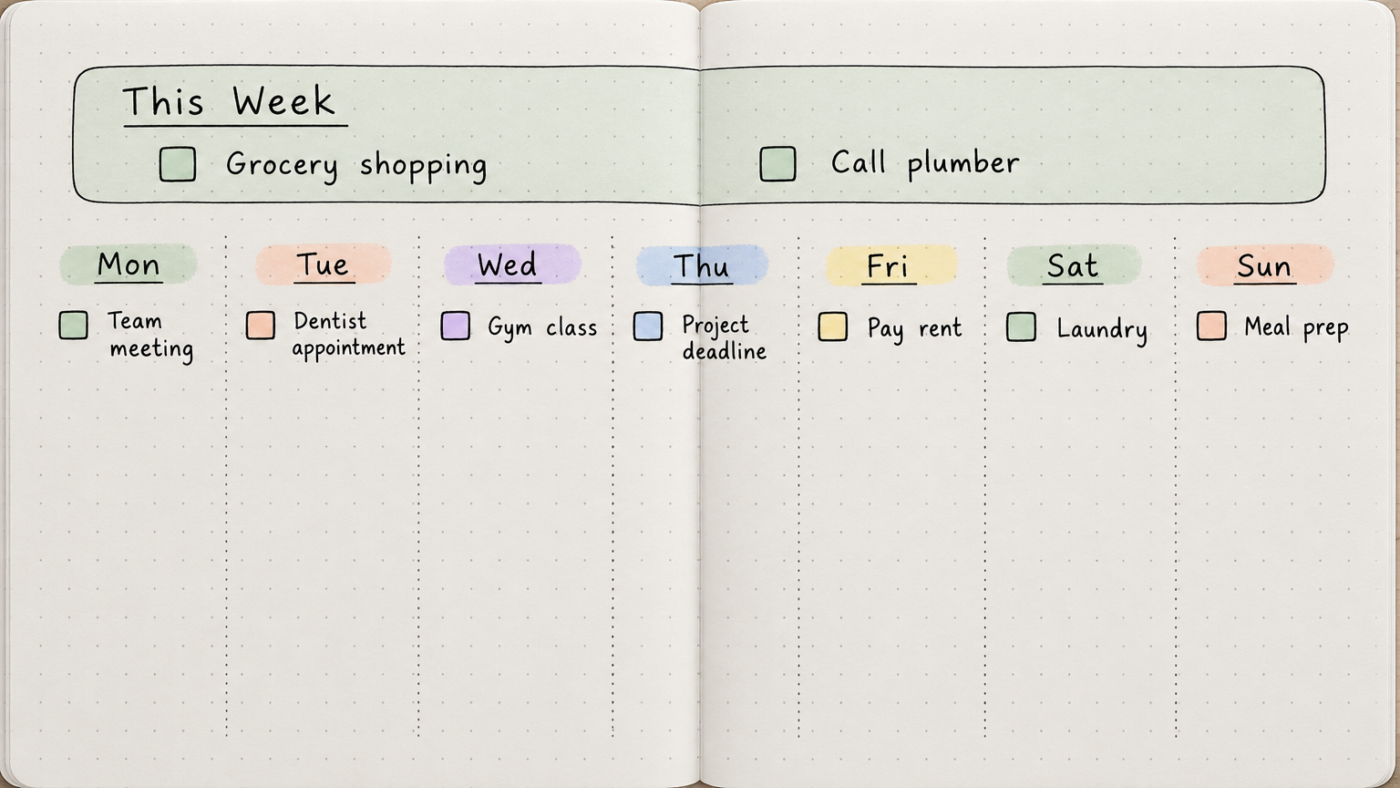
If you like seeing your entire week on one page, a seven-column spread gives every day its own space without losing sight of what’s coming up.
Open a two-page notebook spread and divide it into seven narrow columns, one for each day. Add a wide “This Week” section across the top for tasks you haven’t scheduled yet. Give each day a colorful heading, add small checkboxes beside tasks, and use thin dotted lines to separate the columns.
For example, you might place a dentist appointment under Tuesday, a project deadline under Thursday, and grocery shopping in the weekly section until you decide when to go.
As new tasks come in, you can add them to the right day or keep them in the weekly section until you’re ready to plan them. This also works in a printable planner or a custom weekly layout in Canva.
Best for: People who want to see their weekly commitments and flexible tasks together
Skip it if: You need to manage several detailed tasks each day, and the narrow columns feel too restrictive
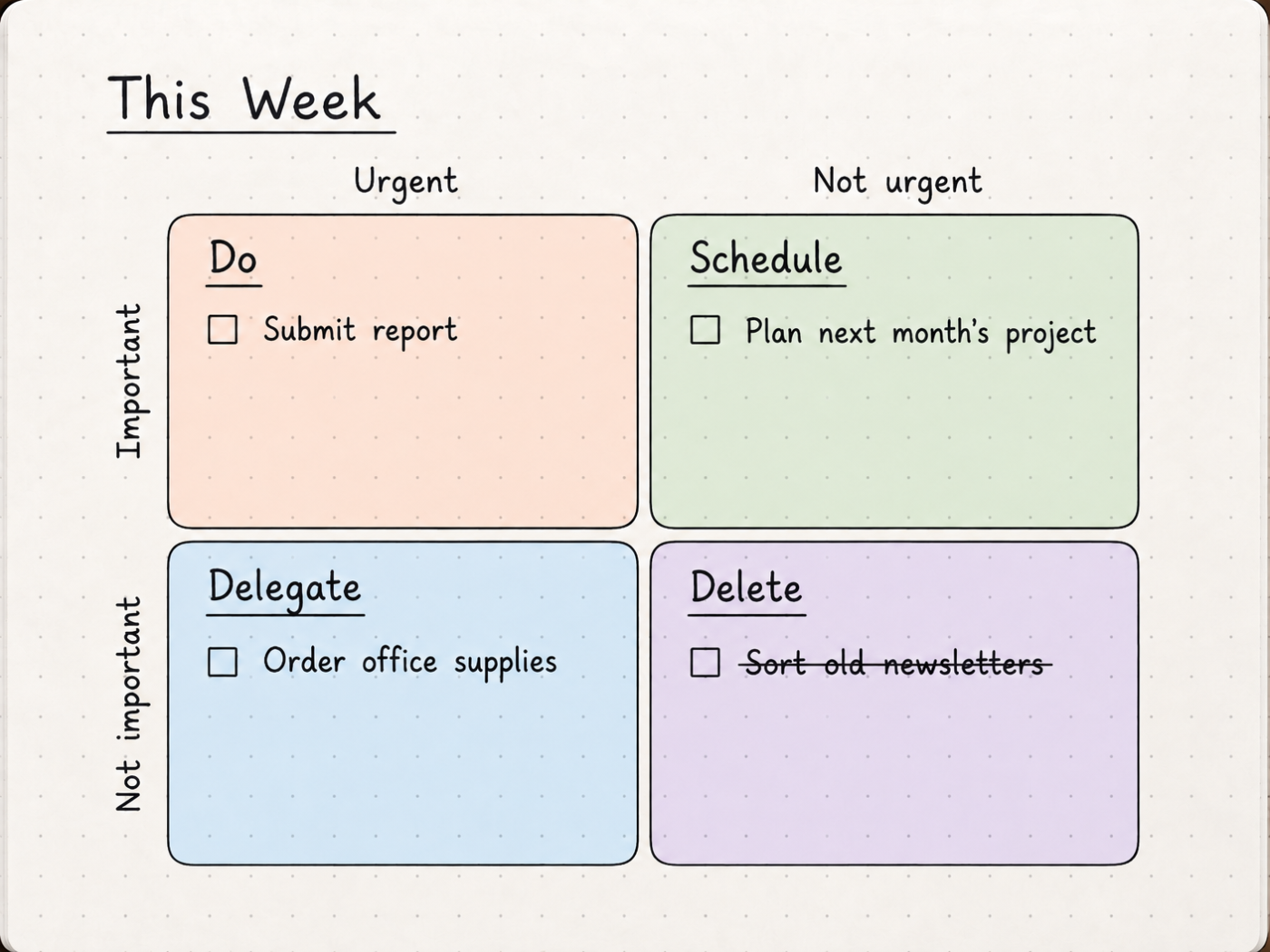
When your weekly list includes everything from urgent deadlines to tasks you’ve been putting off, a pastel priority grid can help you decide where to begin.
The layout follows the Eisenhower matrix, which sorts tasks by urgency and importance. Divide a page into four squares and assign a color to each. Label them:
For example, submitting a report due tomorrow might go in the first square, while planning next month’s project could sit in the second. If you can’t delegate something in the third square, decide when you’ll handle it.
The colored sections make the categories easy to spot when you review your week. You can draw the grid in a notebook or customize one of these prioritization templates for a digital version.
Best for: Students, managers, and professionals who need to sort competing priorities before planning their week
Skip it if: Your tasks already follow a fixed schedule, and you have little room to change their order
Some weeks are easier to plan when similar tasks have a day of their own. Theme days let you give each day a focus, along with a color that helps you recognize it in your planner.
You might keep Mondays for admin, Tuesdays for creative work, Wednesdays for meetings, Thursdays for deep-focus tasks, and Fridays for reviews. Use matching highlighters, colored headers, or small illustrations to make each theme stand out.
Under each day, add a short checklist of tasks that fit its theme. For instance, your admin day might include processing invoices, updating records, and following up on pending requests.
You don’t have to reserve an entire day for one type of work. If you’ve already got meetings or other commitments, assign a theme to the hours you can control. Recreate this layout in a weekly notebook spread or use recurring, color-coded blocks in a digital calendar.
Best for: Freelancers, creators, and professionals who regularly switch between different kinds of work
Skip it if: Your schedule changes frequently and you have little control over when tasks need to happen
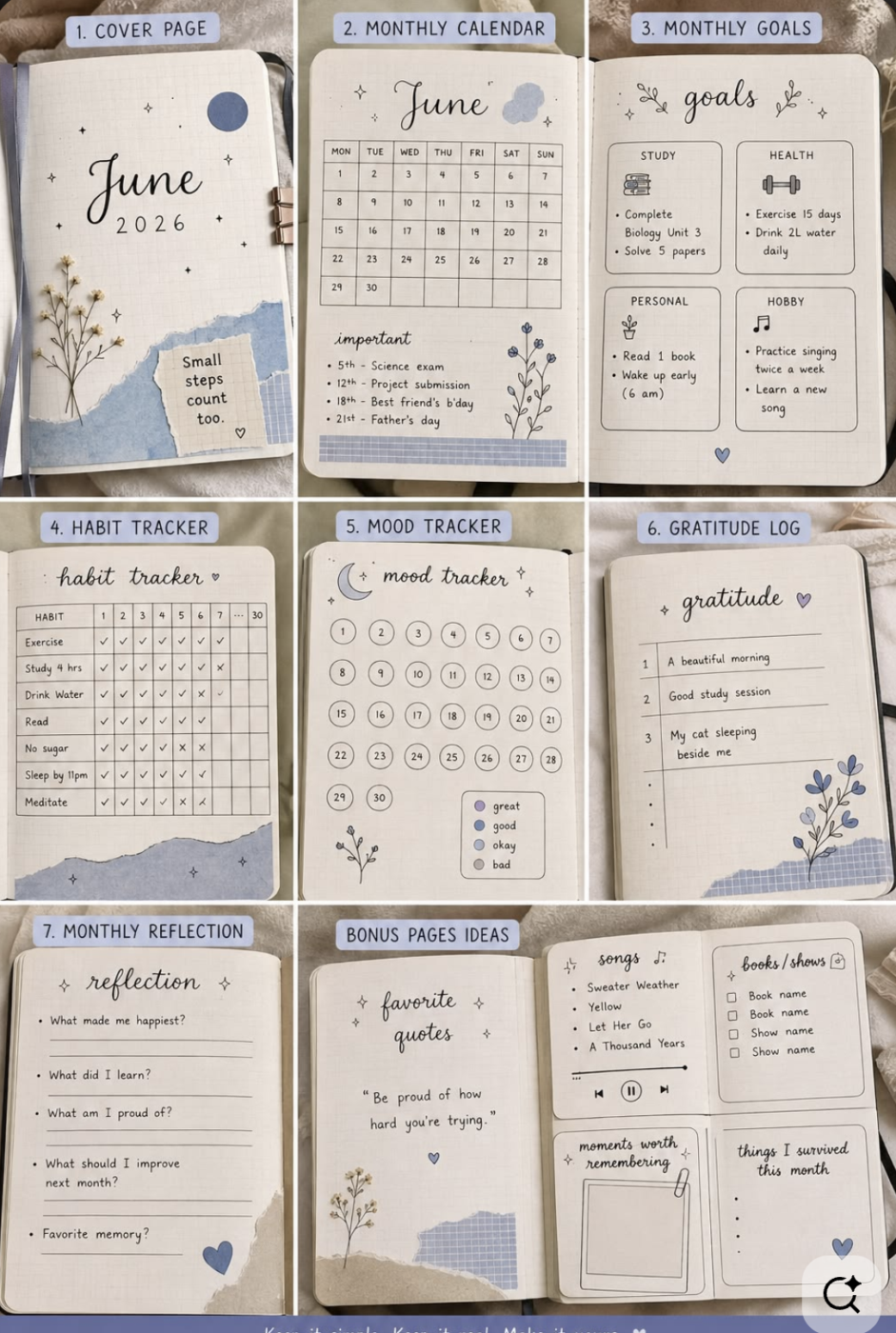
A monthly goals page gives you a place to plan the smaller tasks behind something you want to achieve over the next few weeks.
Divide your page into three sections, each with a goal at the top and a short checklist underneath. You can use pastel borders, handwritten headings, or small progress bars to give every goal its own visual space.
Say one of your goals is to refresh your portfolio. Your checklist might include choosing three recent projects, updating their descriptions, and publishing the changes. Another section could cover a personal goal, such as planning a trip or finishing a book.
As you complete each task, check it off or fill in part of the progress bar. You can also leave a little space under each section for notes or tasks that come up during the month.
A dot-grid notebook works well for this layout, though you can build the same structure in a digital document.
Best for: People working toward personal or professional goals that involve several smaller tasks
Skip it if: You mainly need to track daily appointments and deadlines, which are easier to manage in a calendar
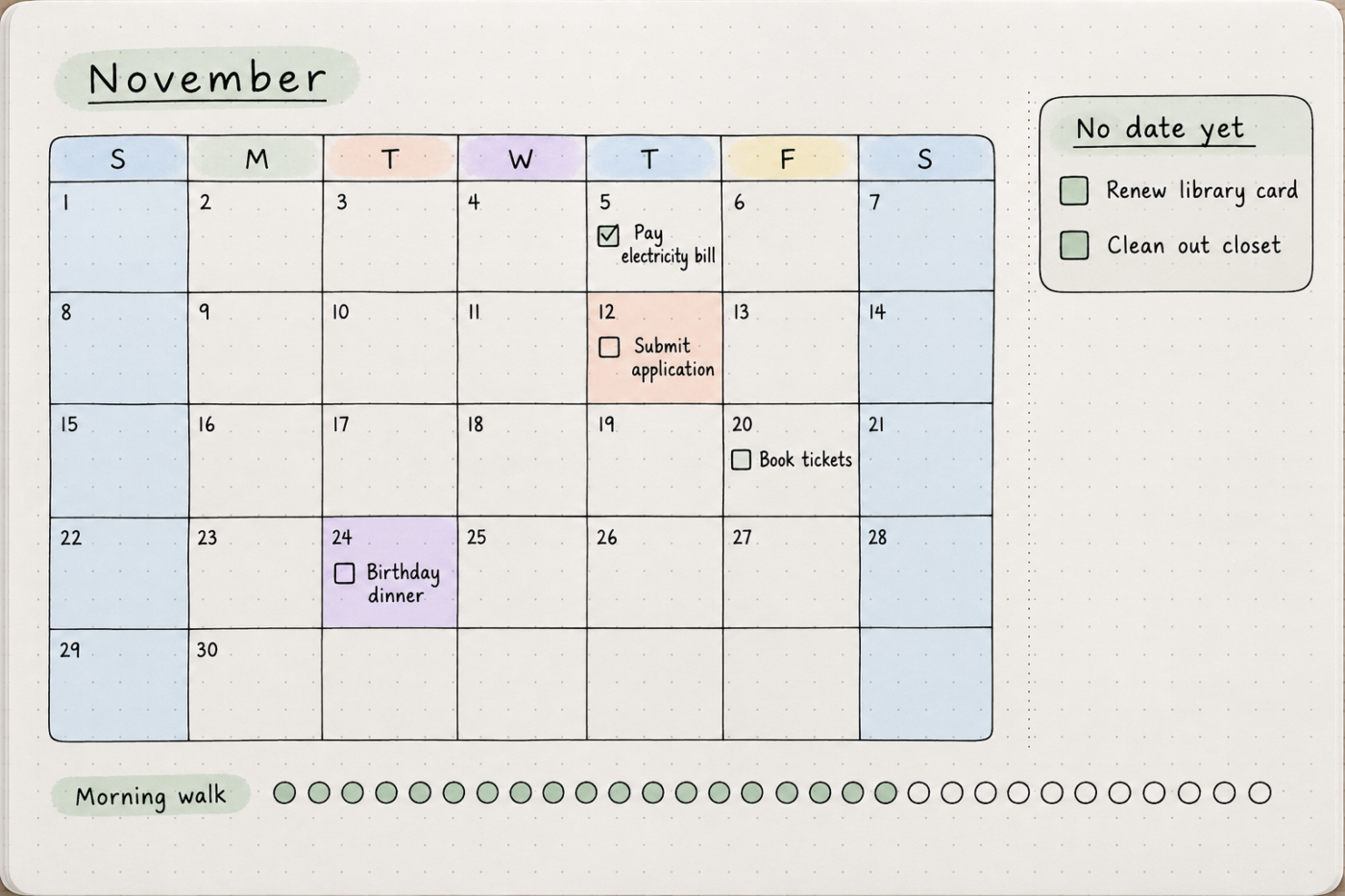
A monthly checklist calendar works well when your tasks are spread across different dates, and you want to see them all at a glance, without flipping through your daily planner.
Draw a calendar grid for the month, with a small box for each date. Use soft colors for weekends, important deadlines, or personal events, and leave room inside each square for a short task or checkbox.
For example, you might add “Pay electricity bill” on the 5th, “Submit application” on the 12th, and “Book tickets” on the 20th. Check off each task as you finish it, and keep a small list beside the calendar for things that don’t have a fixed date yet.
You can also add a narrow habit tracker along the bottom if you’re working on a daily routine. Fill in a dot or square each day you complete it, using the same color palette as the calendar.
Best for: People who want a visual overview of monthly deadlines, errands, and recurring responsibilities
Skip it if: You have several tasks due each day and need more space for details or notes
Bullet journals give you the freedom to create a to-do list that feels personal, whether you prefer simple handwritten layouts or pages filled with colors and illustrations. You can also use symbols, tabs, and visual markers to organize tasks and track progress without constantly rewriting your lists.
Here are three ways to bring those details into your bullet journal.
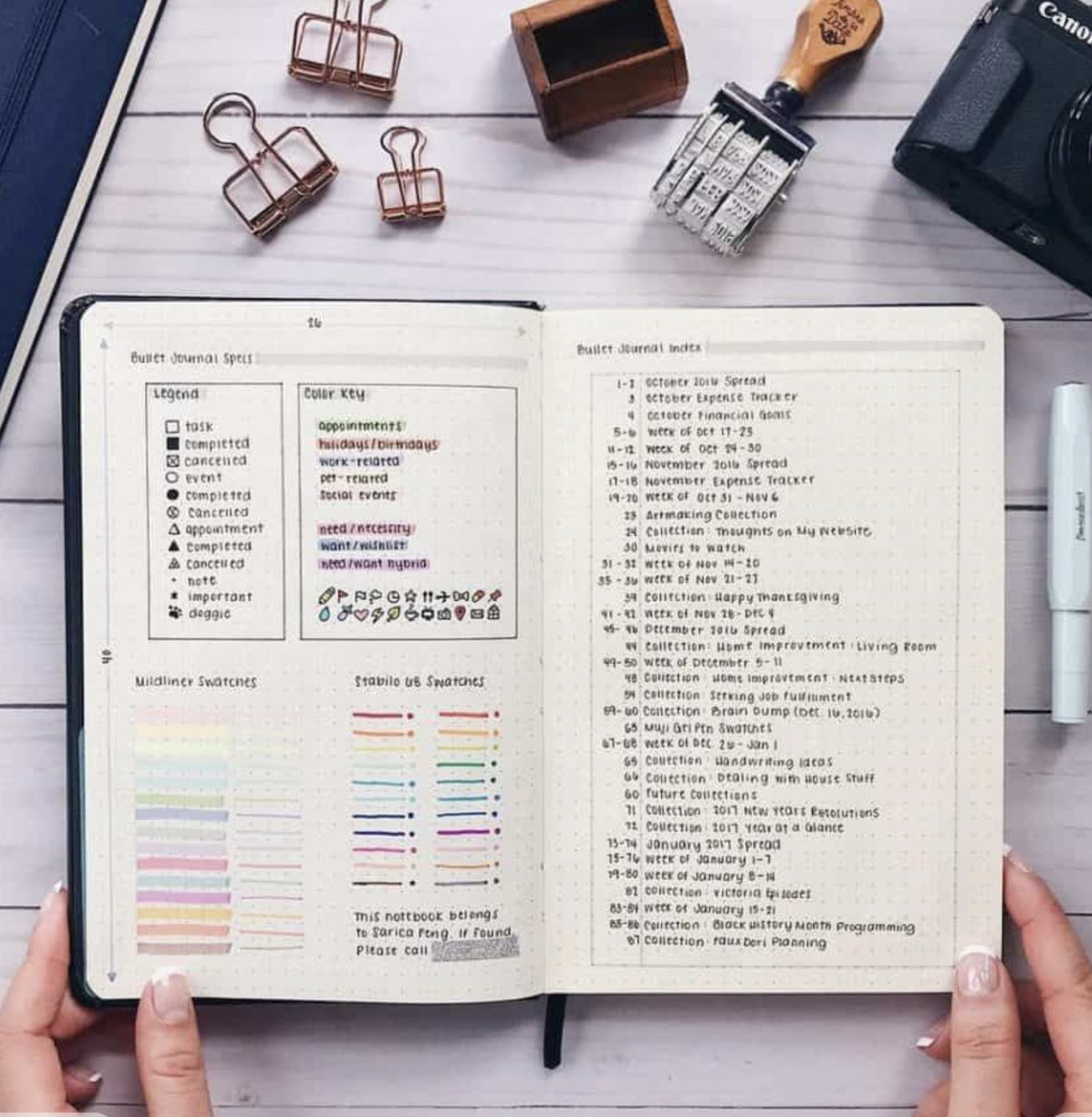
If you want a to-do list that’s easy to update throughout the day, rapid logging gives you a way to track tasks using a few simple symbols.
Developed by Ryder Carroll as part of the Bullet Journal method, the system uses a dot for an open task, an X for a completed task, a right arrow for a task migrated to another collection or the next monthly log, and a left arrow for something scheduled in the future log.
Start with a clean notebook page and write each task on a separate line. You might mark “Submit the expense report” with a dot in the morning, then turn it into an X when you finish. Add a small asterisk beside tasks that need priority attention.
For a more aesthetic layout, use a fine-tip pen for the symbols, soft-colored headings, and a narrow margin for important notes. Keep the same symbol key across your pages, since consistency makes it easier to review unfinished tasks later.
For more ways to organize larger projects with this method, explore this guide to bullet-journal project management.
Best for: People who prefer handwritten planning and want a clear record of completed, scheduled, and unfinished tasks
Skip it if: You rely heavily on automatic reminders, shared assignments, or notifications for upcoming deadlines
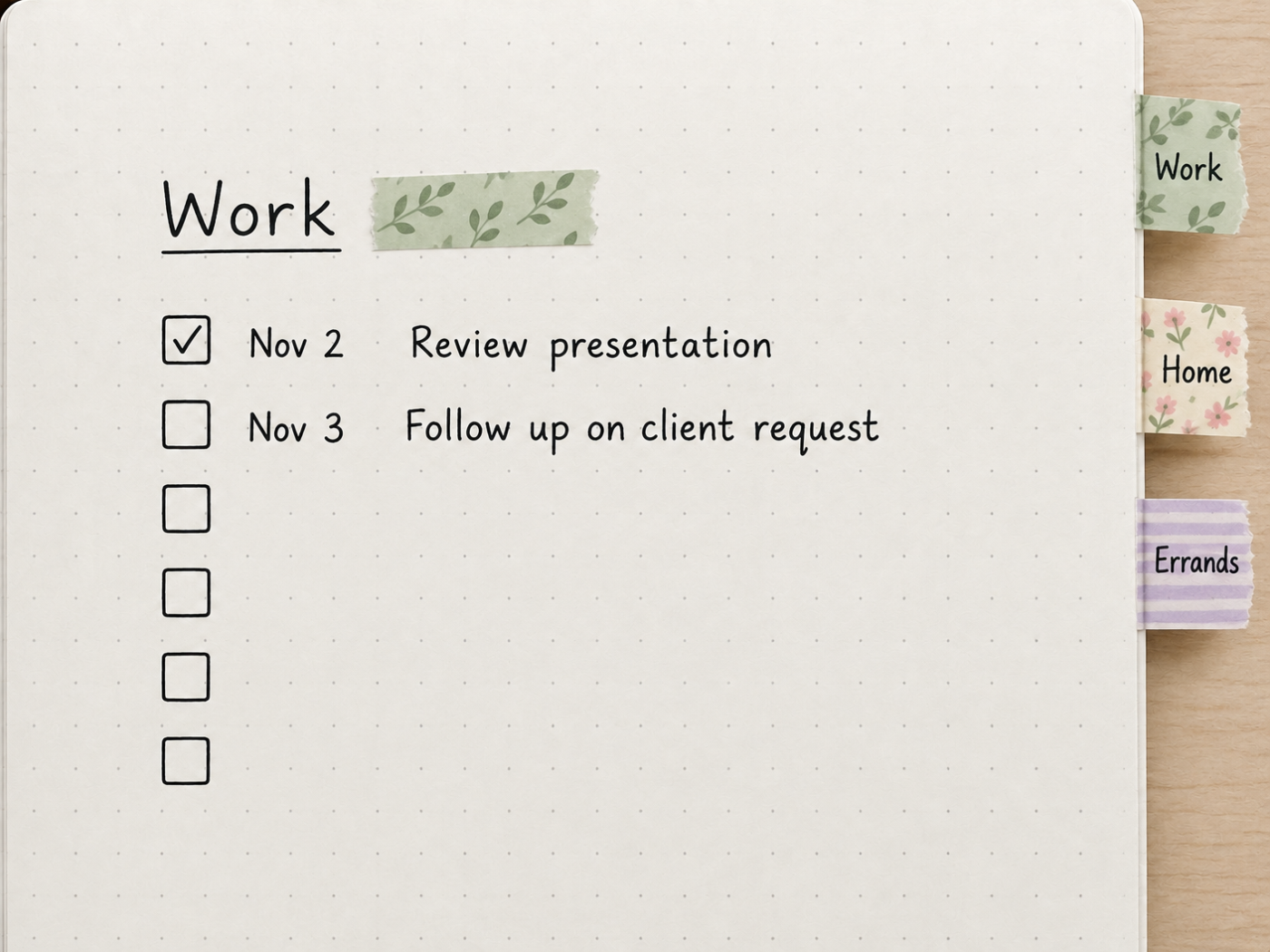
When you use one notebook for work, errands, personal plans, and everything in between, washi-tape tabs can help you keep those lists separate and easy to find.
Start by giving each category its own section. For example, use sage-patterned tape for Work, floral tape for Home, and striped tape for Errands. Place a small strip along the outer edge of the first page in each section, leaving part of it visible as a tab.
Inside each section, create a running checklist with dated tasks and enough space to add new ones. Your Work section might include reviewing a presentation and following up on a client request, while the Errands section could hold grocery shopping and parcel pickups.
As the notebook fills up, the patterned tabs make it easier to return to the right list without searching through every page. You can also create a small category key inside the front cover.
Best for: People who maintain several personal and professional lists in the same notebook
Skip it if: You prefer keeping everything in one short daily list and rarely need to revisit older pages
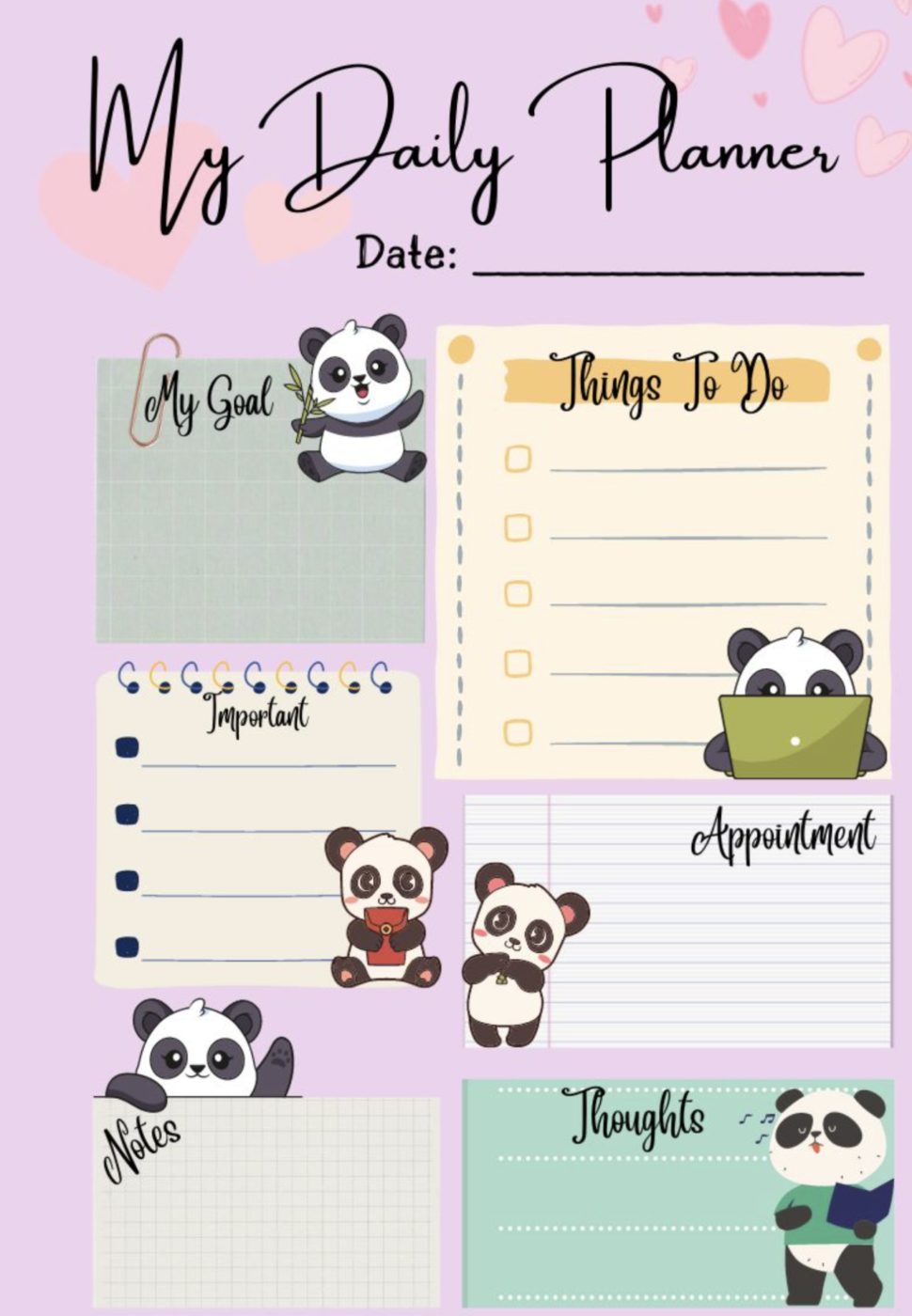
Small doodles and stickers can give a handwritten to-do list more character while making different types of tasks easier to recognize.
Choose a few simple illustrations that match your usual activities. Draw a tiny envelope beside emails, a book beside study tasks, and a shopping bag beside errands. Use the same icons throughout your planner, keeping them small enough to sit beside a checkbox.
For example, a daily list could include “Reply to the client” with an envelope, “Read chapter four” with a book, and “Pick up groceries” with a shopping bag. The illustrations help separate categories even when everything appears on the same page.
If you prefer stickers, choose a matching set with a consistent color palette or illustration style. You can also combine handwritten headings with small decorative borders to give the page a more finished look.
Keep a simple icon key on the first page, particularly if you use several categories. That way, the drawings remain easy to understand when you return to an older list.
Best for: Visual planners who enjoy adding illustrations and personal details to their daily checklists
Skip it if: You prefer plain-text lists or find that maintaining the illustrations takes too much time
Digital to-do lists offer plenty of room for visual customization, from dark themes and color-coded cards to widgets that keep your tasks within reach. They also help you update deadlines, move tasks between stages, and carry unfinished work into the next day.
Here are four layouts that combine those features with a clean, consistent design.
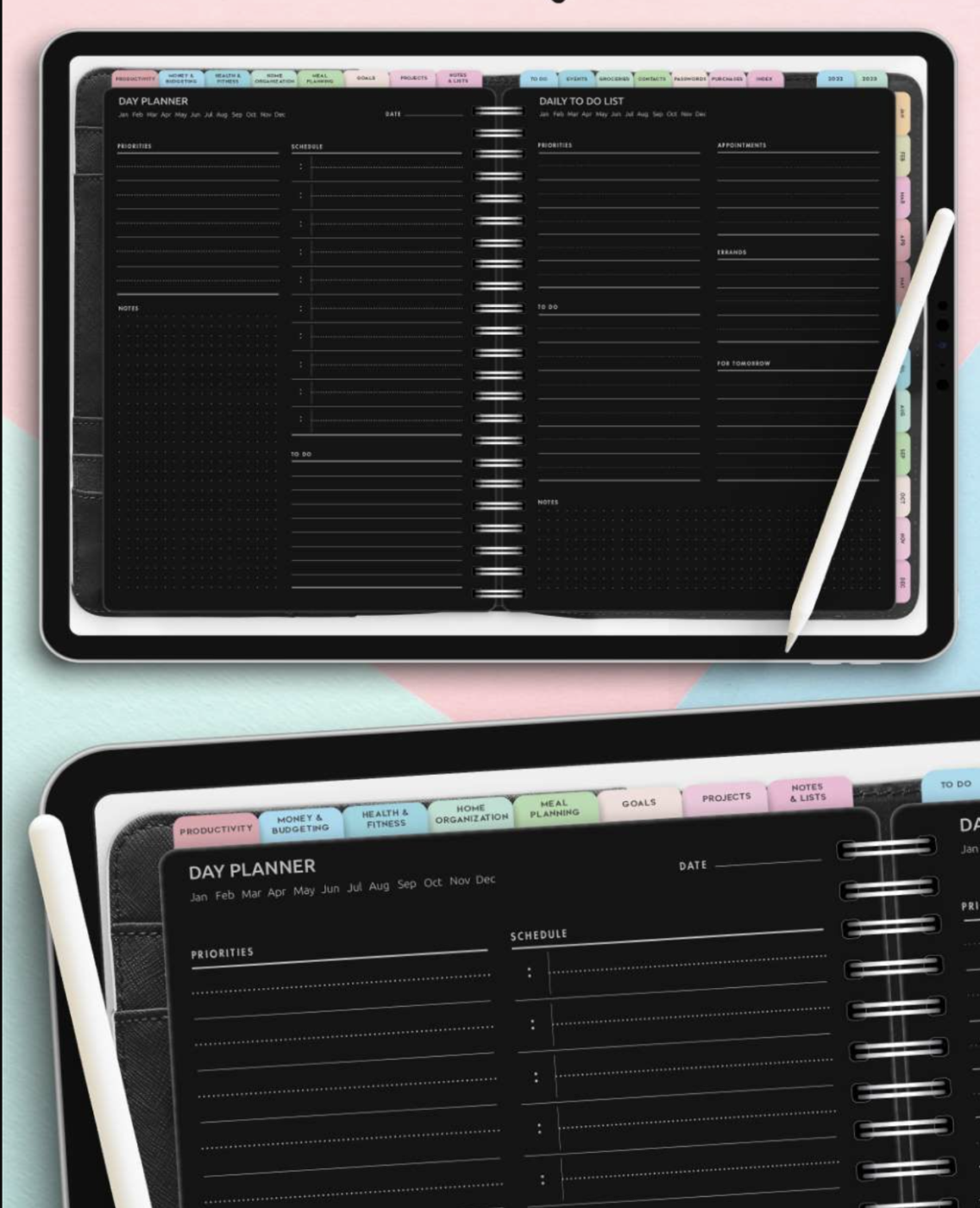
A dark-mode to-do list works well if you prefer a simple interface with fewer decorative elements and a consistent color palette.
Start with a task app that supports dark mode and organize your list into a few sections, such as Today, Upcoming, and Completed. Use one accent color for high-priority tasks and neutral shades for the rest, keeping task names easy to read.
For example, you could highlight “Send the final proposal” with a muted purple priority label while keeping routine tasks in a standard list underneath. Clear headings and consistent spacing will help you separate the sections without adding more colors.
You can also match your app’s theme with your desktop or phone wallpaper for a more cohesive look. Just make sure the text remains readable against the background, especially when using softer shades.
Best for: People who prefer minimal digital layouts and want their priorities visible without too many visual elements
Skip it if: You enjoy highly illustrated planners or need extensive visual customization beyond the app’s available themes
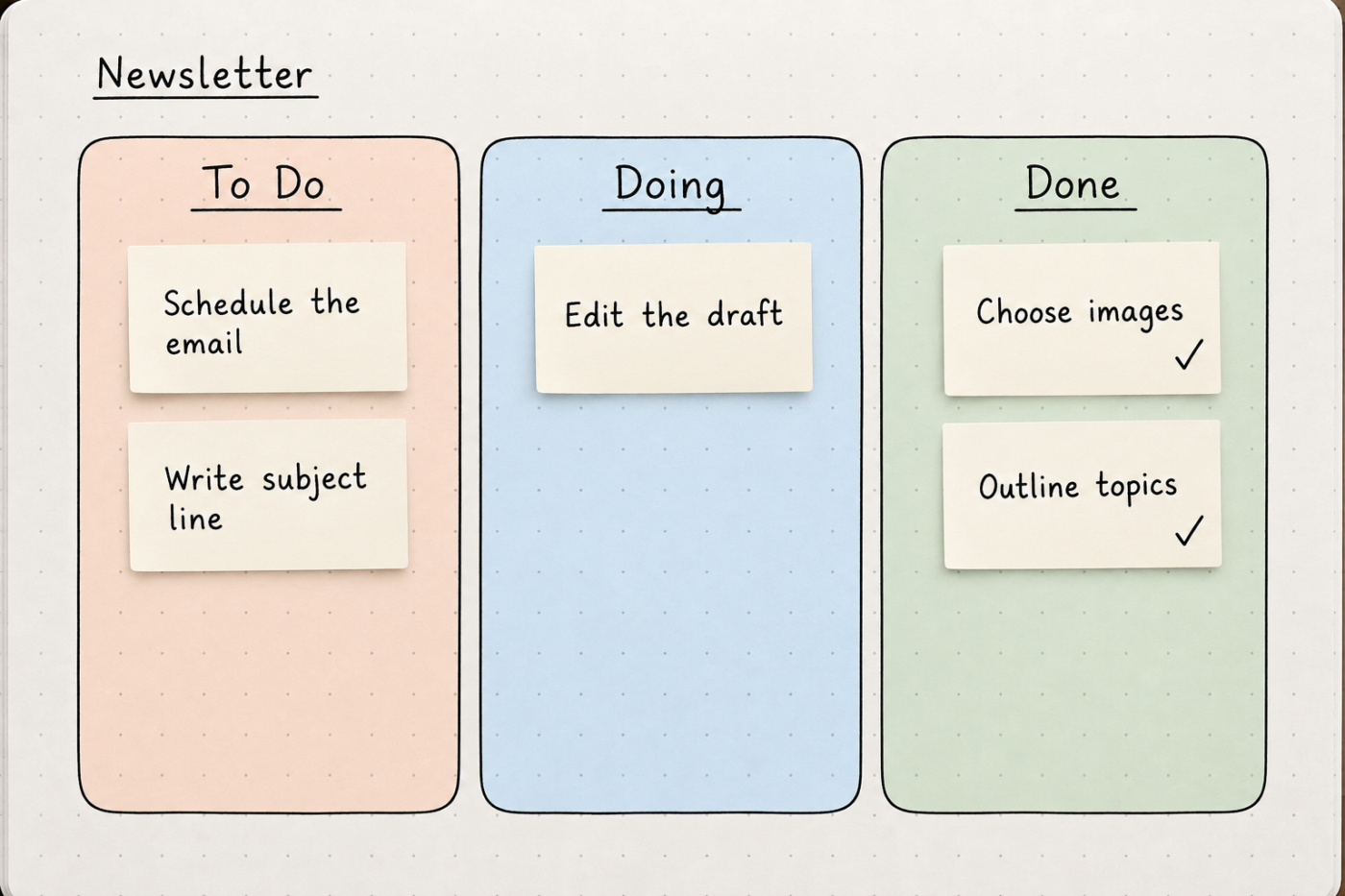
A mini Kanban board turns your to-do list into a set of cards that move through different stages as you work.
Create three columns labeled To Do, Doing, and Done. Give each column a soft background color or use colored labels on individual cards. Each card should represent a task you can move forward as its status changes.
For example, if you’re preparing a newsletter, “Choose images” might be in Done, “Edit the draft” in Doing, and “Schedule the email” in To Do. Moving the cards across the board gives you a better picture of what’s finished and what still needs attention.
You can recreate this layout with sticky notes on a board or use a digital task app with a Board view. For a cleaner layout, keep only the tasks you’re actively working on in the Doing column and leave upcoming work in To Do.
Best for: Visual planners and people managing personal projects with several tasks or stages
Skip it if: Your list mainly contains quick, unrelated tasks that are easier to check off than move between columns
If your to-do list includes several creative projects or plans, gallery cards let you organize them using images that make each one recognizable.
In a tool like Notion, create a gallery and add a card for each project. Choose a cover image that represents the work, then add a checklist inside the card for the tasks you need to complete.
For instance, a travel planning gallery could have separate cards for transport, accommodation, and activities, each with a relevant cover image. Opening the accommodation card would reveal tasks like comparing hotels, checking cancellation policies, and confirming a reservation. You can also display a status or due date on each card. That’ll give you an overview of progress without opening each project.
Best for: Creative projects, travel planning, reading lists, and other activities that benefit from images and detailed checklists
Skip it if: You mainly track small daily tasks and need to check them off as quickly as possible
A home screen widget keeps your to-do list visible without requiring you to open a planning app whenever you want to check your next task.
Start by creating a short daily list in an app that supports widgets. Then add its widget to your phone’s home screen and choose which tasks or list you want to display, depending on the app’s available settings.
You can create a Today list in Apple Reminders with tasks like submitting an assignment, picking up a parcel, and scheduling an appointment. Add the Reminders widget to your iPhone home screen, then select the list you want to see. Choose a widget size and placement that fit your home screen layout.
With a supported interactive widget, you can also check off completed tasks directly from the home screen.
Best for: Phone-first planners who want to keep a short list of daily tasks within easy reach
Skip it if: You prefer keeping work tasks separate from your phone’s home screen or need more room for detailed planning
When your tasks involve classes, deadlines, or other people, a simple checklist can leave out important details. Due dates, subject labels, and task owners all need a clear place in your layout.
These four ideas bring those details into focus while leaving space for colors, clean typography, and other personal touches.
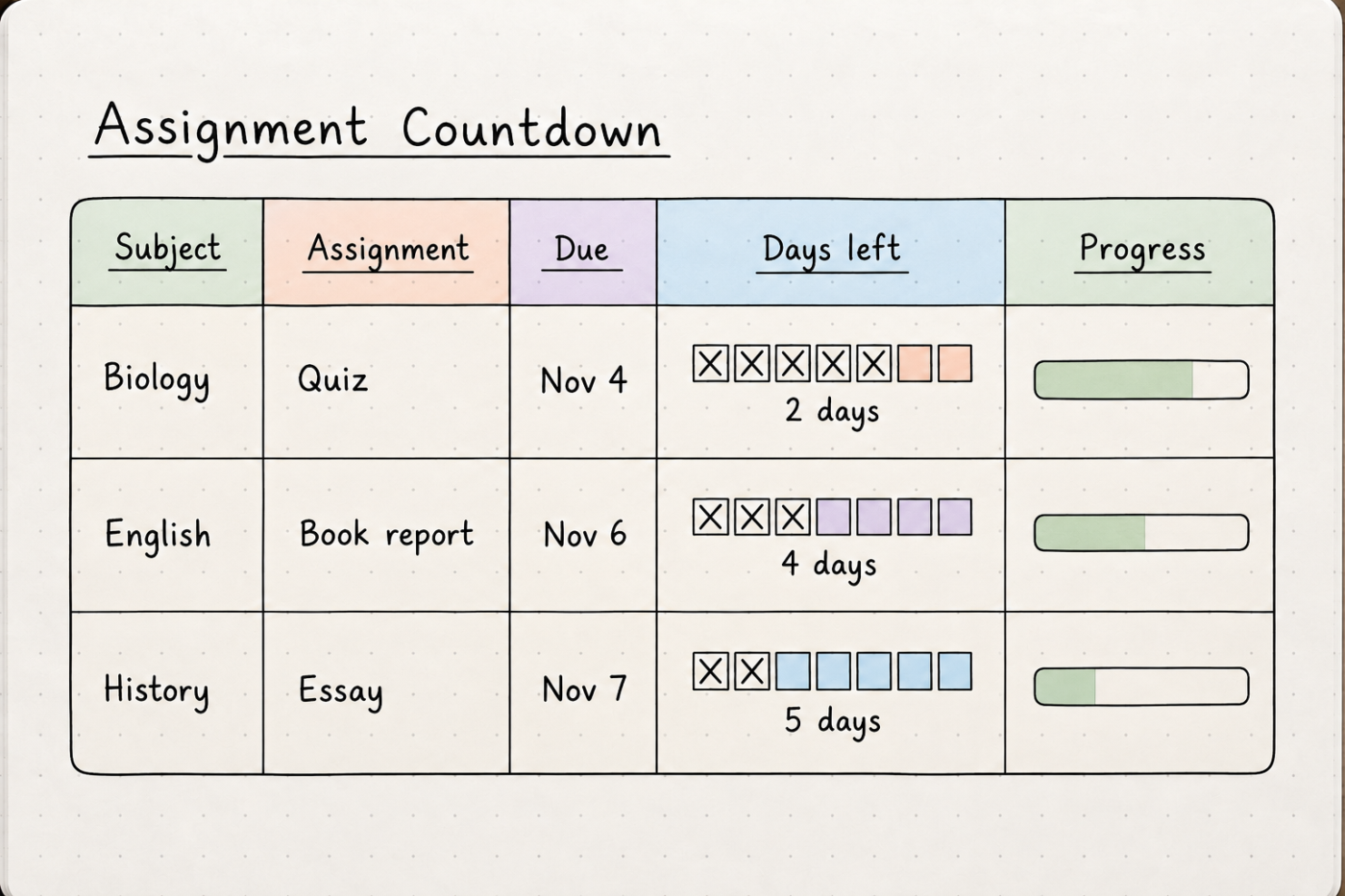
When you have several assignments due in the same week, an assignment countdown gives you a visual reminder of how much time is left to complete each one.
Create a tracker with a separate row for every assignment. Include the subject, task name, due date, and a small countdown bar divided into days. You can shade the remaining days in pastel colors or cross off one segment as each day passes.
For example, your tracker might show a biology quiz with two days left and a history essay due in five days. Add a checkbox or progress indicator beside each assignment to track how much work you’ve completed, since a deadline countdown alone won’t show that.
Arrange the rows by due date, keeping the nearest deadlines at the top. You can draw the layout in a notebook or use a printable tracker with colored progress bars.
For more digital planning options, explore these organization tools for students.
Best for: Students managing assignments, exams, and coursework across multiple subjects
Skip it if: Your assignments have several stages or dependencies that need more detailed tracking
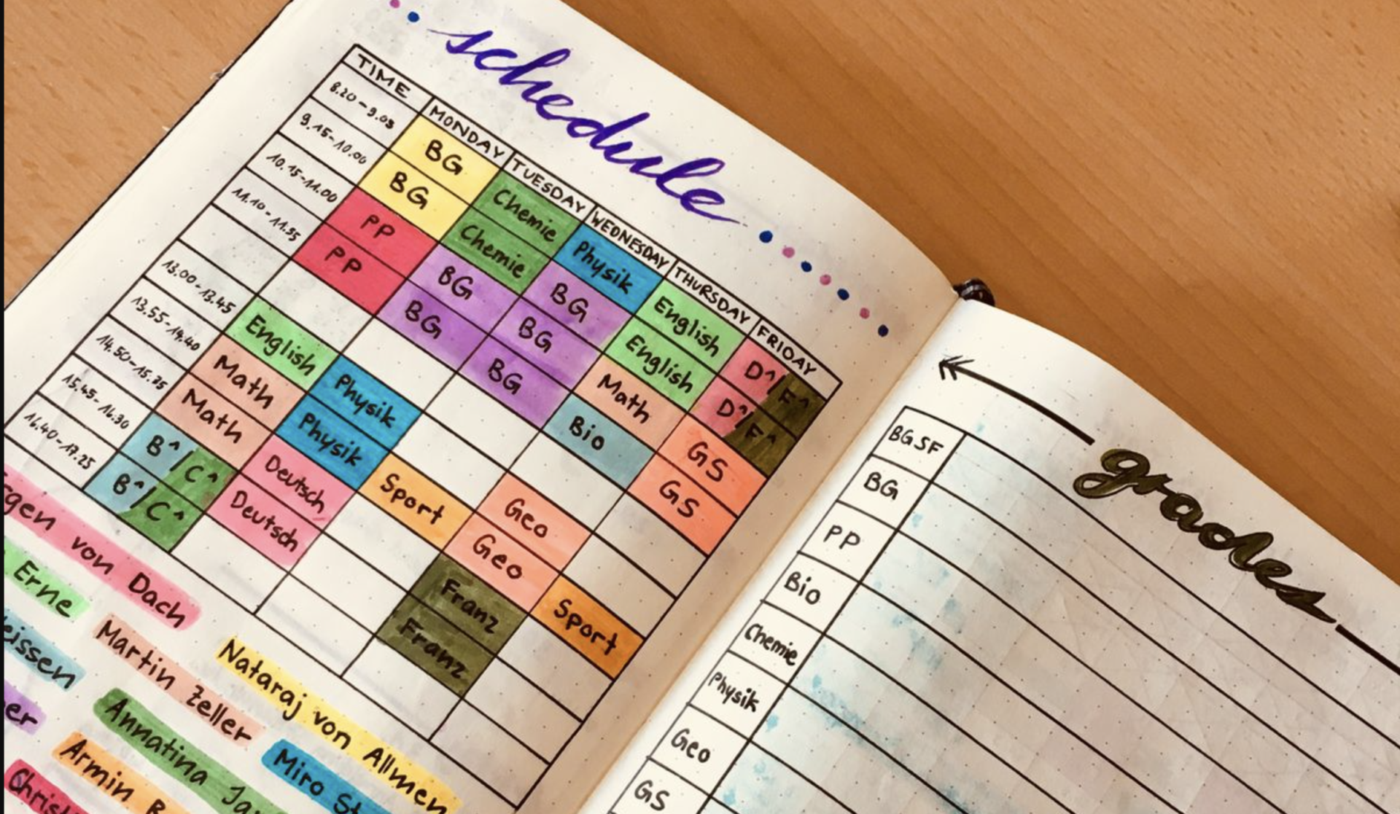
If you maintain separate notes and assignments for different subjects, using a consistent color for each one can bring some order to your study routine.
Choose a color for every subject and carry it across your notebooks, planner, and to-do list. For example, you might use blue for physics, orange for history, and yellow for mathematics.
Divide your checklist into subject-based sections with matching colored headers. Under each one, write the tasks you need to complete, along with their deadlines. Your history section might include reading a chapter, preparing presentation notes, and submitting an essay.
You can also use colored page tabs, highlighters, or small subject icons to keep the design consistent. If you prefer digital planning, apply the same colors to your task categories and calendar events. This guide to color coding Google Calendar covers the calendar setup.
Best for: Students who manage coursework across several subjects and want a consistent visual system
Skip it if: You primarily plan by deadline and need to see assignments from every subject in one chronological list
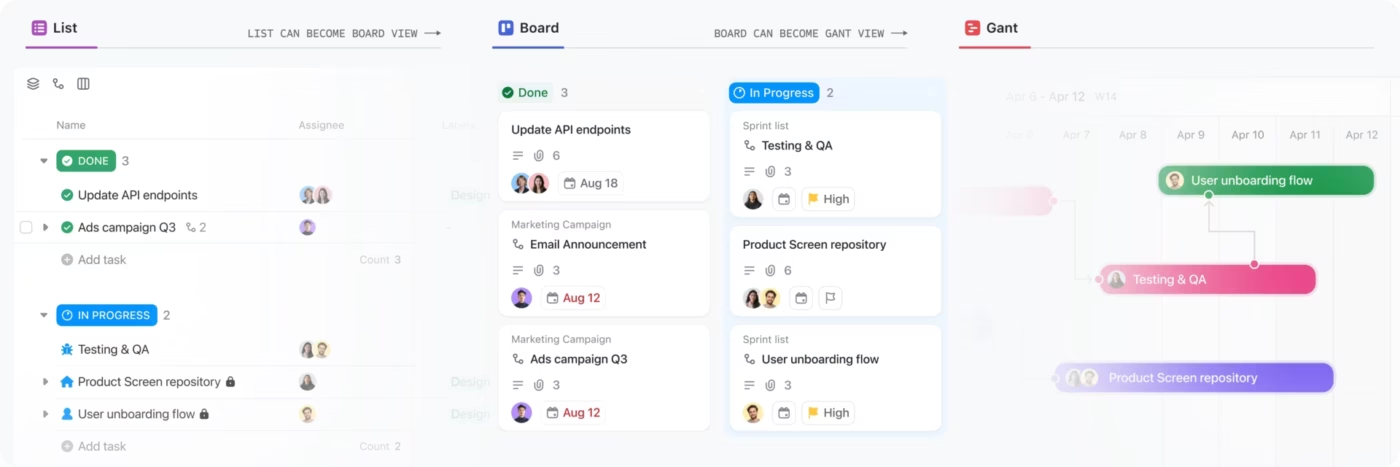
A shared checklist is best for tasks involving multiple people, especially when everyone needs to know what’s assigned to them and when it’s due.
Use a clean table layout with four columns: Task, Owner, Due Date, and Status. You can add soft-colored headers, subtle row dividers, and small status labels to keep the information organized without crowding the page.
For example, if your team is preparing a webinar, the checklist might include drafting the invitation email, reviewing the presentation, testing the registration link, and scheduling reminder emails. Assign each task to a specific person and give it a deadline.
As work progresses, update the status or check off completed items. For tasks that need a review, you can also add a short note or link to the relevant document.
A shared document works for smaller projects, while a task management app gives you dedicated assignees, deadlines, and status updates.
Best for: Small teams coordinating events, campaigns, or projects with clearly assigned responsibilities
Skip it if: Your work involves complex dependencies, changing timelines, or multiple approval stages that need a full project plan
A project kickoff checklist brings the key preparation, discussion points, and follow-up tasks into one organized page.
Divide your checklist into three sections: Before, During, and After the kickoff meeting. Give each section a soft color band, then add checkboxes beneath the headings. Use thin dividers and a small project title at the top to keep the layout consistent.
The three sections might include:
Say you’re launching a new website. Your checklist might include reviewing the sitemap before the meeting, confirming design responsibilities during the discussion, and assigning the first round of deliverables afterward.
You can create this layout in a notebook, shared document, or digital checklist. For a more decorative starting point, browse these cute checklist templates and adapt one to your kickoff process.
Best for: Project leads and small teams preparing for a kickoff meeting and organizing immediate next steps
Skip it if: Your team already follows a detailed, standardized kickoff process with the same tasks and approvals
Start with the tasks you need to plan and a format you enjoy using, whether that’s a notebook or a digital planner. Then build your layout around those tasks, with space for priorities, deadlines, and notes.
Here’s how to put it together.
Choose whether your list will cover a day, a week, or a month. This helps you work out how much space to leave and which details to include.
For a daily checklist, leave room for tasks, checkboxes, and quick notes. Divide a weekly spread into days and use a monthly layout to track deadlines and recurring commitments.
Give longer-term ideas their own section until you’re ready to schedule them.
Write down your tasks, then pick the ones that need your attention first.
You could put your top three priorities in a box, highlight upcoming deadlines, or group tasks by importance. Keep the remaining items in a checklist and leave a little space for work that comes up during the day.
Your priorities should be easy to spot when you glance at the page.
Pick a few colors you like and give each one a purpose. You might use them to group tasks by category, mark priorities, or show progress.
Keep those meanings consistent. Add a small color key near the heading, and include written labels so you can tell categories apart at a glance.
Then add a few details that suit your style, such as a favorite font, a simple border, or patterned dividers. Leave enough space around your tasks to keep the page easy to read.
Choose a few symbols to show where each task stands. An empty checkbox for pending work, a check mark for completed tasks, and an arrow for rescheduled items are enough to start.
Use the same symbols beside each task and update them as you go. If a task has several steps, try a small progress bar or give each step its own checkbox.
Try your list for a few days, including a busy one. Check whether deadlines are easy to find, there’s room for new tasks, and unfinished items keep carrying over.
Use what you notice to make small changes. Expand sections you use often, move key details closer to the top, or simplify decorations that crowd the page. If tasks keep rolling over, check whether you’re planning more than you have time to do.
You can refresh the colors or illustrations anytime. Keep the parts that help you plan your day, and adjust the rest to suit your style.
| Medium | Best for | Strength | Where it taps out |
|---|---|---|---|
| Paper notebook | Bullet journals, daily lists | Tactile and satisfying to cross off | Hard to search, easy to lose loose pages |
| Printable (Canva or PDF) | Weekly spreads, habit grids | Same layout every time, quick to start | Gets reprinted each week, no reminders |
| Notes and template apps (Notion, GoodNotes) | Gallery cards, digital planners | Flexible design, searchable | Reminder support varies by app; in Notion, configure reminders with @remind or a database Date property |
| Task apps (Todoist, Apple Reminders, ClickUp) | Daily lists, shared checklists | Reminders, recurring tasks, sharing | Less room for hand-drawn style |
Many people use two of these at once. A common split is paper for the daily top three and a task app for anything with a date.
Also Read: To-Do List Apps
Many of the ideas we’ve explored can work together in a digital planner. You could borrow the color coding from a study checklist, the priority markers from a daily list, and the progress tracking from a Kanban board, all without maintaining separate versions of your tasks.
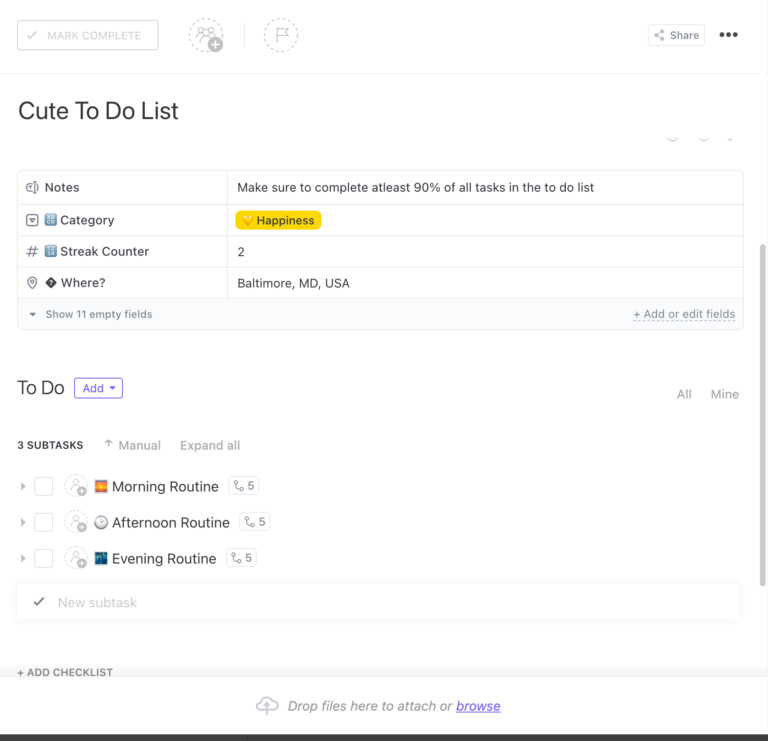
ClickUp brings these options into one workspace, where you can customize how tasks appear, switch between layouts, and keep deadlines and other details connected as your plans change.
The ClickUp Daily To-do List Template is a good place to begin. It includes three Custom Fields: Category, Where, and Streak Counter, plus customizable task statuses and views.
Here’s how to give it your own style:
There’s still room for the handwritten side of planning. ClickUp focuses on structured layouts, task details, and collaboration, while paper planners or digital handwriting apps offer more freedom for lettering, illustrations, and decorative spreads.
Best for: People who want customizable digital checklists with reminders, recurring tasks, and shared responsibilities
Skip it if: Your ideal planner involves freehand drawing, handwritten notes, and extensive decorative elements
There’s something satisfying about a planner that looks exactly how you want it to. Maybe that’s a carefully arranged weekly spread, a notebook filled with small illustrations, or a digital checklist with everything in its place.
Whatever you choose, the real test comes when the week gets busy. You should still be able to find what needs attention, account for unexpected work, and see what you’ve accomplished. A little creative freedom makes the process more enjoyable, and a thoughtful layout keeps it practical.
And if your plans involve moving deadlines, recurring commitments, or tasks shared across a team, try ClickUp for free and bring them together in a workspace you can organize your way.
Write specific actions you can complete, such as “Send the revised budget to Priya” or “Book a dentist appointment.” Break larger tasks into smaller steps and add due dates where needed. For instance, “Update portfolio” could become “Choose three writing samples” and “Rewrite project descriptions.” Keep broader goals in your monthly planner and bring the next actions into your daily checklist.
Start with a simple layout and focus on typography, spacing, and color. Use matching headings, thin borders, and neatly aligned checkboxes for a consistent look. Printable templates and digital planners with preset themes are also good options if you prefer working with a ready-made design.
Canva offers customizable checklist designs that you can edit and print, although some templates and design elements require a paid plan. Notion also has free community templates for personal planning. For a digital checklist with deadlines and task tracking, try the ClickUp Daily To-Do List Template.
Look at what’s keeping you from starting. You may be waiting for information, underestimating the effort, or delaying a decision. Identify the next action and give it a realistic time slot. If the task no longer serves a purpose, remove it from your active list rather than carrying it forward indefinitely.
Consider separate lists when your work involves confidential information, shared projects, or responsibilities that need regular updates. If you prefer seeing everything together, keep both categories in one private planning system and use separate views for each. Avoid placing personal tasks in a workspace shared with colleagues or clients.

Praburam Srinivasan
Max 26min read

Manasi Nair
Max 24min read
Manasi Nair
Max 20min read
© 2026 ClickUp