
Sorry, there were no results found for “”
Sorry, there were no results found for “”
Sorry, there were no results found for “”
Let’s face it—managing a marketing project can feel like juggling flaming torches while riding a unicycle…on a tightrope…during a windstorm.
Between creative brainstorming, budget approvals, last-minute copy edits, and someone insisting the logo “needs to be bigger,” it’s amazing any campaign gets launched at all. That’s where marketing project management steps in. It acts as a behind-the-scenes director who prevents creative chaos from going completely off the rails.
By applying clear project management principles and breaking work into core marketing tasks, marketing teams can stay aligned, hit deadlines, and actually enjoy the process (well, most of it).
But fear not, this blog is your survival kit. We’re talking about the sharpest tools (like ClickUp), slickest tips, and ready-to-use templates—to turn your chaotic marketing project into a well-oiled machine.
Marketing project management is the process of planning, organizing, and delivering marketing projects that hit specific project objectives within defined budgets and deadlines.
It includes managing resources, keeping the marketing team aligned, and tracking project progress so that every marketing campaign launches on time and delivers results.
Here’s a closer look at what makes up effective marketing project management:
✅ Outlining the project scope, setting clear project goals, allocating resources, and aligning every task with the wider marketing communication strategy
✅ Coordinating team collaboration, assigning tasks to the right team members, monitoring task progress, and keeping internal stakeholders and external stakeholders informed
✅ Controlling budgets, managing project risks, and adjusting plans at every phase of the project lifecycle to stay on track
Operations keeps the lights on, strategy provides a light at the end of the tunnel, but project management is the train engine that moves the organization forward.
Want to track goals like brand awareness and lead generation, manage budgets, and watch real-time metrics without hunting through scattered spreadsheets?
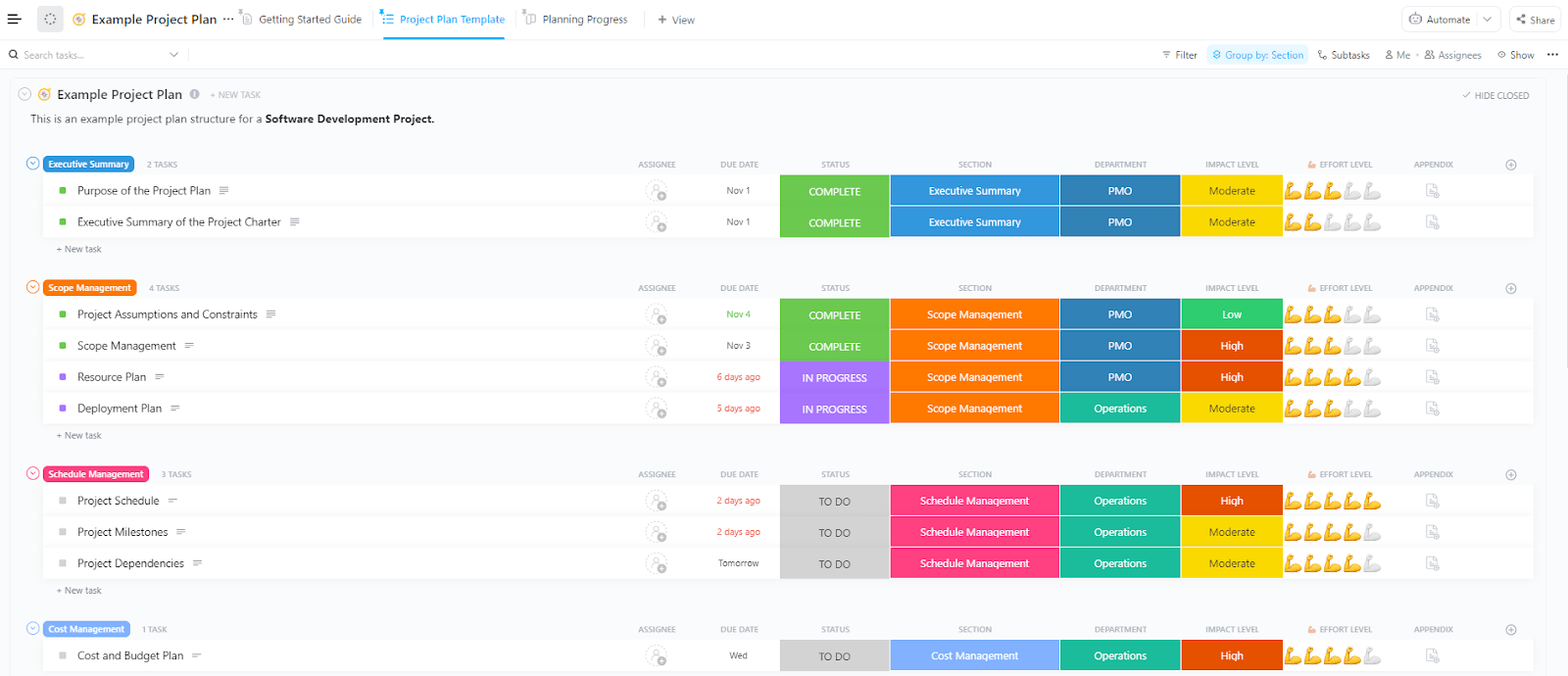
The ClickUp Digital Marketing Project Plan Template breaks big, scattered campaigns into clear, actionable steps your team can actually follow.
📖 Also Read: How to Use AI in Marketing
We can all agree that there is always a lot to handle in marketing. From planning large marketing campaigns to coordinating multiple marketing projects, teams manage countless details and tight deadlines. No wonder so many companies rely on project management software to keep things on track.
Yet, general project management features alone are not enough for the pace and complexity of modern marketing.
This is why specialized marketing project management provides significant advantages that generic systems often overlook, for instance:
📖 Also Read: Effective Marketing Plan Examples & Samples
If marketing project management had a relationship status, it’d be: It’s complicated.
New tools pop up, team structures shift, and timelines somehow keep getting tighter. What worked last quarter might already feel outdated—and let’s not even talk about surprise rebrands mid-project.
Many marketing teams face these very real challenges when delivering marketing campaigns. Luckily, solid marketing project management and the right project management tools can prevent or reduce most issues.
Let’s discuss common challenges in managing marketing projects and solutions you can incorporate into your marketing project management process.
Every marketing project carries risk, from technical setbacks to market shifts. If you do not plan for these early, unexpected problems can affect project quality and delay delivery.
Examples of project risks:
✅ Solution: Use project risk management during the project planning stage. Analyze possible risks, set priorities, and build backup plans. A strong plan helps you mitigate risk before it affects your project scope or project budget.
👀 Fun Fact: Before viral videos, there were hoaxes. In 1917, two young girls fooled the world with the Cottingley Fairies photos—Sir Arthur Conan Doyle published them, boosting paper sales. That’s accidental content marketing!
Scope creep happens when a marketing project grows beyond what was agreed upon. Many teams face this when they do not define project objectives clearly or fail to manage stakeholder expectations.
Imagine this: midway through a campaign, new requests kept piling up—extra social posts, last-minute video edits, and additional approval rounds. Without clear boundaries, the project timeline stretched, budgets ballooned, and the team scrambled to keep up—classic scope creep in action.
✅ Solution: Lock in your project scope and goals early. Share these limits with all internal stakeholders and external stakeholders. Keep lines of communication open to manage change requests within your project lifecycle. If needed, use a change control process to keep the project team aligned and on budget.
Poor communication slows down even the best marketing project manager. It leads to unclear expectations, duplicate work, missed deadlines, and wasted budget.
Example: A product launch campaign went live targeting the wrong audience because the product team’s mid-project changes weren’t communicated to marketing. The stakeholder assumed everyone was in the loop, but crucial updates were missed. The result? Wasted budget and confused customers.
✅ Solution: Use reliable marketing operations software to centralize updates and share real-time progress. Set clear milestones, encourage team members and stakeholders to provide feedback, and track every change. Effective communication ensures a shared understanding of the project status.
When teams rely on scattered emails or calls, details get lost. Without a single source of truth, it is challenging to track project progress, share files, or manage task management and timelines effectively.
✅ Solution: Use modern marketing project management software to store all campaign details, tasks, files, and updates in one place. Tools like ClickUp let you create customizable dashboards so your marketing team, project manager, and stakeholders can see every part of the plan clearly.
📮 ClickUp Insight: Around 16% of managers say pulling updates from different tools into a clear overview is still a major headache. When information lives in too many places, managers spend precious time stitching it all together instead of actually leading. The fallout? Missed opportunities, additional administrative tasks, and disorganized teams are the consequences. ClickUp fixes such issues by bringing tasks, docs, and updates into one place, cutting down on busywork and highlighting the insights you actually need, exactly when you require them.
💫 Real Results: For example, Convene brought 200 professionals together in one ClickUp workspace. With ready-to-use templates and built-in time tracking, they cut down on overhead and sped up delivery across multiple locations.
A project manager assumes various roles, with the primary responsibility being to assist the project team in achieving results. As one Reddit user put it well:
I’m a marketing manager/project manager. My main job is to make sure we get the work done to support our goals. We structure our work around quarterly projects. Each team member is assigned two to four projects each quarter, including myself. These projects are chosen to align with company initiatives and team goals.
A successful marketing project manager combines strategy with daily action to keep marketing projects moving.
Here is what that involves:
Think of marketing project management as a clear flow from idea to results. Here’s how the main components fit within the project lifecycle:
📌 Initiation
Set the purpose → Define project scope, outline project objectives, analyze market fit, and clarify the target audience
📌 Planning
Shape the marketing strategy → Map tasks in a detailed project plan, decide on resource allocation, and align the budget
📌 Execution
Launch the campaign → Create and distribute creative assets, assign tasks to team members, and keep all parts moving
📌 Monitoring and Control
Track performance → Check project status, monitor spend against the project budget, adjust tasks, and handle any project risks
📌 Closure
Wrap-up → Review outcomes, gather feedback from internal stakeholders and external stakeholders, document lessons, and apply them to future projects
This flow clearly outlines what happens next for every marketing project manager and helps the marketing team deliver consistent results.
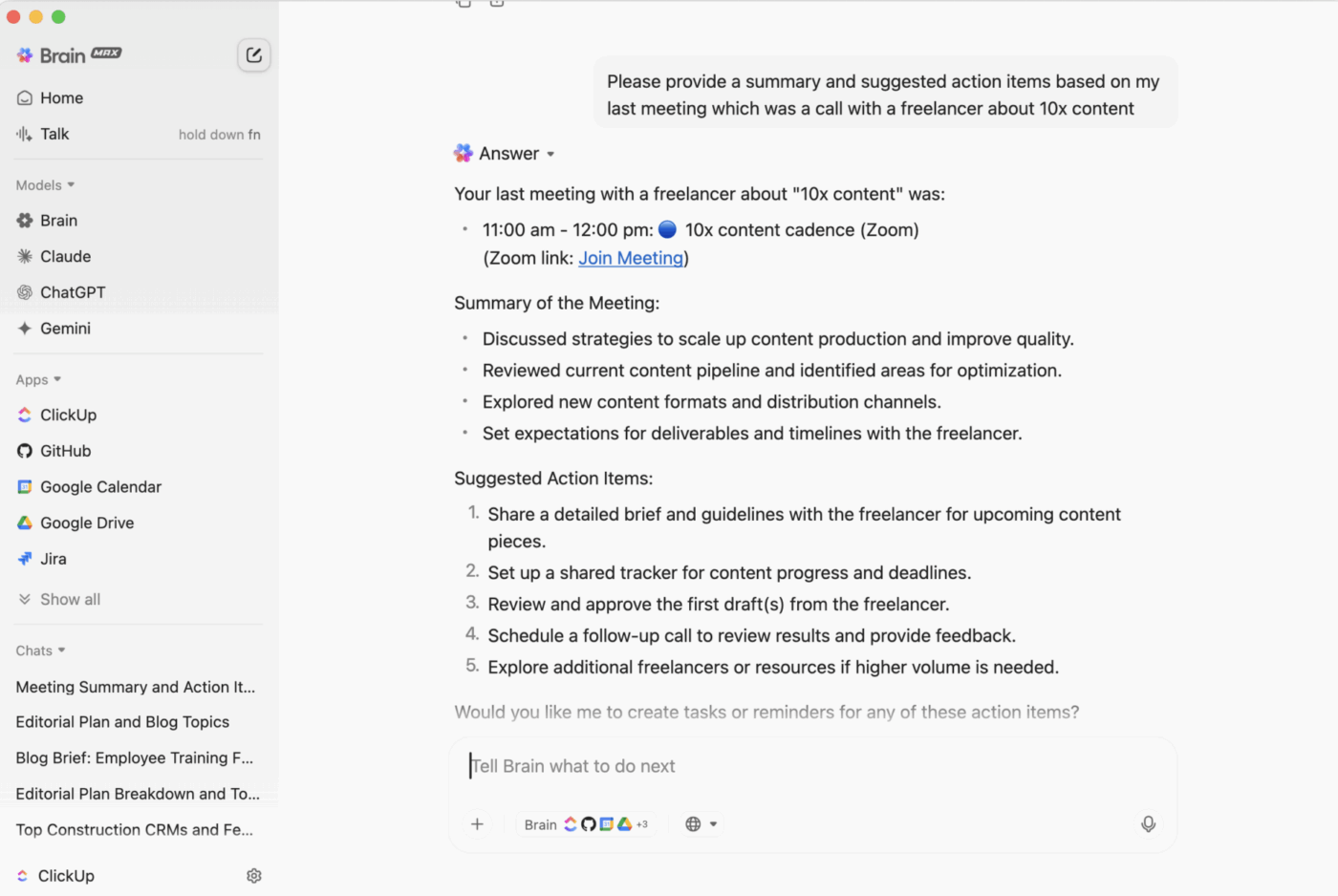
💡 Bonus: Marketing project management can become incredibly complicated. That’s why you need a Converged AI Workspace that understands your work and executes your tasks with a single click (or the sound of your voice!). So if you seek to:
Try ClickUp Brain MAX—a superpowered desktop AI companion that truly understands you, because it knows your work. Ditch the AI tool sprawl and use your AI assistant to build out all your marketing projects at 10x speed.
Over 85% of businesses actively use project management software. But what makes a tool worth using? In fact, which tools should you consider for your team?
Let’s explore some options. ✨

A good marketing project management tool should fit every step of your process and not force you to work around the tool. ClickUp does this well because it gives marketing project managers a single place to plan, assign, and track work without drowning in updates.
For marketing teams

Manasi Nair
Max 22min read
Manasi Nair
Max 15min read

Praburam Srinivasan
Max 16min read

© 2026 ClickUp