

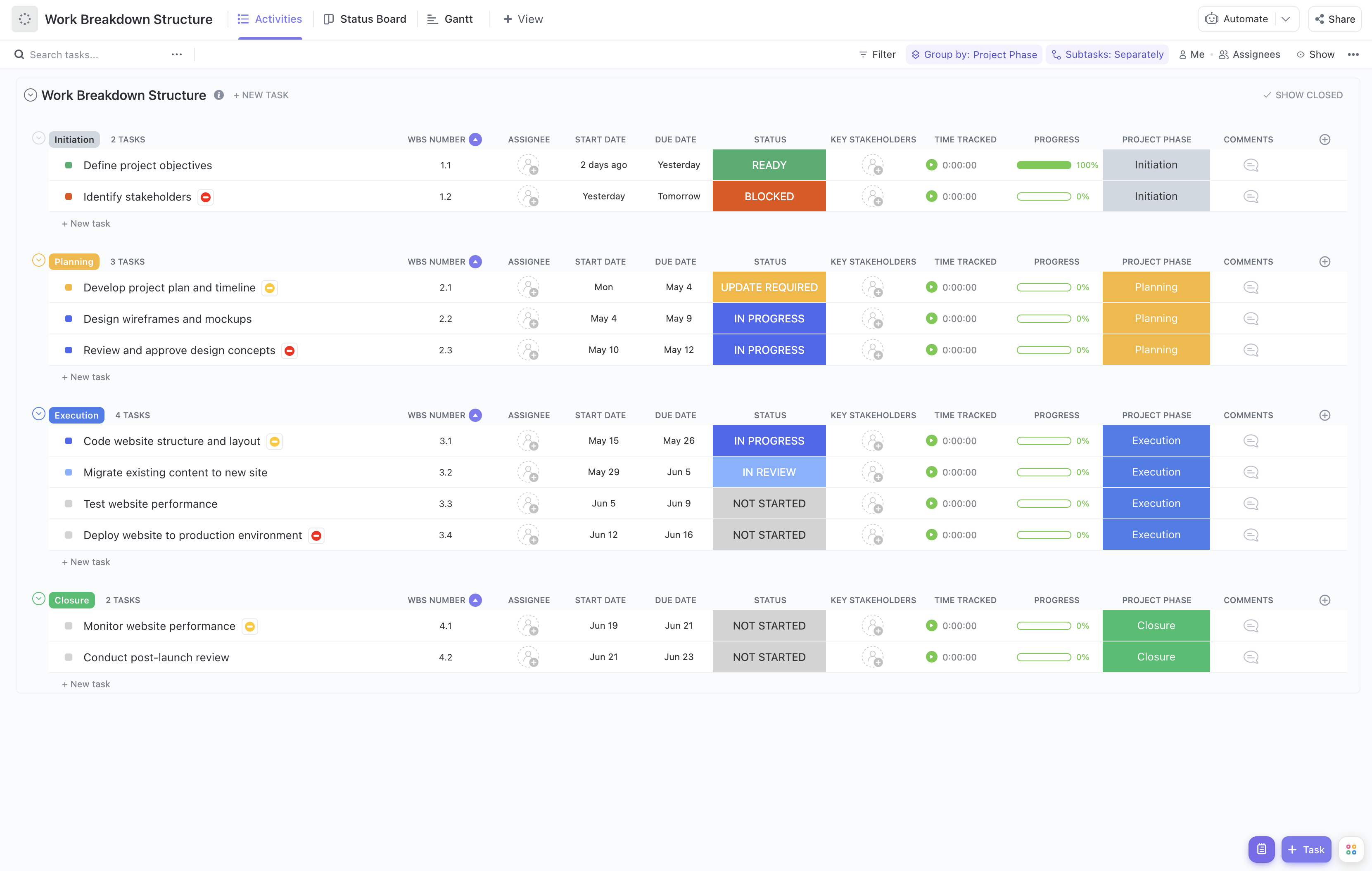


Managing an evidence management system involves meticulous coordination of numerous tasks, from evidence collection to storage, analysis, and eventual disposition. Ensuring every piece of evidence is tracked and handled correctly is critical to maintaining chain of custody and legal compliance. This specialized Work Breakdown Structure (WBS) Template is crafted to help you break down the complexities of evidence management into clear, manageable components.
With this template, you can:
- Organize evidence-related tasks into logical sections such as intake, cataloging, analysis, storage, and release
- Assign team members to specific responsibilities like evidence logging, quality control, and audit preparation
- Monitor progress in real-time to quickly identify bottlenecks or compliance risks
Best of all, this template requires no coding or specialized software—just your ClickUp workspace to get started on streamlining your evidence management projects.
Benefits of a Work Breakdown Structure Template for Evidence Management
Using a WBS template tailored for evidence management provides several advantages:
- Clear Definition of Deliverables: Break down the entire evidence handling process into specific deliverables such as evidence intake forms, chain of custody documentation, and storage protocols.
- Role Clarity: Assign clear responsibilities to forensic analysts, evidence custodians, and legal compliance officers to avoid overlaps or gaps.
- Improved Communication: Enhance coordination between law enforcement, forensic labs, and legal teams by providing a shared framework and status updates.
- Risk Mitigation: Early identification of delays or compliance issues helps prevent evidence mishandling and legal challenges.
Main Elements of the Evidence Management Work Breakdown Structure Template
This template is structured to cover all critical phases of evidence management:
- Evidence Intake: Tasks include receiving evidence, verifying documentation, and initial logging.
- Cataloging and Labeling: Assign unique identifiers, photograph evidence, and update inventory systems.
- Storage and Security: Define secure storage locations, access controls, and environmental monitoring.
- Analysis and Testing: Schedule forensic tests, document findings, and manage sample handling.
- Chain of Custody Tracking: Maintain detailed records of evidence transfers and custody changes.
- Audit and Compliance: Prepare for internal and external audits, update policies, and conduct training.
- Disposition and Release: Manage evidence release requests, destruction protocols, and final documentation.
Each task can be assigned to specific team members with deadlines and status updates, enabling transparent tracking and accountability throughout the evidence lifecycle.
By leveraging this Work Breakdown Structure template, your evidence management system will benefit from enhanced organization, improved compliance, and streamlined workflows—ultimately supporting the integrity and reliability of your evidence handling processes.










