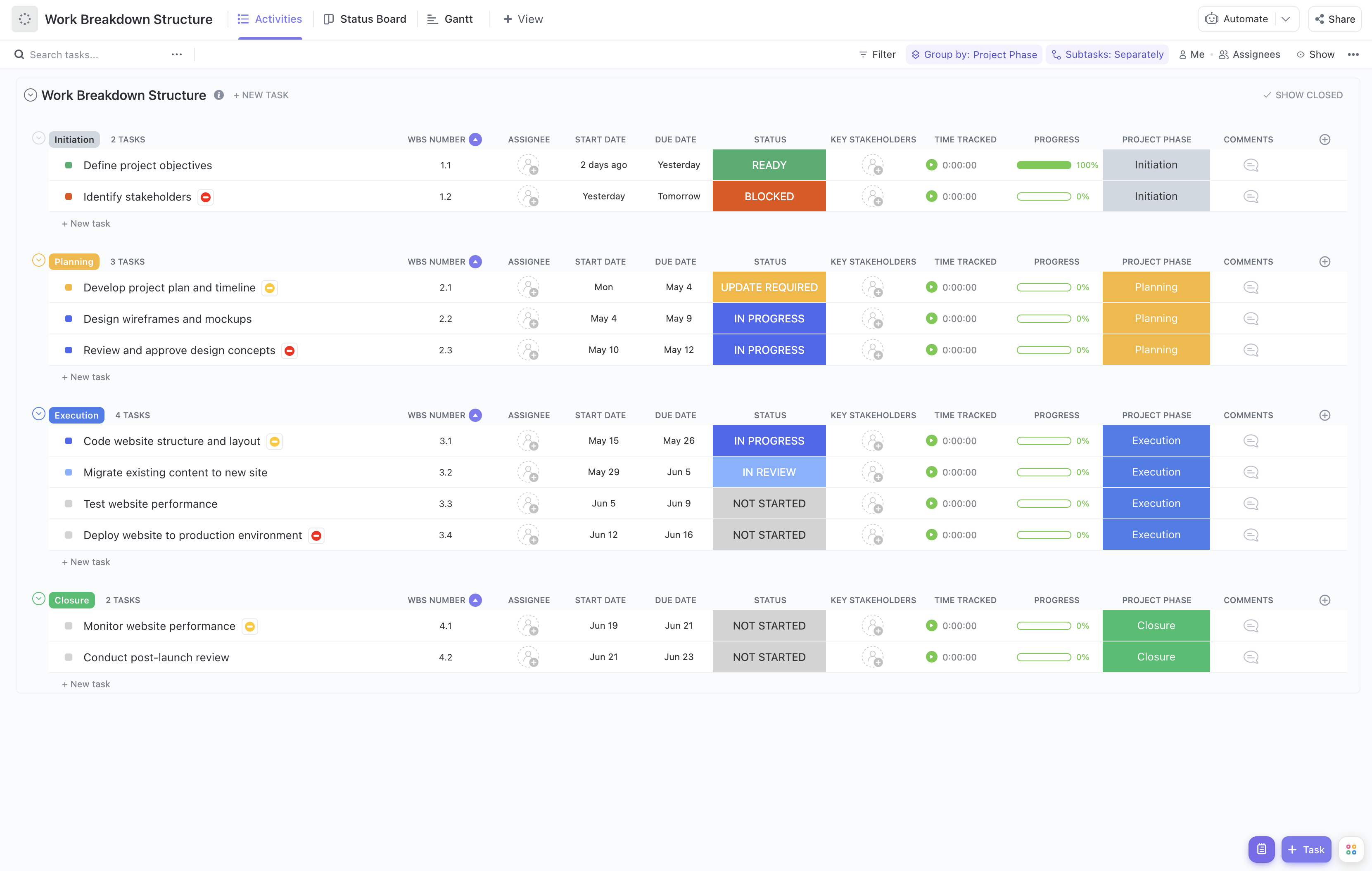
Handling technology exceptions effectively is critical to maintaining system stability and ensuring seamless user experiences. This Technology Exception Handling Work Breakdown Structure (WBS) Template enables your team to systematically break down exception management into clear, actionable components.
This tailored template helps you:
- Segment exception handling tasks into focused areas such as identification, classification, resolution, and documentation
- Assign responsibilities to the appropriate technical teams and stakeholders swiftly
- Monitor exception resolution progress in real-time, ensuring timely mitigation
Best of all, this template requires no special coding skills or software beyond ClickUp, making it accessible for all technology teams to implement immediately.
Benefits of a Technology Exception Handling Work Breakdown Structure Template
Using a WBS template specifically designed for technology exception handling offers numerous advantages:
- Clearly defines and organizes all exception management deliverables, from detection to closure
- Clarifies roles and responsibilities among developers, QA, support, and management teams
- Enhances communication between technical teams and stakeholders, reducing misunderstandings and delays (learn more about effective team communication)
- Improves efficiency by providing a structured workflow for handling exceptions, minimizing downtime and impact
Main Elements of the Technology Exception Handling Work Breakdown Structure Template
This template breaks down exception handling into the following core components:
- Exception Identification: Detecting and logging exceptions using monitoring tools and user reports.
- Exception Classification: Categorizing exceptions by severity, type, and impact to prioritize response.
- Root Cause Analysis: Investigating underlying causes through debugging and system analysis.
- Resolution Planning: Developing action plans to fix exceptions, including code fixes, configuration changes, or process updates.
- Implementation: Executing fixes and deploying patches or updates.
- Testing and Validation: Verifying that exceptions are resolved and systems function correctly post-fix.
- Documentation and Reporting: Recording exception details, resolutions, and lessons learned for future reference.
- Stakeholder Communication: Keeping relevant parties informed throughout the exception handling lifecycle.
By following this structured approach, your technology teams can ensure a comprehensive and efficient exception handling process that minimizes system disruptions and maintains high service quality.