
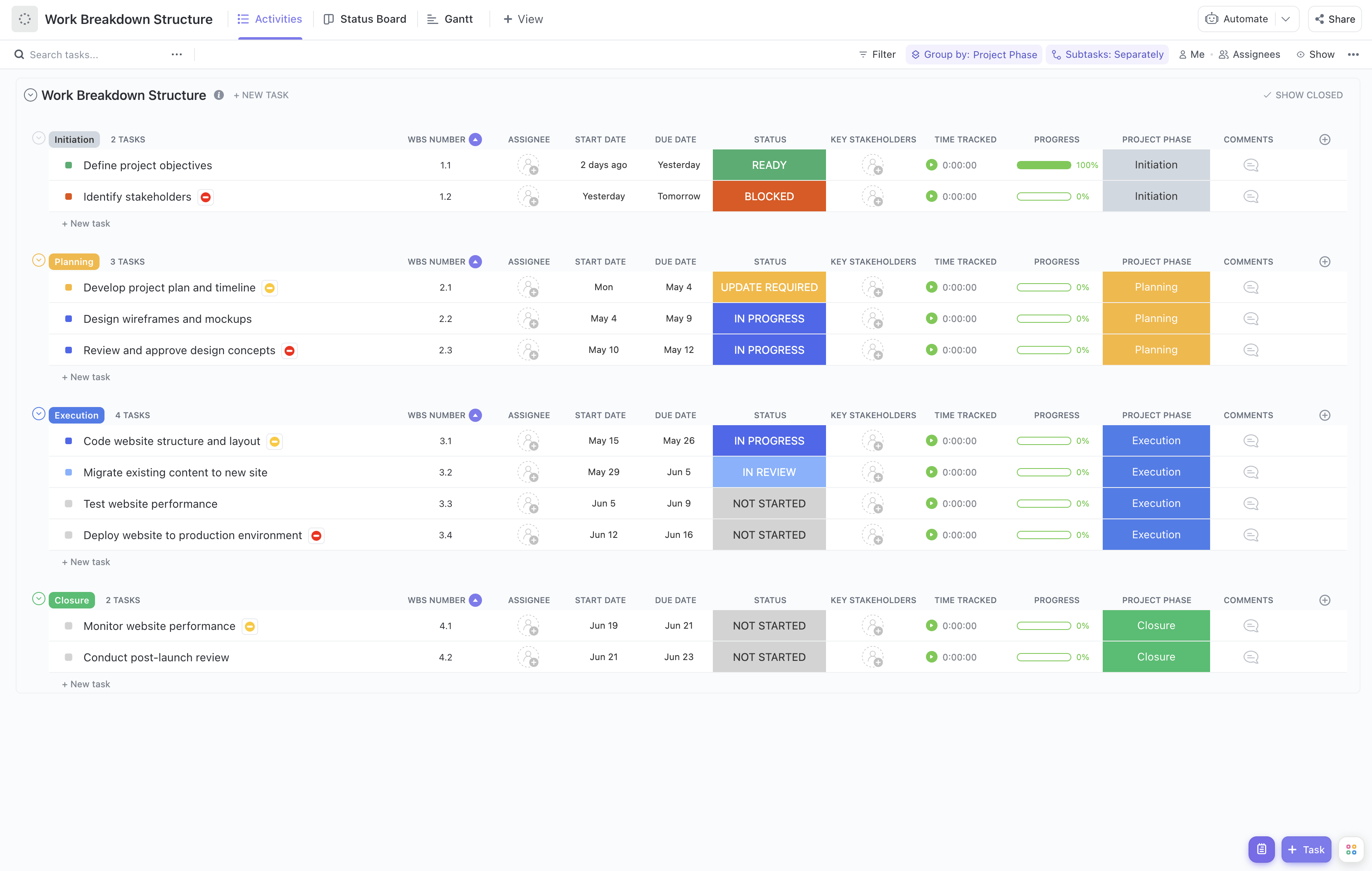


Ensuring technology compliance is a critical and complex endeavor that requires meticulous planning and execution. Managing multiple compliance requirements, audits, and remediation tasks can be overwhelming without a clear structure. That's where our Technology Compliance Execution Work Breakdown Structure Template comes in!
This tailored template helps you:
- Decompose compliance projects into detailed, manageable tasks for clear oversight
- Assign responsibilities to compliance officers, IT teams, and stakeholders efficiently
- Monitor progress with real-time updates to stay ahead of deadlines and regulatory changes
Best of all, this template requires no specialized software or coding skills—just your commitment to compliance and ClickUp to streamline your efforts.
Benefits of a Technology Compliance Execution Work Breakdown Structure
Using a structured work breakdown for compliance projects offers numerous advantages:
- Clearly defines and organizes compliance deliverables such as policy updates, risk assessments, and audit responses
- Clarifies roles and responsibilities across IT, legal, and audit teams to prevent overlaps or gaps
- Enhances communication between compliance stakeholders, ensuring everyone is aligned on priorities and deadlines (learn more about effective team communication)
- Improves efficiency by enabling proactive tracking of compliance milestones and quick identification of bottlenecks
Main Elements of the Technology Compliance Execution Work Breakdown Structure
This template organizes your compliance project into key components:
- Compliance Requirements: Catalog all relevant regulations, standards, and internal policies that must be addressed.
- Task Breakdown: Decompose each requirement into actionable tasks such as documentation review, system configuration, training, and audit preparation.
- Stakeholder Assignment: Assign each task to responsible individuals or teams, including compliance officers, IT administrators, and external consultants.
- Milestones and Deadlines: Set clear deadlines aligned with regulatory timelines and internal audit schedules.
- Progress Tracking: Use status indicators to monitor task completion, identify risks, and manage dependencies effectively.
By leveraging this structured approach, your organization can confidently navigate the complexities of technology compliance, reduce risk exposure, and demonstrate accountability to regulators and stakeholders alike.