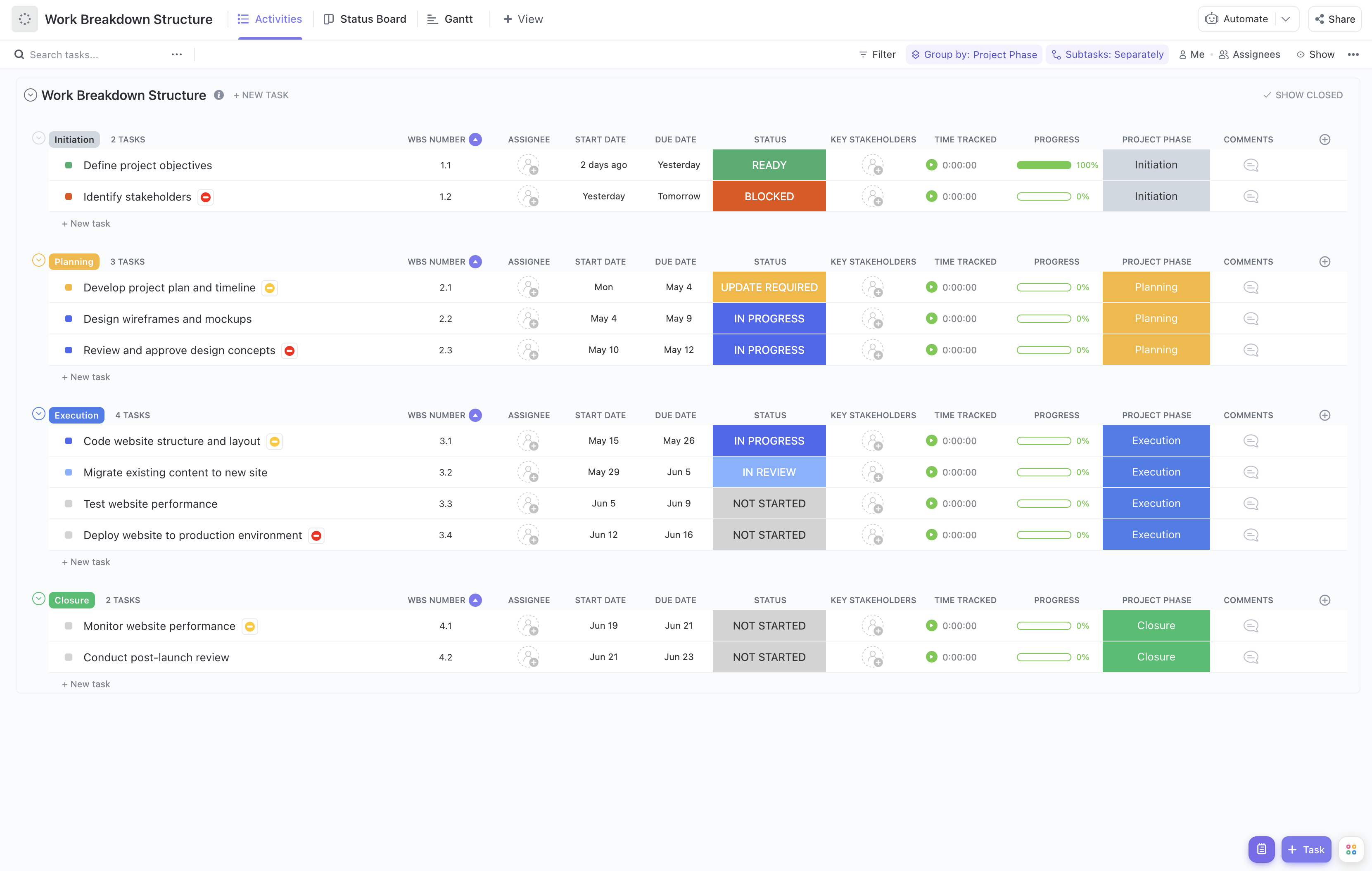
Optimizing delivery routes involves coordinating multiple tasks, teams, and data points to achieve efficiency and cost savings. Managing these complexities requires a structured approach, and that's where our Route Optimization Work Breakdown Structure Template comes in!
This specialized template helps you:
- Organize route planning, data analysis, and implementation tasks into clear, manageable sections
- Align logistics coordinators, drivers, and IT teams to their specific responsibilities swiftly and accurately
- Track progress on route testing, software integration, and performance metrics with real-time updates
Best of all, no coding or advanced technical skills are needed to get started. Simply use ClickUp to break down your route optimization project into actionable steps and drive success!
Benefits of a Route Optimization Work Breakdown Structure Template
Using a WBS template tailored for route optimization projects offers several advantages:
- Clearly defines and organizes deliverables such as route analysis, software configuration, and driver training
- Provides transparency for team members on their roles, deadlines, and dependencies
- Enhances communication between dispatchers, drivers, and IT specialists to quickly resolve issues
- Improves project efficiency by identifying bottlenecks and facilitating timely adjustments
Main Elements of the Route Optimization Work Breakdown Structure Template
This template breaks down your route optimization initiative into key components:
- Project Initiation: Define objectives, scope, and key stakeholders such as logistics managers and IT leads.
- Data Collection & Analysis: Gather historical route data, traffic patterns, and delivery constraints for analysis.
- Route Planning: Develop optimized routes using software tools, considering vehicle capacity and delivery windows.
- Software Integration: Configure route optimization software and integrate with existing dispatch systems.
- Testing & Validation: Conduct pilot runs, gather feedback from drivers, and adjust routes accordingly.
- Training & Deployment: Train dispatchers and drivers on new routes and software usage, then deploy at scale.
- Monitoring & Improvement: Track key performance indicators such as delivery times and fuel consumption to continuously refine routes.
By following this structured approach, your team can manage the complexities of route optimization projects effectively, ensuring improved delivery efficiency and customer satisfaction.