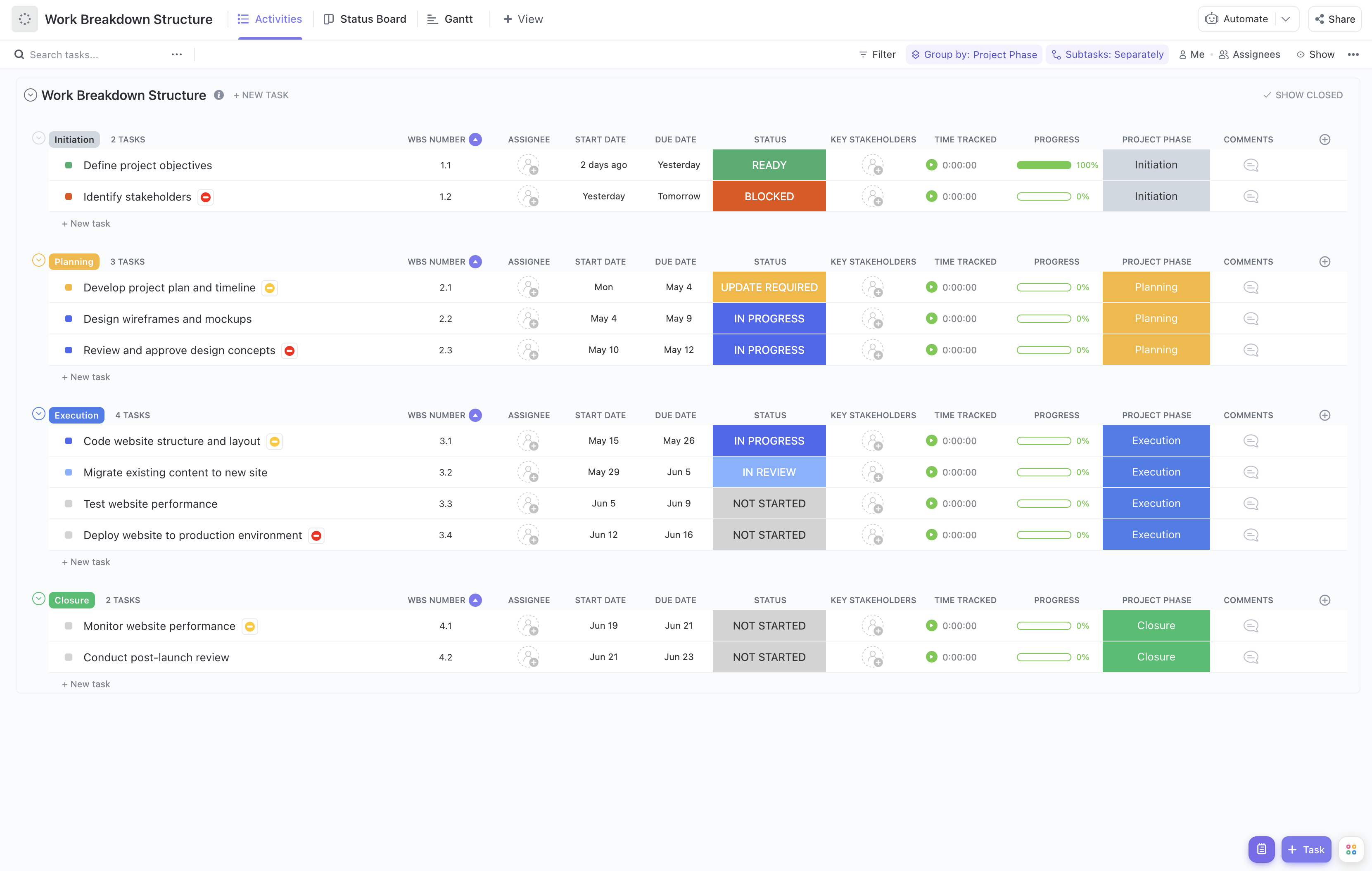
Coordinating government workforce projects involves managing multiple departments, compliance requirements, and public service objectives. This specialized Work Breakdown Structure Template is crafted to help government project managers and coordinators systematically organize workforce initiatives, ensuring clarity and efficiency.
This template enables you to:
- Segment workforce coordination tasks into clear, manageable components for enhanced oversight
- Assign roles and responsibilities across various government agencies and teams swiftly and accurately
- Monitor project milestones and workforce deployment progress with real-time updates to keep stakeholders informed
Best of all, this template requires no coding skills or specialized software—just use ClickUp to start structuring your government workforce projects effectively.
Benefits of a Government Workforce Coordination Work Breakdown Structure Template
Utilizing a WBS template tailored for government workforce coordination offers significant advantages. It provides a transparent framework for complex public sector projects, ensuring that all tasks align with governmental policies and workforce regulations. Key benefits include:
- Clearly defines project deliverables such as recruitment drives, training programs, and deployment schedules
- Clarifies roles and responsibilities across multiple government departments and external partners
- Enhances communication channels between workforce teams, human resources, and policy stakeholders
- Improves efficiency by identifying dependencies and potential bottlenecks in workforce mobilization
Main Elements of the Government Workforce Coordination Work Breakdown Structure Template
This template incorporates essential components to support government workforce projects:
- Project Phases: Define stages such as planning, recruitment, training, deployment, and evaluation.
- Task Breakdown: Decompose each phase into detailed tasks like job posting, candidate screening, compliance checks, and orientation sessions.
- Role Assignments: Allocate responsibilities to specific agencies, HR teams, and external contractors.
- Progress Tracking: Use custom fields to monitor task status, deadlines, and workforce readiness.
- Stakeholder Management: Identify key stakeholders including government officials, union representatives, and community leaders to ensure alignment and support.
By leveraging this structured approach, government workforce coordinators can enhance transparency, accountability, and collaboration, ultimately leading to successful project outcomes that meet public service goals.