

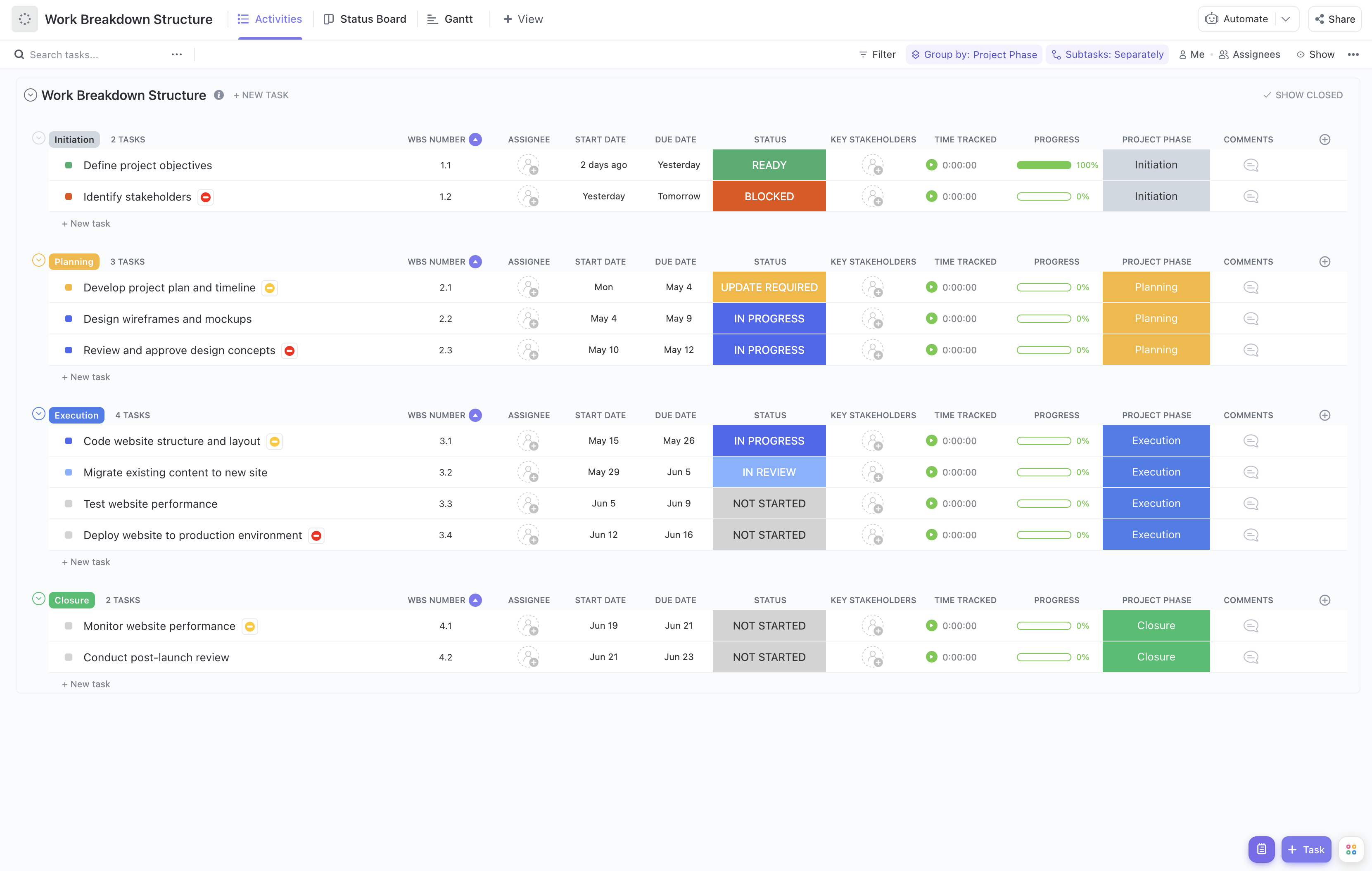


Managing education analytics projects involves coordinating diverse data sources, stakeholders, and analytical tasks. Breaking down these complex initiatives into clear, actionable components is essential for success. The Education Analytics Work Breakdown Structure Template is designed to help you organize and execute your analytics projects efficiently.
This specialized template enables you to:
- Segment analytics projects into focused work packages such as data collection, cleaning, analysis, and reporting
- Assign roles to educators, data analysts, IT staff, and administrators for streamlined collaboration
- Monitor progress with real-time updates to ensure timely insights delivery
Best of all, no advanced technical skills are required to use this template—just ClickUp and your team’s expertise to start transforming education data into actionable knowledge.
Benefits of an Education Analytics Work Breakdown Structure Template
Utilizing a work breakdown structure tailored for education analytics projects offers numerous advantages:
- Clarifies project deliverables such as student performance dashboards, attendance trend reports, and intervention impact analyses
- Defines clear responsibilities among data stewards, analysts, and educators to foster accountability
- Enhances communication between data teams and educational stakeholders, ensuring alignment on goals and expectations
- Improves efficiency by identifying dependencies and potential bottlenecks early in the project lifecycle
Main Elements of the Education Analytics Work Breakdown Structure Template
This template is structured to support the unique phases of education analytics projects:
- Project Initiation: Define objectives, identify key stakeholders such as school leaders and data governance committees, and establish scope.
- Data Acquisition: Collect data from student information systems, learning management platforms, and assessment tools, ensuring compliance with privacy regulations.
- Data Preparation: Cleanse and validate data, handle missing values, and integrate datasets for comprehensive analysis.
- Analysis and Modeling: Perform statistical analyses, predictive modeling, and visualization to uncover insights on student outcomes and program effectiveness.
- Reporting and Dissemination: Develop reports, dashboards, and presentations tailored to educators, administrators, and policy makers.
- Review and Feedback: Gather input from stakeholders to refine analytics approaches and inform continuous improvement.
By following this structured approach, your education analytics projects will be well-organized, transparent, and aligned with institutional goals, ultimately supporting data-driven decision-making that enhances student success.










