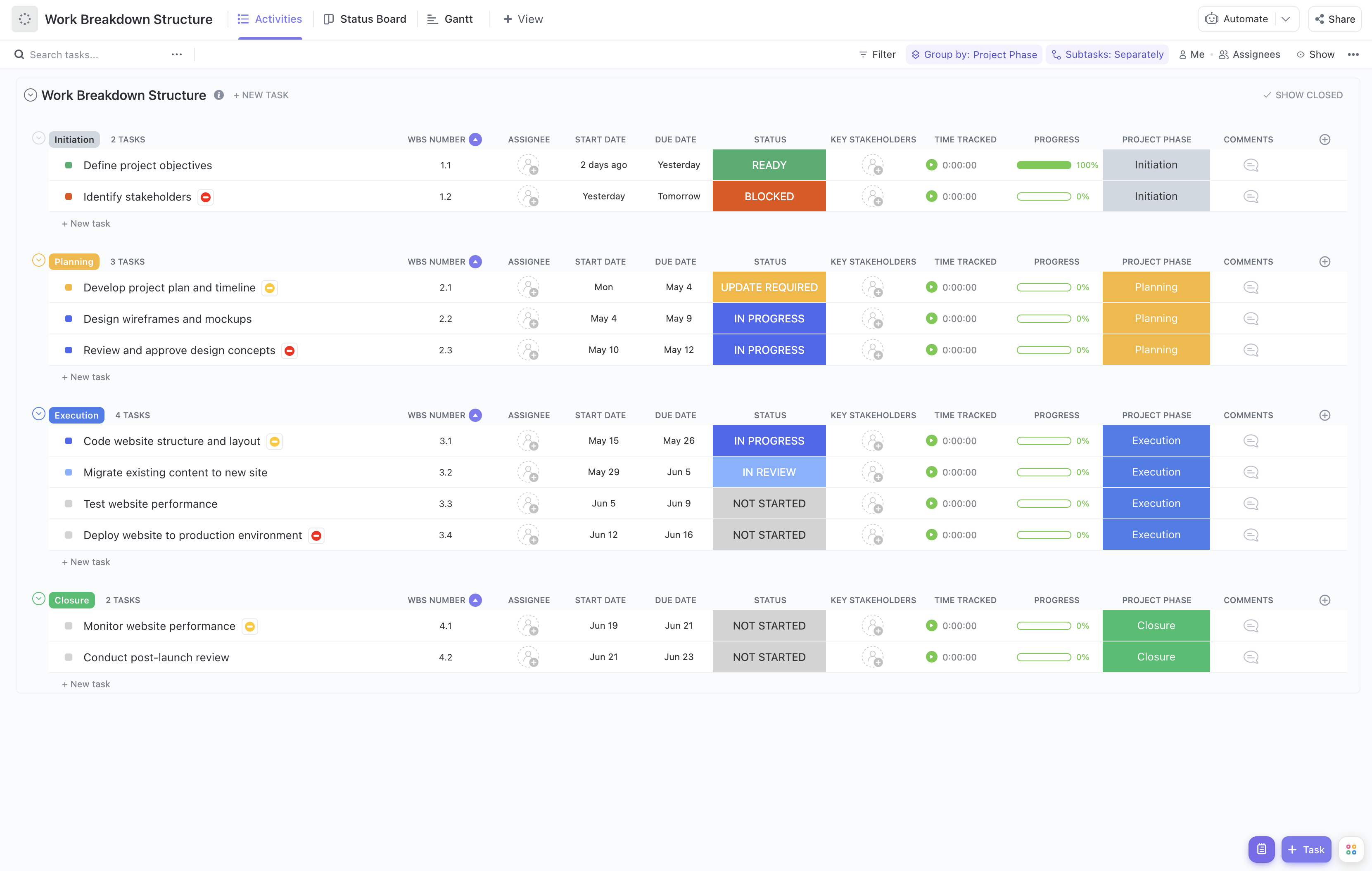
Establishing a functional and responsive local governance system involves numerous interrelated tasks that require careful coordination and oversight. This Work Breakdown Structure Template is crafted to guide local government teams through the process of setting up governance frameworks, policies, and community engagement initiatives.
With this template, you can:
- Segment the governance setup process into clear, manageable components such as legal framework development, stakeholder engagement, resource allocation, and infrastructure planning.
- Assign responsibilities to municipal departments, elected officials, and community representatives efficiently to ensure accountability.
- Monitor milestones such as drafting ordinances, conducting public consultations, and establishing administrative offices with real-time progress tracking.
Designed for ease of use, this template requires no specialized software or coding skills—simply use ClickUp to organize and manage your local governance project effectively.
Benefits of Using This Local Governance Work Breakdown Structure Template
Implementing this WBS template offers several advantages for local governance projects:
- Clarifies the scope and deliverables of governance setup, from legal codification to community outreach programs.
- Defines roles and responsibilities for government officials, administrative staff, and community stakeholders, reducing overlap and confusion.
- Enhances communication channels between departments and with the public, fostering transparency and collaboration.
- Improves project efficiency by enabling timely identification of bottlenecks and resource needs.
Main Elements of the Local Governance Work Breakdown Structure Template
This template is structured around key phases essential to local governance setup:
- Legal and Regulatory Framework:
Drafting and approval of local laws, policies, and governance charters.
- Organizational Structure Development:
Defining roles, establishing departments, and recruiting personnel.
- Community Engagement:
Planning and conducting public consultations, feedback sessions, and awareness campaigns.
- Resource and Infrastructure Planning:
Budget allocation, office setup, and technology integration.
- Monitoring and Evaluation:
Setting up performance indicators and review mechanisms to ensure governance effectiveness.
By following this structured approach, local governments can systematically manage the complexities of governance setup, ensuring a transparent, inclusive, and efficient process that meets community needs.