

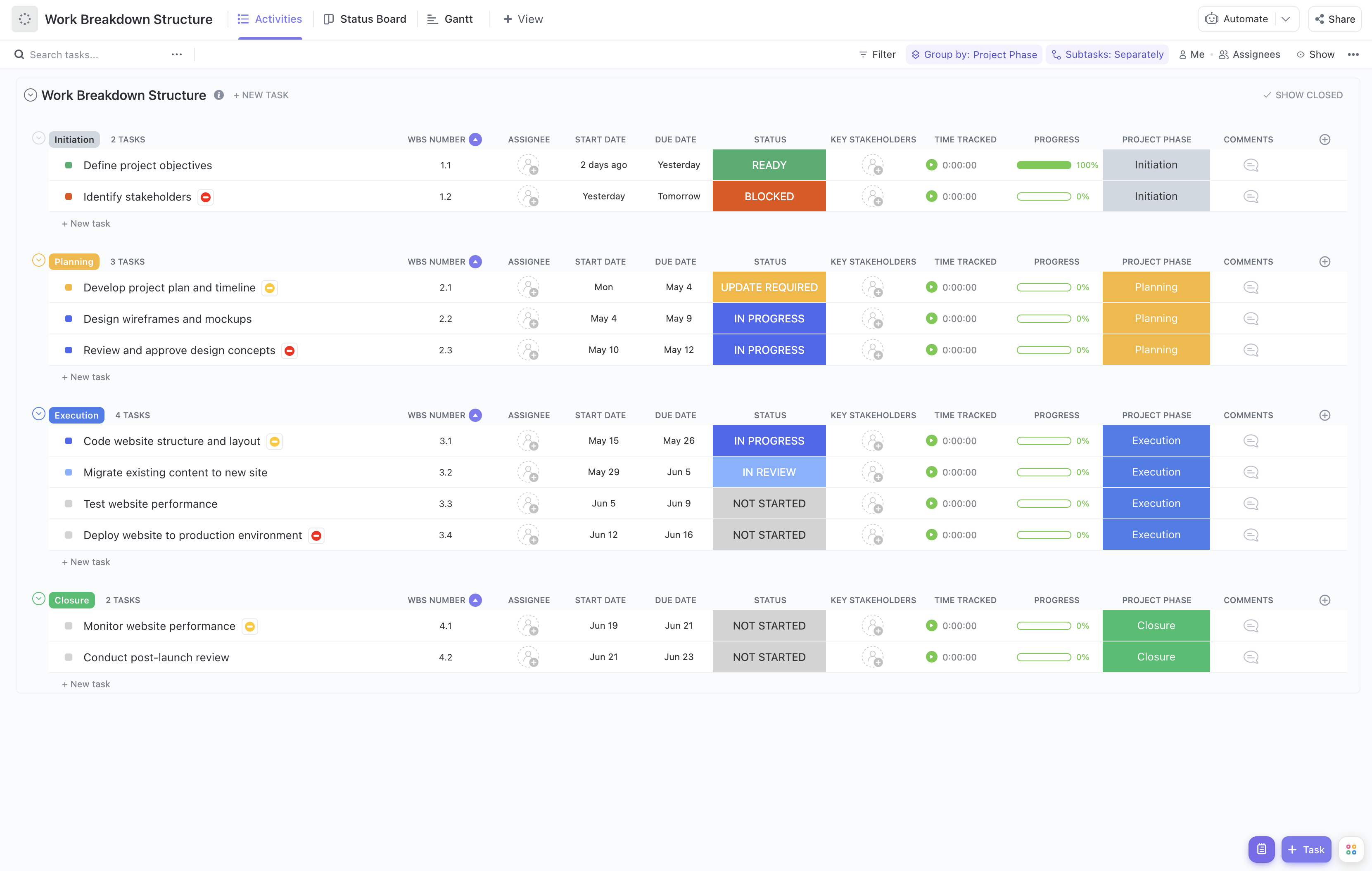


Implementing an asset tracking system involves numerous interconnected tasks, from hardware procurement to software configuration and staff training. Managing these components efficiently is crucial for a successful deployment. This Work Breakdown Structure Template is designed to help you systematically break down the asset tracking implementation project into manageable tasks and phases.
This specialized template enables you to:
- Organize asset tracking tasks into clear, manageable sections such as hardware setup, software integration, and user training
- Assign responsibilities to team members with clarity, ensuring each aspect of the implementation is covered
- Monitor progress in real-time, allowing for quick adjustments and risk mitigation during the project lifecycle
Best of all, you can start using this template immediately with ClickUp—no coding or complex software required. Streamline your asset tracking implementation and keep your project on track!
Benefits of Using This Asset Tracking Work Breakdown Structure Template
Deploying an asset tracking system can be complex, involving multiple stakeholders and technical components. Utilizing this WBS template offers several advantages:
- Clearly defines deliverables such as hardware installation, software deployment, and training completion
- Provides transparency on roles and responsibilities, ensuring accountability across teams
- Enhances communication between project managers, IT staff, vendors, and end-users through structured task alignment
- Improves project efficiency by breaking down the implementation into actionable, trackable segments
Main Elements of the Asset Tracking Implementation Work Breakdown Structure
This template includes the following key components tailored for asset tracking projects:
- Project Initiation: Define project scope, objectives, and key stakeholders involved in asset tracking deployment.
- Hardware Procurement: Identify required tracking devices (e.g., RFID tags, barcode scanners), place orders, and manage vendor relationships.
- Software Setup: Install and configure asset tracking software, integrate with existing systems, and customize features as needed.
- Network Infrastructure: Ensure network readiness for device connectivity, including Wi-Fi coverage and security protocols.
- Testing and Validation: Conduct pilot tests of tracking devices and software, troubleshoot issues, and validate system accuracy.
- Training and Documentation: Develop training materials and conduct sessions for end-users and administrators to ensure smooth adoption.
- Deployment and Go-Live: Roll out the asset tracking system across the organization, monitor initial performance, and provide support.
- Project Closure: Review project outcomes, document lessons learned, and formalize project completion.
By following this structured approach, your team can confidently manage the complexities of asset tracking implementation, ensuring all critical tasks are completed on time and within budget.










