
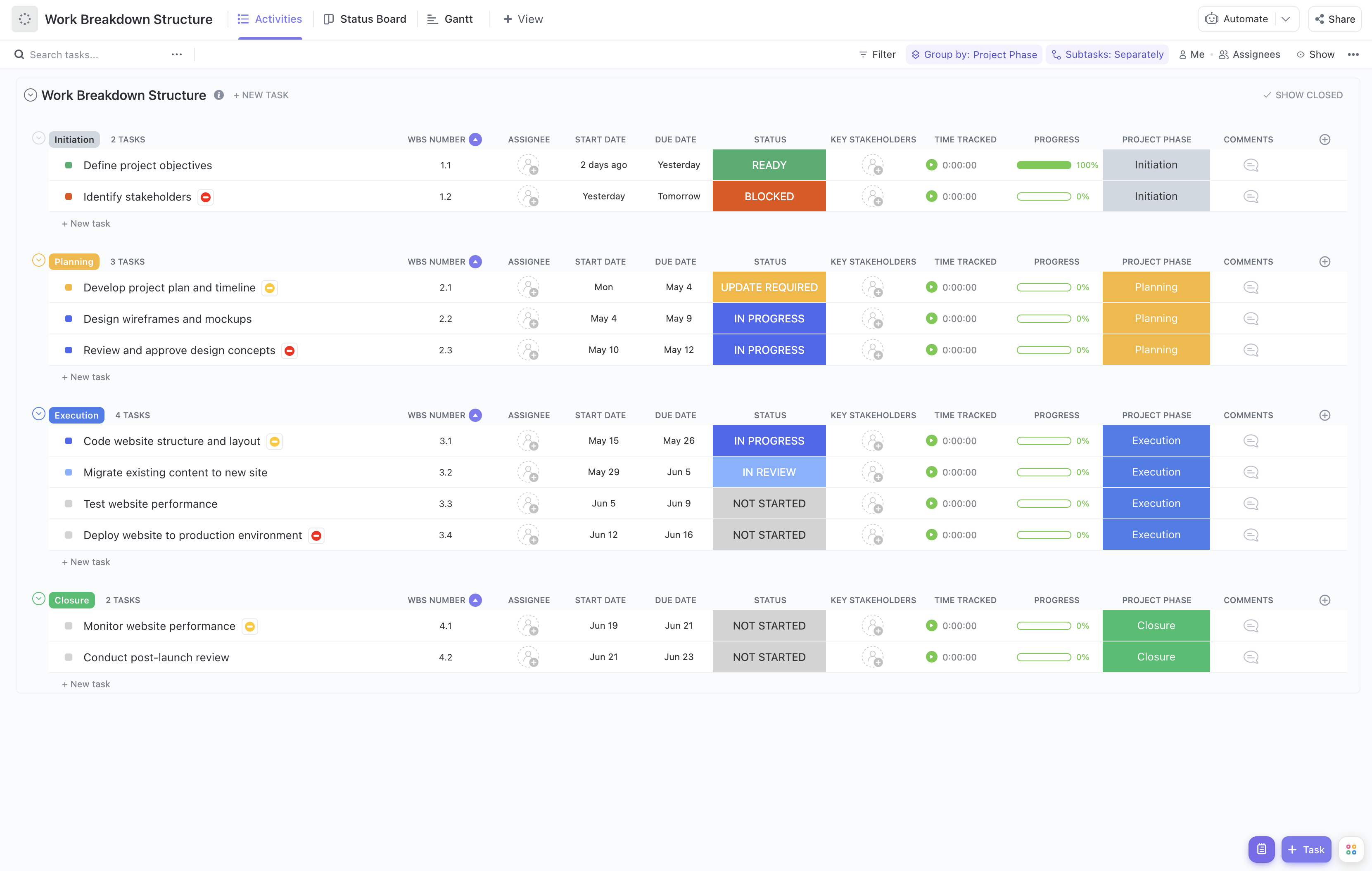


Developing a website involves multiple phases, from initial concept to deployment and ongoing maintenance. Breaking down this complex process into manageable components is essential for successful project delivery. Our Website Development Work Breakdown Structure Template is designed to help you organize every aspect of your web project with clarity and precision.
This specialized template enables you to:
- Segment your website project into clear, actionable tasks such as requirements gathering, design, development, testing, and deployment
- Assign roles to designers, developers, content creators, and QA specialists efficiently to ensure accountability
- Monitor progress in real-time, allowing you to identify bottlenecks and adjust timelines proactively
Best of all, no coding skills or complex software are needed—just use ClickUp to start structuring your website development project for success.
Benefits of a Website Development Work Breakdown Structure Template
Utilizing a WBS template tailored for website development offers numerous advantages to project managers and teams, including:
- Defining and organizing all website deliverables such as wireframes, prototypes, content, and final site launch
- Clarifying team roles and responsibilities, ensuring designers focus on UI/UX, developers on coding, and content teams on copywriting
- Enhancing communication between stakeholders including clients, developers, and marketing teams to align expectations
- Improving project efficiency by systematically tracking progress through each development phase
Main Elements of the Website Development Work Breakdown Structure Template
This template is structured to cover all critical phases of website development:
- Project Initiation: Define project scope, objectives, and stakeholder requirements.
- Planning: Develop site architecture, sitemap, and project timelines.
- Design: Create wireframes, mockups, and gather client feedback.
- Development: Code front-end and back-end components, integrate CMS and third-party tools.
- Testing: Conduct usability testing, cross-browser compatibility checks, and bug fixes.
- Deployment: Launch the website, configure hosting, and set up analytics.
- Maintenance: Monitor performance, update content, and implement security patches.
Each task can be assigned with detailed descriptions, deadlines, and responsible team members, ensuring transparency and accountability throughout the project lifecycle.
By leveraging this Website Development Work Breakdown Structure Template, your team can confidently navigate the complexities of web projects, delivering high-quality websites on time and within budget.










