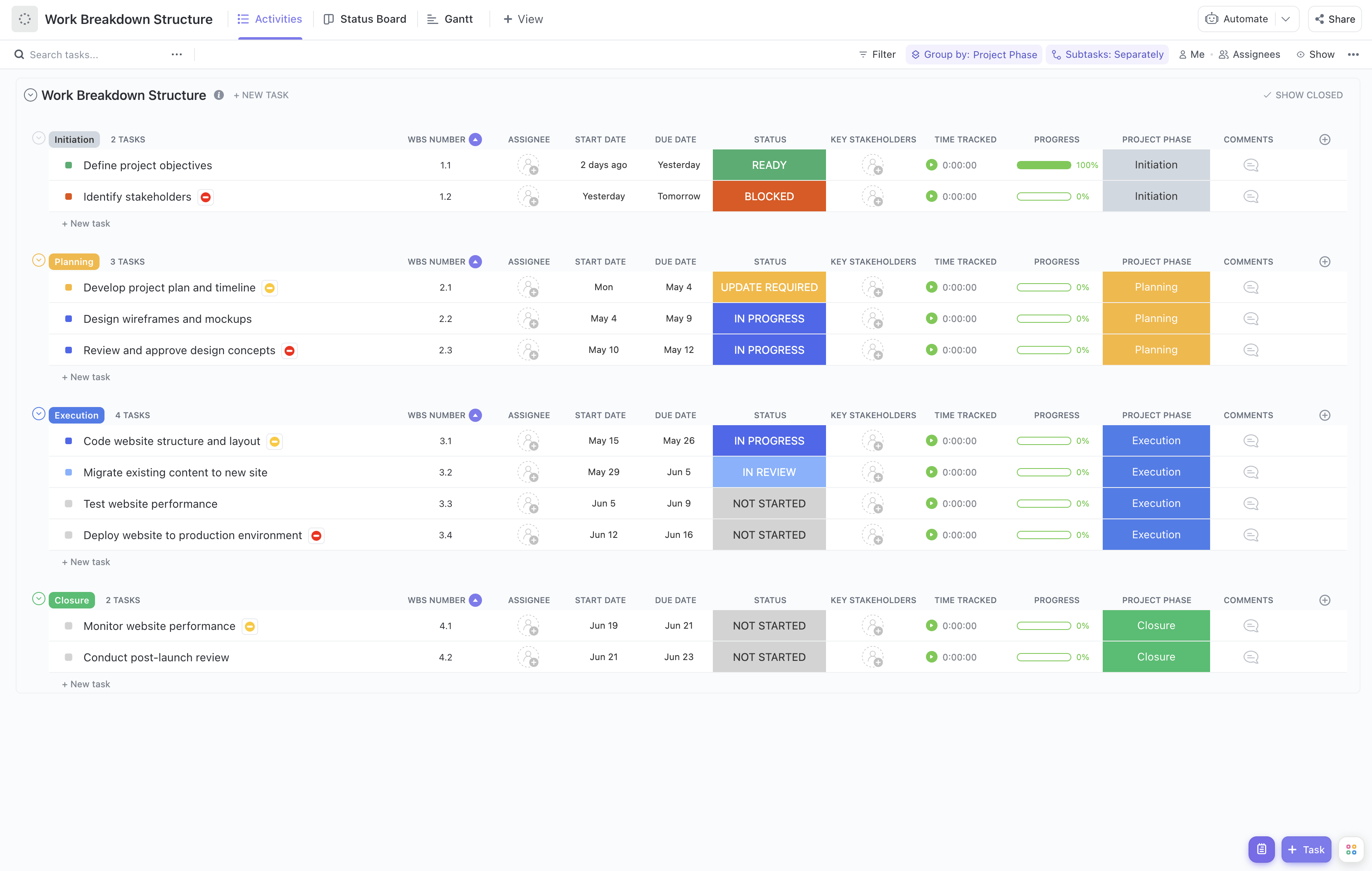
Implementing a transport digitization program involves coordinating multiple complex tasks across various teams and technologies. Breaking down this multifaceted project into manageable components is essential for success. This Transport Digitization Program Work Breakdown Structure Template is designed to help you effectively organize and oversee every aspect of your digital transformation in the transport sector.
This specialized template enables you to:
- Segment your digitization initiative into clear, actionable tasks such as infrastructure upgrades, software development, data integration, and user training.
- Assign responsibilities to cross-functional teams including IT, operations, and external vendors to ensure accountability and efficient collaboration.
- Monitor progress in real-time with integrated status updates, enabling proactive management of milestones and deliverables.
Best of all, no advanced technical skills are required to get started. With just ClickUp, you can immediately begin structuring your transport digitization project for success.
Benefits of a Transport Digitization Work Breakdown Structure Template
Utilizing a WBS tailored for transport digitization projects offers numerous advantages:
- Clearly defines and organizes digital transformation deliverables such as IoT sensor deployment, data analytics platform implementation, and mobile app development.
- Clarifies team roles and responsibilities across departments, ensuring smooth coordination between technology, operations, and management teams.
- Enhances communication among stakeholders, including government agencies, technology partners, and end-users, fostering transparency and alignment.
- Improves project efficiency by identifying dependencies and potential bottlenecks early, facilitating timely adjustments.
Main Elements of the Transport Digitization Work Breakdown Structure Template
This template is structured to cover all critical components of a transport digitization program:
- Project Initiation: Defining scope, objectives, and stakeholder engagement plans specific to transport digital transformation.
- Infrastructure Development: Tasks related to upgrading physical assets such as smart traffic signals, connected vehicles, and communication networks.
- Software and Systems Integration: Developing and integrating platforms for data collection, processing, and user interaction.
- Testing and Quality Assurance: Validating system performance, security, and user experience across transport modes.
- Training and Change Management: Preparing staff and users for new digital tools through comprehensive training programs.
- Deployment and Monitoring: Rolling out solutions and continuously monitoring system health and user feedback for ongoing improvements.
By following this structured approach, your transport digitization program will be well-positioned to deliver transformative outcomes efficiently and effectively.