
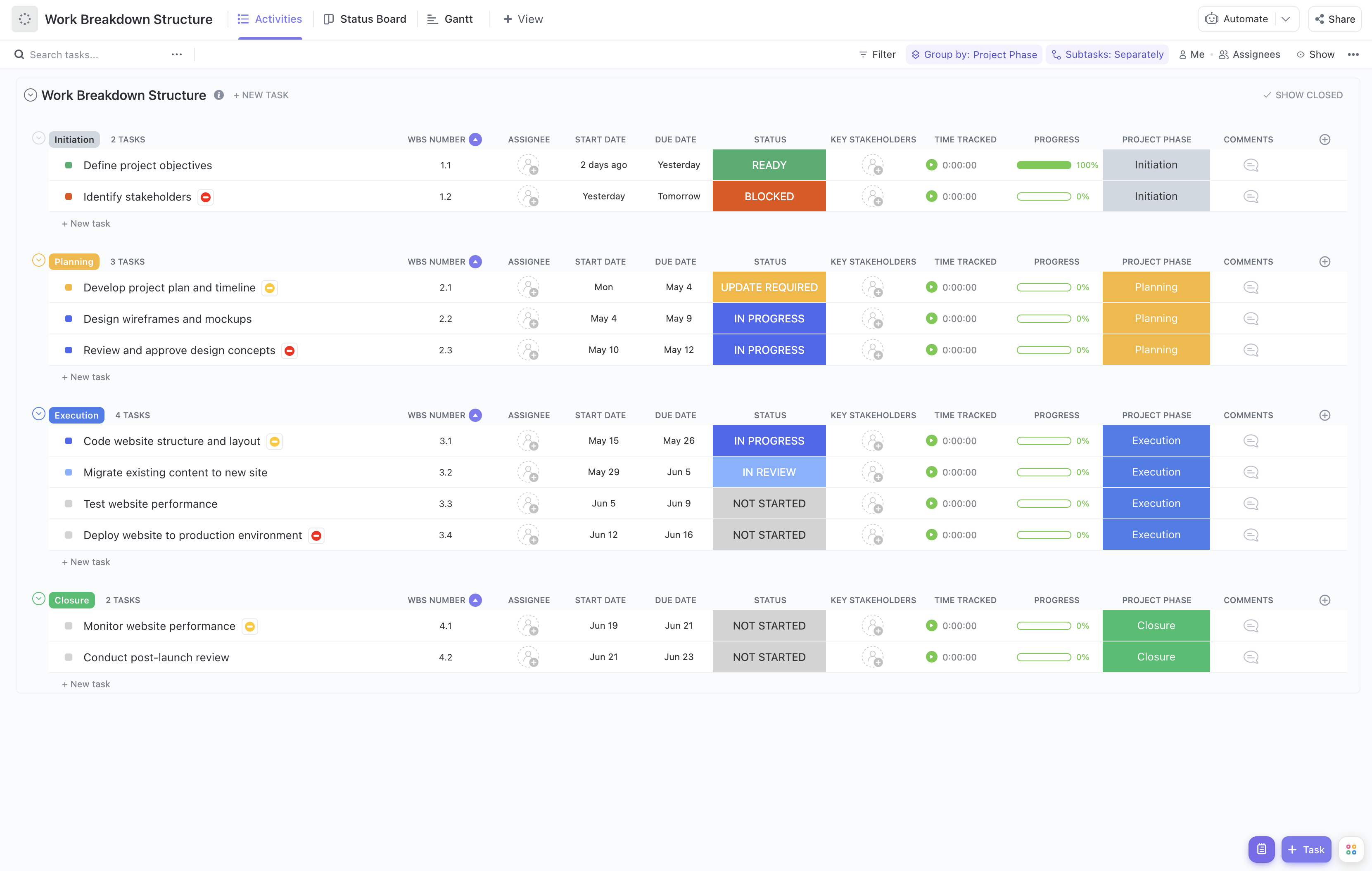


Executing technology controls requires meticulous planning and coordination to ensure compliance, security, and operational efficiency. This Technology Controls Execution Work Breakdown Structure Template empowers your team to decompose complex control implementation projects into clear, manageable tasks.
With this template, you can:
- Structure technology control activities into detailed work packages for enhanced oversight
- Assign responsibilities to control owners and stakeholders effectively
- Monitor execution progress with real-time updates to maintain compliance timelines
Designed for ease of use, this template requires no specialized software or coding knowledge—just ClickUp to get started breaking down your technology control projects into actionable steps.
Benefits of Using This Technology Controls Execution WBS Template
Implementing technology controls involves multiple teams, regulatory requirements, and technical complexities. This WBS template helps you:
- Clearly define and organize control implementation deliverables and milestones
- Provide transparency on roles and responsibilities for control owners, auditors, and IT teams
- Enhance communication among compliance officers, IT security, and project managers
- Improve efficiency by identifying dependencies and streamlining control execution workflows
Main Elements of the Technology Controls Execution Work Breakdown Structure
This template breaks down your technology controls project into hierarchical components, including:
- Control Identification:
Cataloging all relevant technology controls based on frameworks such as NIST, ISO 27001, or internal policies.
- Planning and Design:
Defining control objectives, scope, and implementation strategies.
- Execution Tasks:
Assigning specific activities such as configuration, deployment, testing, and validation of controls.
- Monitoring and Reporting:
Setting up ongoing control monitoring, issue tracking, and compliance reporting mechanisms.
- Review and Audit Preparation:
Preparing documentation and evidence for internal and external audits.
By leveraging this structured approach, your organization can ensure technology controls are executed systematically, risks are mitigated effectively, and compliance requirements are met with confidence.










