



Executing a system transition involves coordinating numerous interdependent tasks, from data migration to user training and system validation. This System Transition Execution Work Breakdown Structure Template provides a structured approach to decompose these activities into clear, manageable segments.
This tailored template helps you:
- Segment transition tasks into detailed work packages for precise tracking
- Assign responsibilities to specialized teams such as IT, operations, and support
- Monitor progress in real-time to quickly identify and address potential bottlenecks
Designed for ease of use, this template requires no specialized software beyond ClickUp, enabling your team to focus on seamless system transition execution.
Benefits of a System Transition Execution Work Breakdown Structure Template
Utilizing this WBS template during system transitions offers several advantages:
- Clearly defines transition deliverables such as data migration, system testing, and user onboarding
- Clarifies roles and responsibilities across cross-functional teams to ensure accountability
- Enhances communication between technical teams, business stakeholders, and end-users to align expectations
- Improves efficiency by identifying dependencies and scheduling tasks to minimize downtime
Main Elements of the System Transition Execution Work Breakdown Structure Template
This template is structured to cover all critical phases of system transition execution:
- Preparation: Inventory existing systems, define scope, and prepare data for migration.
- Migration: Execute data transfer, configure new system settings, and validate data integrity.
- Testing: Conduct system, integration, and user acceptance testing to ensure functionality.
- Training and Support: Develop training materials, conduct sessions, and establish support channels.
- Go-Live and Stabilization: Transition to the new system, monitor performance, and resolve issues promptly.
Each element includes detailed tasks and milestones, enabling comprehensive tracking and management throughout the transition process.
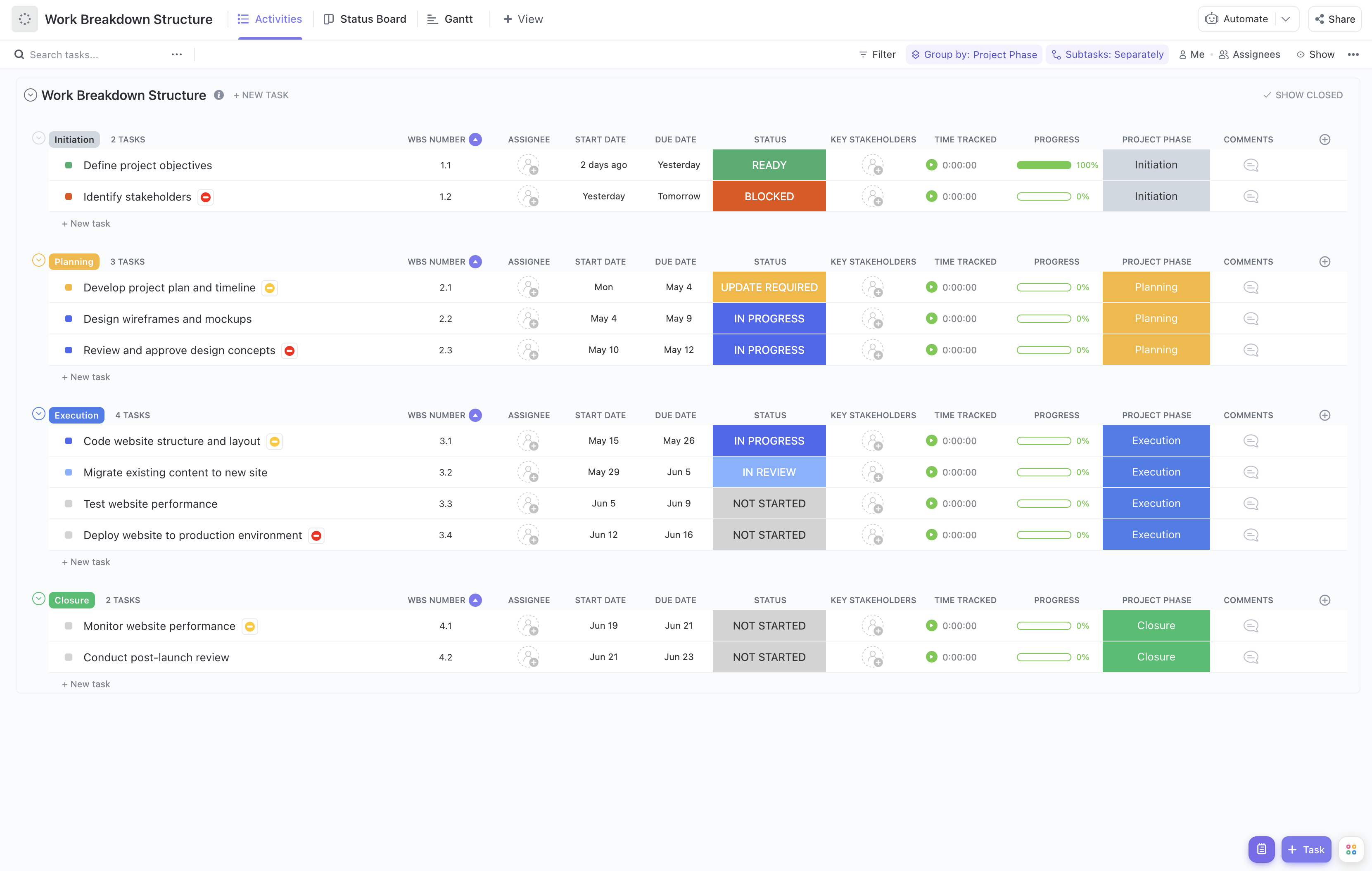
By leveraging this template, project managers can ensure a structured, transparent, and efficient system transition execution, reducing risks and facilitating stakeholder confidence.










