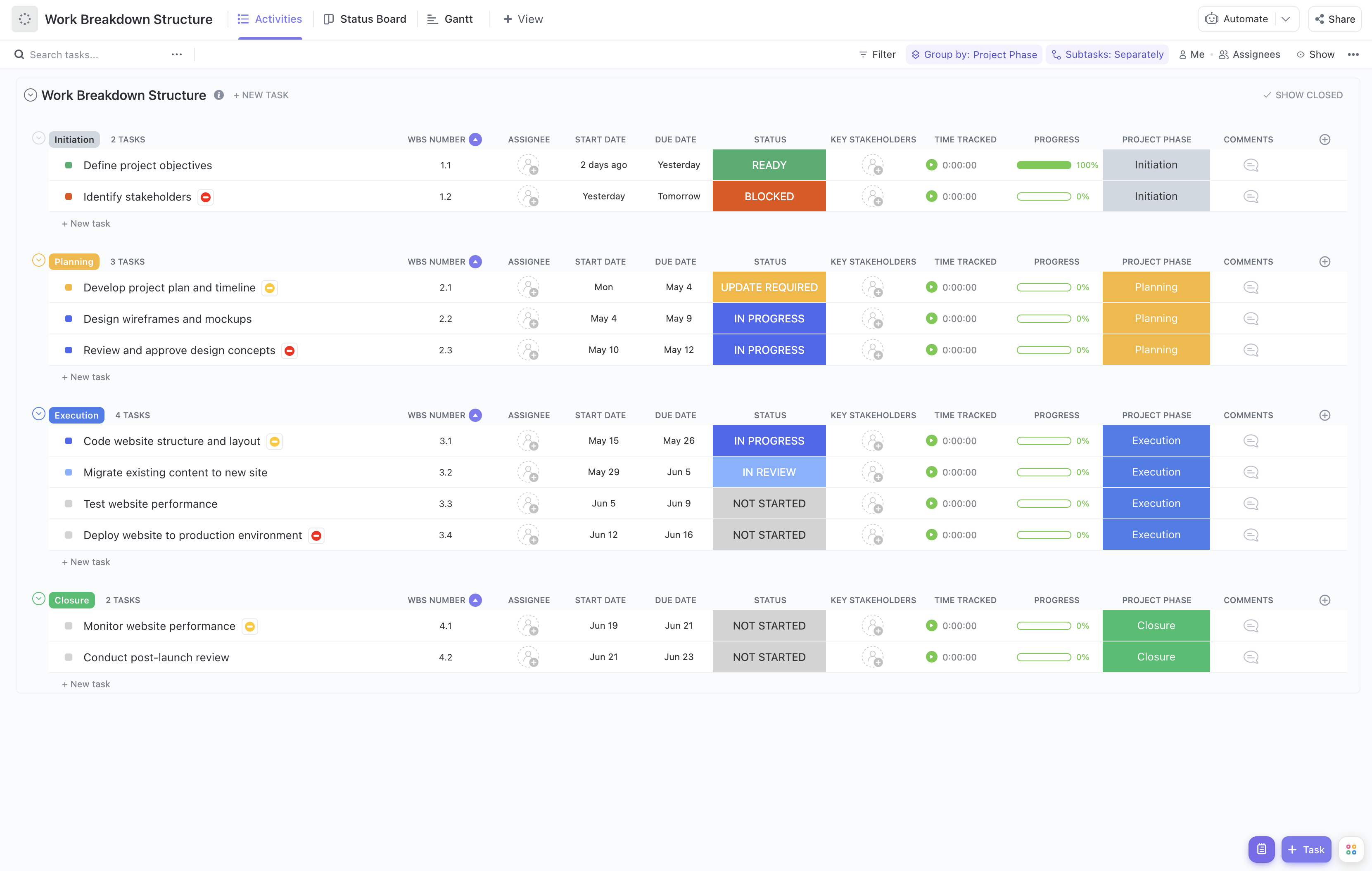
Recovering a system after failure involves numerous coordinated tasks that must be managed carefully to minimize downtime and data loss. The System Recovery Work Breakdown Structure Template provides a structured approach to decompose the recovery process into manageable components, enabling teams to assign responsibilities, track progress, and ensure comprehensive coverage of all recovery activities.
This tailored template helps you:
- Organize recovery tasks into logical phases such as assessment, restoration, validation, and reporting
- Align IT personnel and stakeholders with specific recovery responsibilities for rapid response
- Monitor recovery progress in real-time to identify bottlenecks and ensure timely completion
Best of all, this template requires no specialized software or coding skills—just use ClickUp to streamline your system recovery efforts and get your infrastructure back online efficiently.
Benefits of a System Recovery Work Breakdown Structure Template
Utilizing a work breakdown structure for system recovery offers significant advantages for IT operations teams. It provides a clear visual map of recovery tasks, helping to ensure nothing is overlooked during critical restoration efforts. Key benefits include:
- Clearly defines and organizes all recovery deliverables and milestones, from initial diagnostics to full system restoration
- Clarifies roles and responsibilities among team members, reducing confusion during high-pressure recovery scenarios
- Enhances communication between IT staff, management, and stakeholders by providing transparent status updates and task assignments
- Improves overall efficiency and effectiveness of recovery operations, reducing downtime and mitigating impact on business continuity
Main Elements of a System Recovery Work Breakdown Structure Template
This template is structured around key phases of system recovery, each broken down into detailed tasks:
- Assessment Phase: Identify the scope of system failure, gather logs, and determine affected components.
- Planning Phase: Develop a recovery plan outlining required resources, timelines, and contingency measures.
- Restoration Phase: Execute recovery actions such as data restoration, system reconfiguration, and hardware replacement.
- Validation Phase: Test system functionality, verify data integrity, and confirm that all services are operational.
- Reporting Phase: Document recovery activities, lessons learned, and update disaster recovery plans accordingly.
Each task within these phases can be assigned to specific team members, tracked for progress, and linked to relevant documentation or tools within ClickUp. This comprehensive structure ensures a methodical and transparent approach to system recovery, facilitating faster resolution and improved resilience against future incidents.