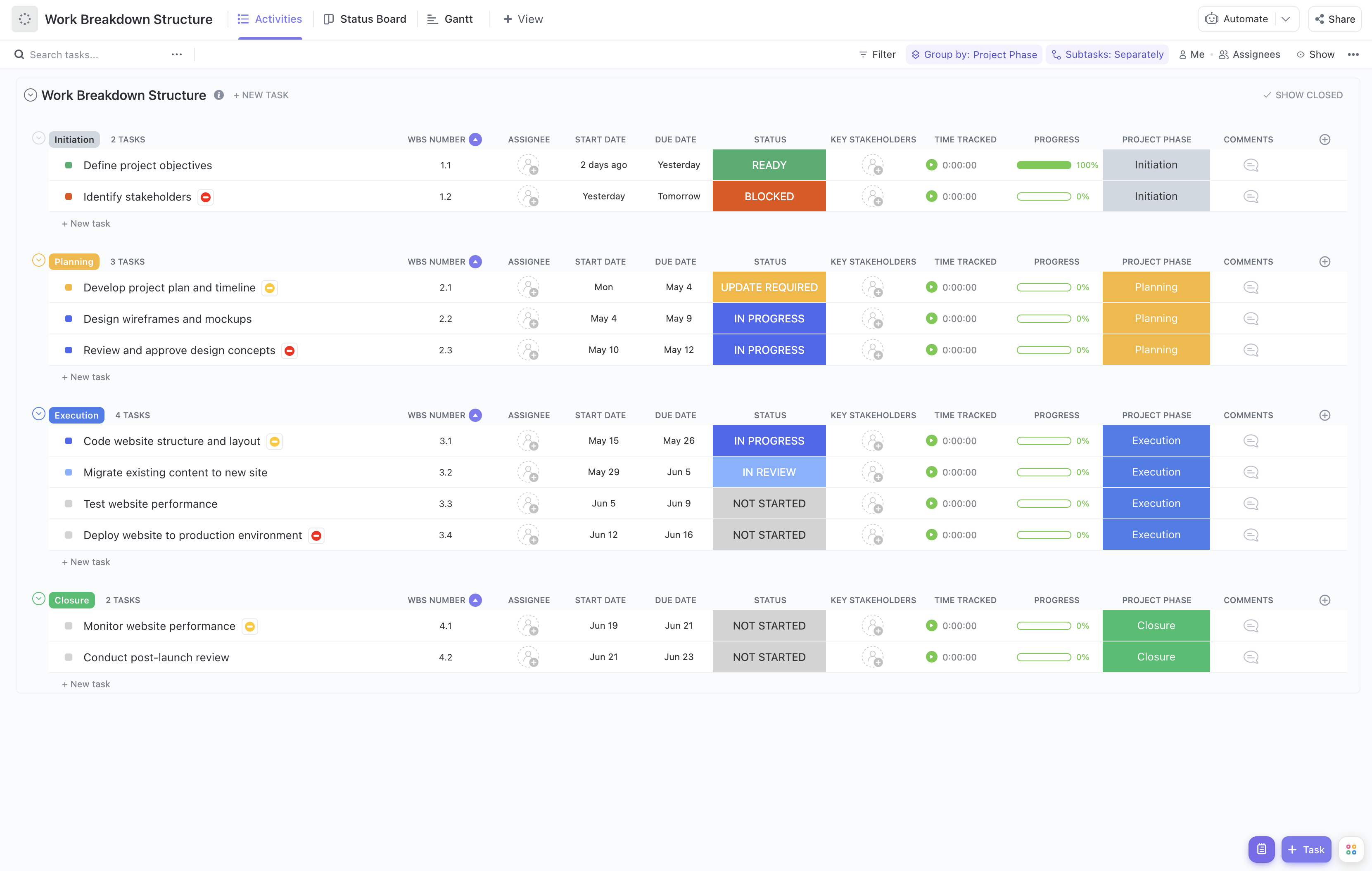
Effectively managing supplier performance is critical to maintaining a resilient and efficient supply chain. However, coordinating the various tasks involved—from initial assessment to ongoing monitoring and improvement—can be complex and challenging. That's where ClickUp's Supplier Performance Management Work Breakdown Structure Template comes in!
This specialized template helps you:
- Organize supplier evaluation and monitoring tasks into clear, manageable sections for enhanced visibility
- Align procurement, quality assurance, and operations teams to the right supplier management activities swiftly and efficiently
- Track supplier performance metrics and improvement goals with real-time updates and dashboards
The best part? You don't need any coding knowledge or special software to get started with this template. All you need is ClickUp—and you're ready to optimize your supplier performance management process!
Benefits of a Supplier Performance Management Work Breakdown Structure Template
Utilizing a work breakdown structure tailored for supplier performance management empowers your team to systematically oversee supplier-related activities. Key benefits include:
- Clearly defines and organizes supplier evaluation criteria, performance metrics, and improvement initiatives
- Provides clarity on roles and responsibilities across procurement, quality, and operations teams involved in supplier management
- Enhances communication and collaboration between internal stakeholders and suppliers through transparent task tracking
- Improves overall supply chain efficiency by proactively identifying and addressing supplier performance issues
Main Elements of a Supplier Performance Management Work Breakdown Structure Template
This template is structured to cover all critical components of supplier performance management, including:
- Supplier Identification and Segmentation: Categorize suppliers based on risk, spend, and strategic importance to prioritize management efforts.
- Performance Criteria Definition: Establish key performance indicators (KPIs) such as delivery timeliness, quality standards, compliance, and cost management.
- Data Collection and Monitoring: Set up processes for gathering performance data through audits, scorecards, and feedback mechanisms.
- Performance Analysis and Reporting: Analyze supplier data to identify trends, risks, and opportunities for improvement.
- Improvement Planning and Execution: Develop and track corrective action plans, supplier development programs, and continuous improvement initiatives.
- Stakeholder Communication: Facilitate regular updates and collaboration among procurement teams, suppliers, and management.
By breaking down supplier performance management into these manageable components, your team can ensure a comprehensive and proactive approach to supplier relationships, ultimately driving better quality, reliability, and value in your supply chain.