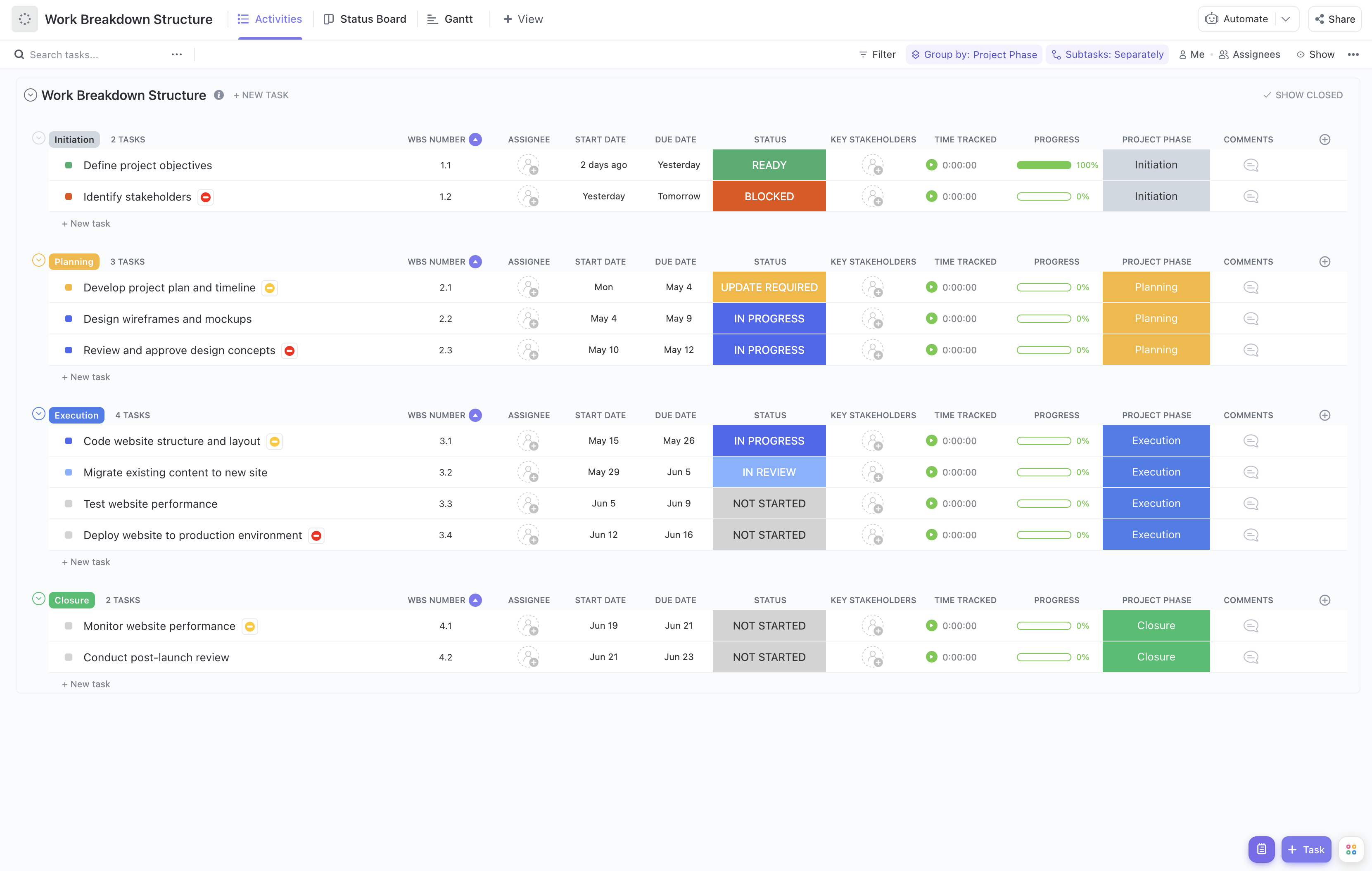
Managing student evaluations can be complex, involving multiple assessment types, scheduling, and coordination among educators and administrative staff. The Student Evaluation Work Breakdown Structure Template simplifies this process by breaking down the evaluation execution into clear, actionable tasks.
This tailored template helps you:
- Organize evaluation components such as exams, projects, and participation assessments into manageable sections for clarity
- Assign responsibilities to educators, teaching assistants, and administrative staff efficiently
- Track progress of evaluation tasks with real-time updates to ensure deadlines are met
The best part? No special software or coding skills are required—just use ClickUp to streamline your student evaluation process!
Benefits of a Student Evaluation Work Breakdown Structure Template
Using this template provides educators with a structured overview of the entire evaluation process, ensuring nothing is overlooked. Key benefits include:
- Clearly defines and organizes all evaluation deliverables, from test creation to grading and feedback
- Clarifies roles and responsibilities among faculty and staff involved in the evaluation process
- Enhances communication between educators, students, and administrative personnel to facilitate smooth execution
- Improves efficiency by enabling timely tracking and adjustments to evaluation tasks
Main Elements of the Student Evaluation Work Breakdown Structure Template
This template breaks down the student evaluation process into the following core elements:
- Evaluation Planning: Defining assessment types, criteria, and scheduling timelines
- Assessment Development: Creating exams, assignments, and project guidelines
- Task Assignment: Allocating responsibilities to educators and support staff
- Execution: Administering assessments and collecting student submissions
- Grading and Feedback: Evaluating student work and providing timely feedback
- Review and Reporting: Analyzing evaluation outcomes and preparing reports for stakeholders
By following this structured approach, educational institutions can ensure a comprehensive and efficient student evaluation process that supports academic success.