


Software development projects often involve intricate processes, multiple teams, and evolving requirements. Breaking down these complex projects into clear, manageable components is essential for delivering quality software on time. Our Software Development Work Breakdown Structure Template is crafted to help you navigate these challenges with ease.
This specialized template enables you to:
- Segment your software project into well-defined phases such as requirements gathering, design, development, testing, deployment, and maintenance.
- Assign specific tasks to developers, QA engineers, UI/UX designers, and other stakeholders to ensure clear accountability.
- Monitor real-time progress of each module or feature, allowing for agile adjustments and timely delivery.
Best of all, no advanced technical skills are required to get started. With ClickUp, your team can immediately begin structuring and managing software development tasks effectively.
Benefits of a Software Development Work Breakdown Structure Template
Utilizing a WBS tailored for software development offers numerous advantages:
- Clarifies project deliverables by breaking down the software into modules, features, and sub-tasks, ensuring comprehensive coverage of requirements.
- Defines roles clearly, helping developers, testers, and project managers understand their responsibilities and deadlines.
- Enhances communication across cross-functional teams and stakeholders, fostering collaboration and reducing misunderstandings.
- Improves project efficiency by enabling early identification of bottlenecks and facilitating iterative progress tracking.
Main Elements of the Software Development Work Breakdown Structure Template
This template is structured to reflect the typical phases of a software development lifecycle:
- Project Initiation:
Define project scope, objectives, and key stakeholders.
- Requirements Analysis:
Gather and document functional and non-functional requirements.
- Design:
Create system architecture, UI/UX designs, and technical specifications.
- Development:
Break down coding tasks by feature or module, assign to developers, and set milestones.
- Testing:
Plan and execute unit tests, integration tests, system tests, and user acceptance testing.
- Deployment:
Prepare deployment plans, release schedules, and post-deployment support.
- Maintenance:
Track bug fixes, updates, and feature enhancements post-launch.
Each element includes task assignments, deadlines, dependencies, and progress tracking features to keep your software development project on course.
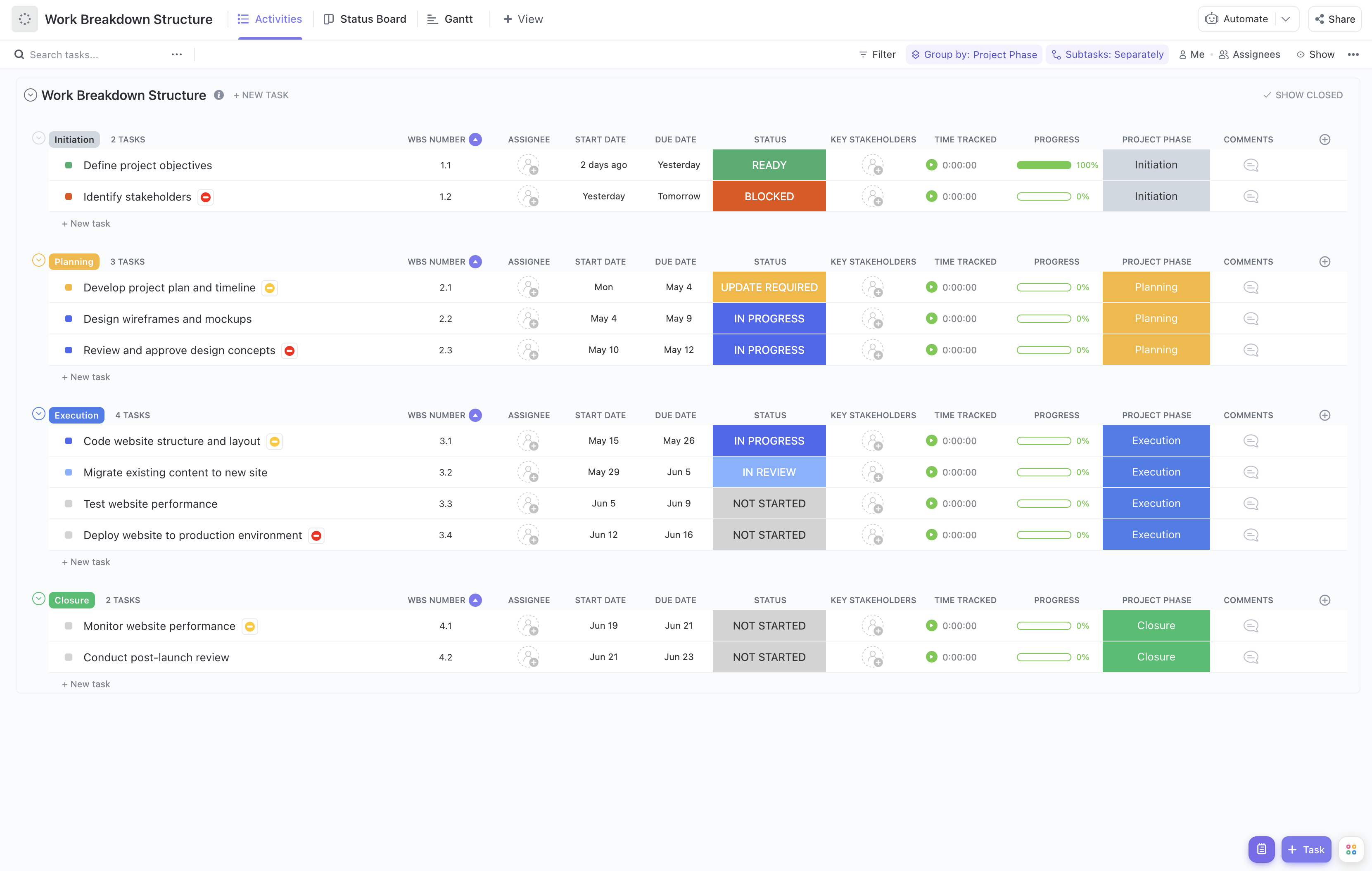
By leveraging this template, your software development team gains a clear roadmap, enabling efficient collaboration and successful project delivery.












