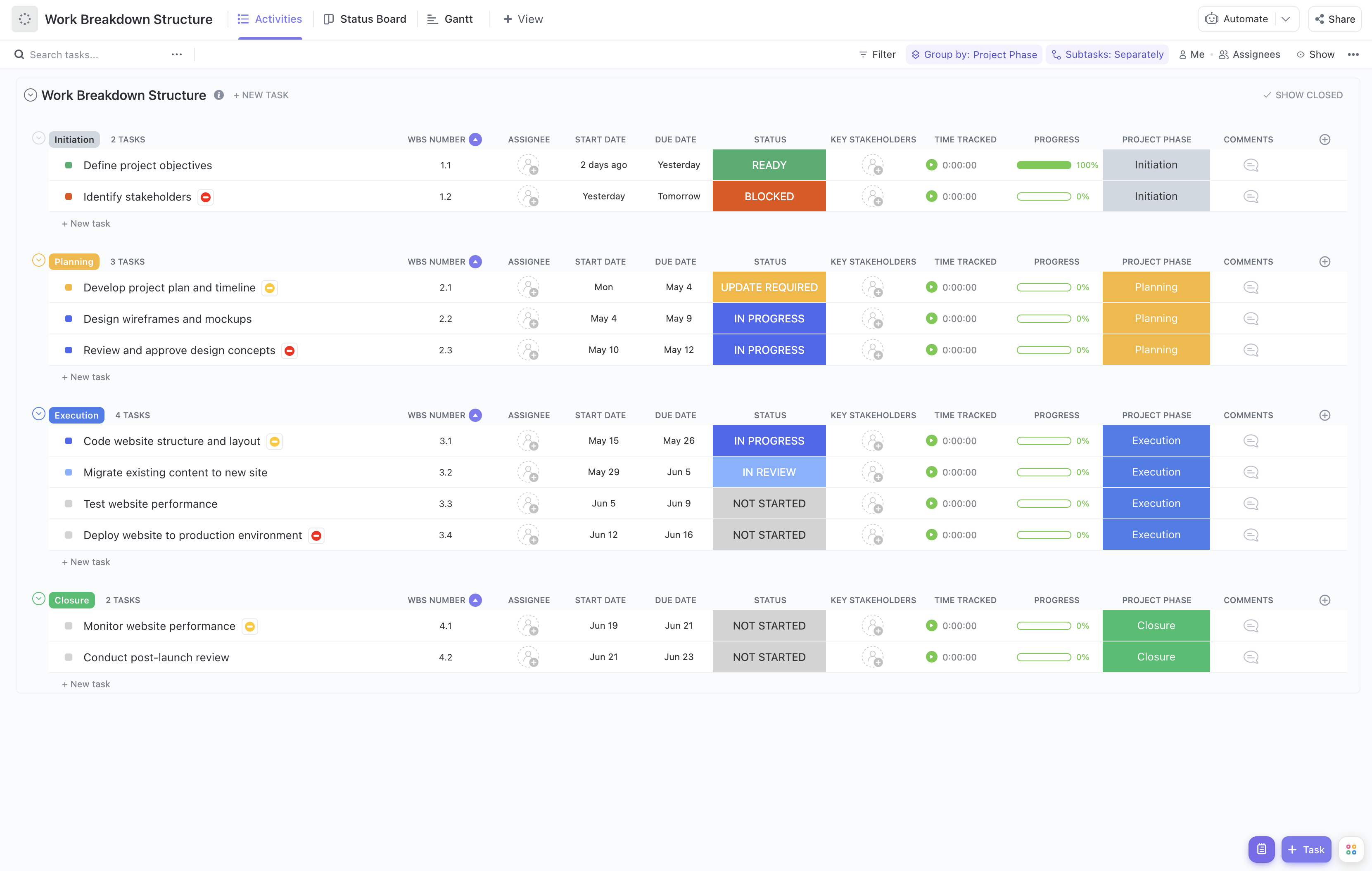
Managing a shop floor control system involves coordinating numerous interrelated tasks, from scheduling and resource allocation to quality control and real-time monitoring. Breaking down these complex processes into manageable components is essential for operational success. This Shop Floor Control System Work Breakdown Structure Template provides a structured framework to help you organize, assign, and track every critical aspect of your shop floor operations.
This specialized template helps you:
- Segment shop floor control activities into clear, actionable tasks for better oversight
- Assign responsibilities to production teams, supervisors, and quality control staff efficiently
- Monitor progress and identify bottlenecks with real-time updates and status tracking
The best part? You don't need any specialized software or coding skills to implement this template. Simply use ClickUp to gain full visibility and control over your shop floor processes.
Benefits of a Shop Floor Control System Work Breakdown Structure Template
Utilizing a WBS template designed for shop floor control offers numerous advantages for manufacturing managers and teams. It provides a clear visual map of all activities required to operate and optimize the shop floor, ensuring timely completion and resource efficiency. Key benefits include:
- Clearly defines and organizes all shop floor control deliverables, from scheduling to quality assurance
- Clarifies roles and responsibilities among production workers, supervisors, and support staff
- Enhances communication and coordination between departments such as production, maintenance, and logistics
- Improves operational efficiency by identifying task dependencies and streamlining workflows
Main Elements of a Shop Floor Control System Work Breakdown Structure Template
This template breaks down the shop floor control system into the following core components:
- Production Scheduling
Includes tasks such as creating production plans, sequencing jobs, and allocating machine time to meet delivery deadlines.
- Resource Management
Focuses on assigning labor, machinery, and materials efficiently to optimize throughput and minimize downtime.
- Quality Control
Encompasses inspection procedures, defect tracking, and corrective actions to maintain product standards.
- Real-Time Monitoring
Involves tracking production status, machine performance, and workflow progress using dashboards and alerts.
- Maintenance Coordination
Schedules preventive maintenance and manages repair tasks to ensure equipment reliability.
- Reporting and Analysis
Generates performance reports, analyzes production data, and supports continuous improvement initiatives.
By leveraging this structured approach, your team can maintain clear visibility over every aspect of shop floor control, ensuring smooth operations and timely delivery of products. Use this template to align your workforce, optimize processes, and drive manufacturing excellence.