
Ensuring that services meet defined standards and client expectations is critical for successful service delivery. Managing the verification process can be complex, involving multiple tasks, teams, and checkpoints. That's where this Service Verification Execution Work Breakdown Structure Template comes in!
This specialized template helps you:
- Decompose the service verification process into clear, actionable tasks for better oversight
- Assign verification responsibilities to the appropriate team members swiftly and accurately
- Monitor verification progress and compliance status with real-time updates and reporting
Best of all, you can implement this template easily with ClickUp—no coding or specialized software needed. Start structuring your service verification workflow for success today!
Benefits of a Service Verification Execution Work Breakdown Structure Template
Utilizing a work breakdown structure tailored for service verification execution offers numerous advantages for project managers and service teams, including:
- Clear definition and organization of verification deliverables, such as test plans, validation reports, and compliance checklists
- Enhanced clarity on roles and responsibilities, ensuring each team member understands their verification tasks and deadlines
- Improved communication among service delivery teams, quality assurance, and stakeholders through transparent task tracking and status updates
- Increased efficiency in identifying verification bottlenecks and facilitating timely corrective actions
Main Elements of the Service Verification Execution Work Breakdown Structure Template
This template is structured to guide you through the entire verification process with these key components:
- Verification Planning: Define scope, objectives, criteria, and resources needed for service verification.
- Task Breakdown: Segment verification activities into detailed tasks such as test case development, environment setup, execution, and result analysis.
- Resource Allocation: Assign roles to team members, including verification engineers, quality analysts, and project managers.
- Progress Tracking: Use status indicators and timelines to monitor task completion and identify delays.
- Documentation and Reporting: Capture verification evidence, generate compliance reports, and document issues for resolution.
By following this structured approach, your team can execute service verification with precision, ensuring that services delivered meet or exceed expectations and regulatory requirements.
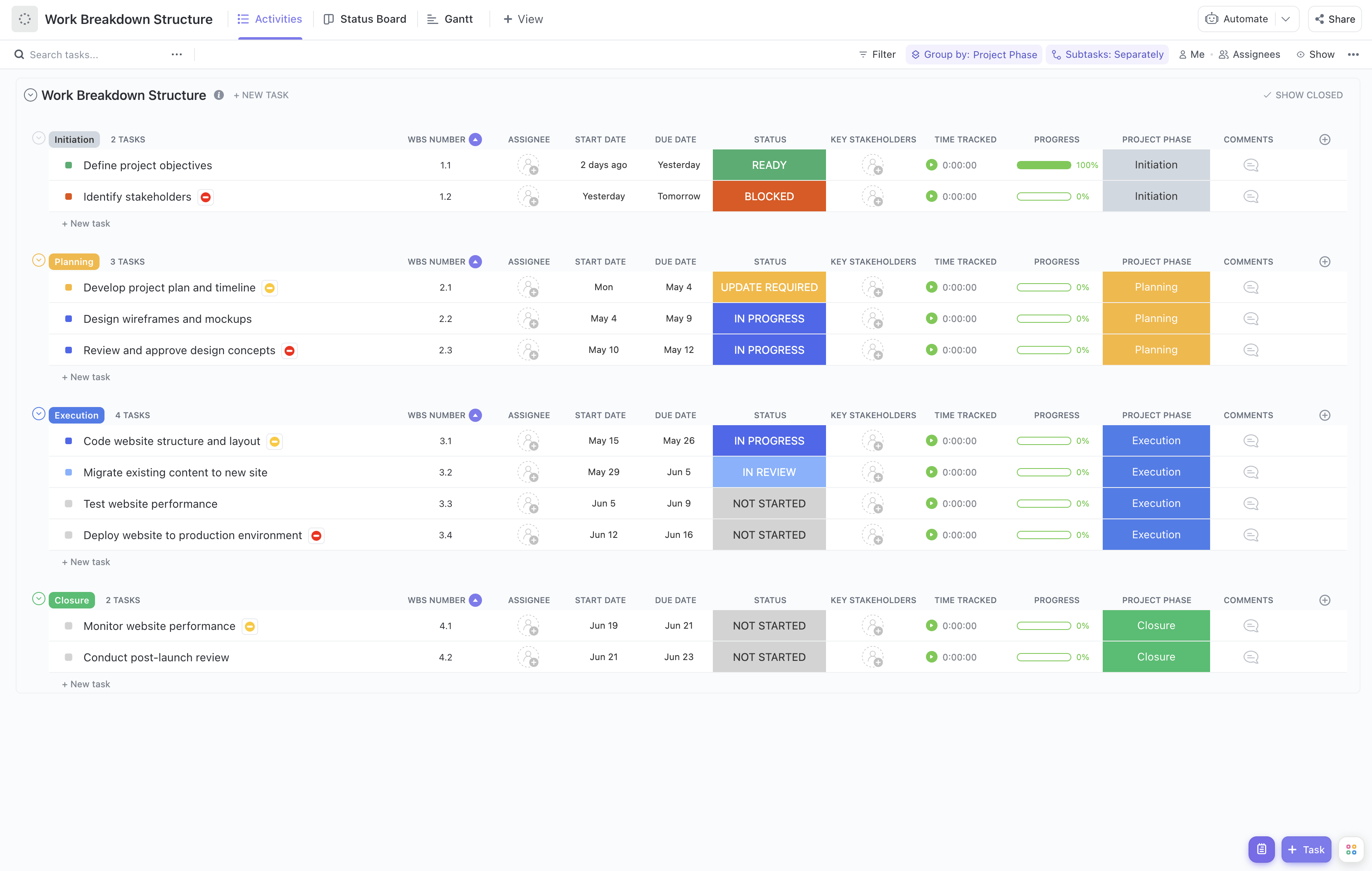


Use this template to bring clarity, accountability, and efficiency to your service verification execution process, ensuring high-quality service delivery and stakeholder satisfaction.