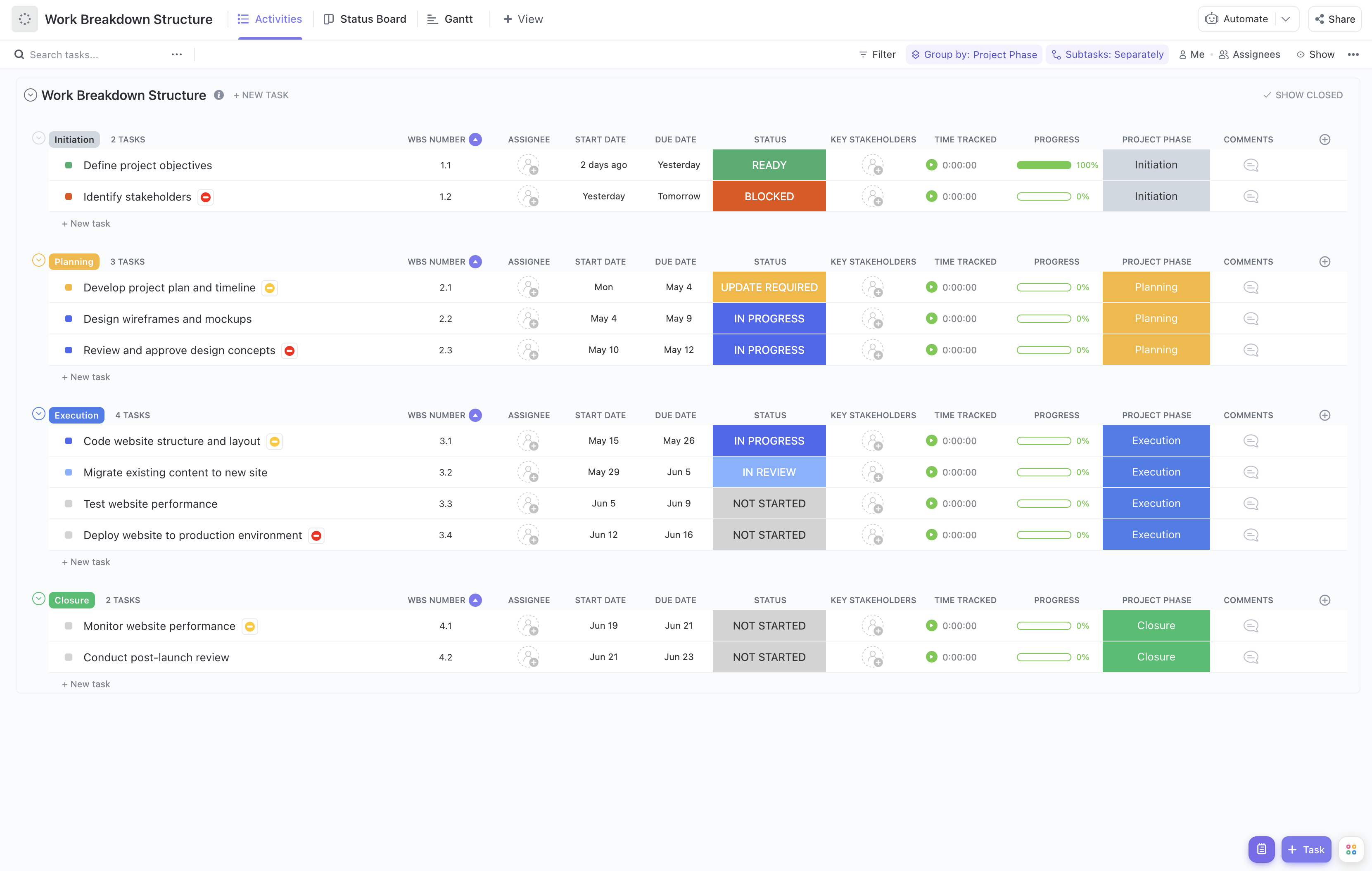
Implementing a reverse logistics rollout involves coordinating numerous interdependent tasks across multiple departments, from returns management to refurbishment and disposal. Managing this complexity requires a clear, structured approach. That's where our Reverse Logistics Rollout Work Breakdown Structure (WBS) Template comes in!
This template empowers your team to:
- Break down the reverse logistics rollout into manageable components, such as returns processing, quality inspection, refurbishment, inventory updates, and final disposition.
- Assign responsibilities to specialized teams including warehouse staff, quality control, IT, and customer service to ensure accountability and clarity.
- Monitor progress in real-time, enabling swift identification of bottlenecks and timely adjustments to the rollout plan.
Best of all, this template requires no coding or complex software—just ClickUp and your team's expertise to drive a successful reverse logistics implementation.
Benefits of a Reverse Logistics Rollout Work Breakdown Structure Template
Using this tailored WBS template provides several advantages for your reverse logistics project:
- Defines and organizes deliverables: Clearly outlines each phase of the reverse logistics process, from initial returns receipt to final disposition, ensuring comprehensive coverage.
- Clarifies roles and responsibilities: Assigns tasks to the appropriate teams, improving coordination between warehouse operations, quality assurance, IT systems, and customer service.
- Enhances communication: Facilitates transparent updates and collaboration among stakeholders, reducing misunderstandings and delays.
- Improves efficiency: Streamlines the rollout by identifying dependencies and critical paths, helping to keep the project on schedule and within budget.
Main Elements of the Reverse Logistics Rollout Work Breakdown Structure Template
This template is structured to cover all essential components of a reverse logistics rollout:
- Returns Processing: Tasks related to receiving, sorting, and documenting returned products.
- Quality Inspection: Procedures for assessing returned items to determine their condition and next steps.
- Refurbishment and Repair: Activities involved in restoring products to sellable condition, if applicable.
- Inventory Management: Updating stock records to reflect returns, refurbishments, and disposals.
- Disposition Planning: Decisions and actions regarding resale, recycling, or disposal of returned goods.
- IT and Systems Integration: Ensuring software and tracking systems support reverse logistics workflows.
- Customer Communication: Managing notifications and support related to returns and refunds.
- Training and Change Management: Preparing staff for new processes and tools involved in the rollout.
By leveraging this comprehensive WBS template, your organization can confidently navigate the complexities of reverse logistics rollout, ensuring all tasks are accounted for and executed efficiently.