

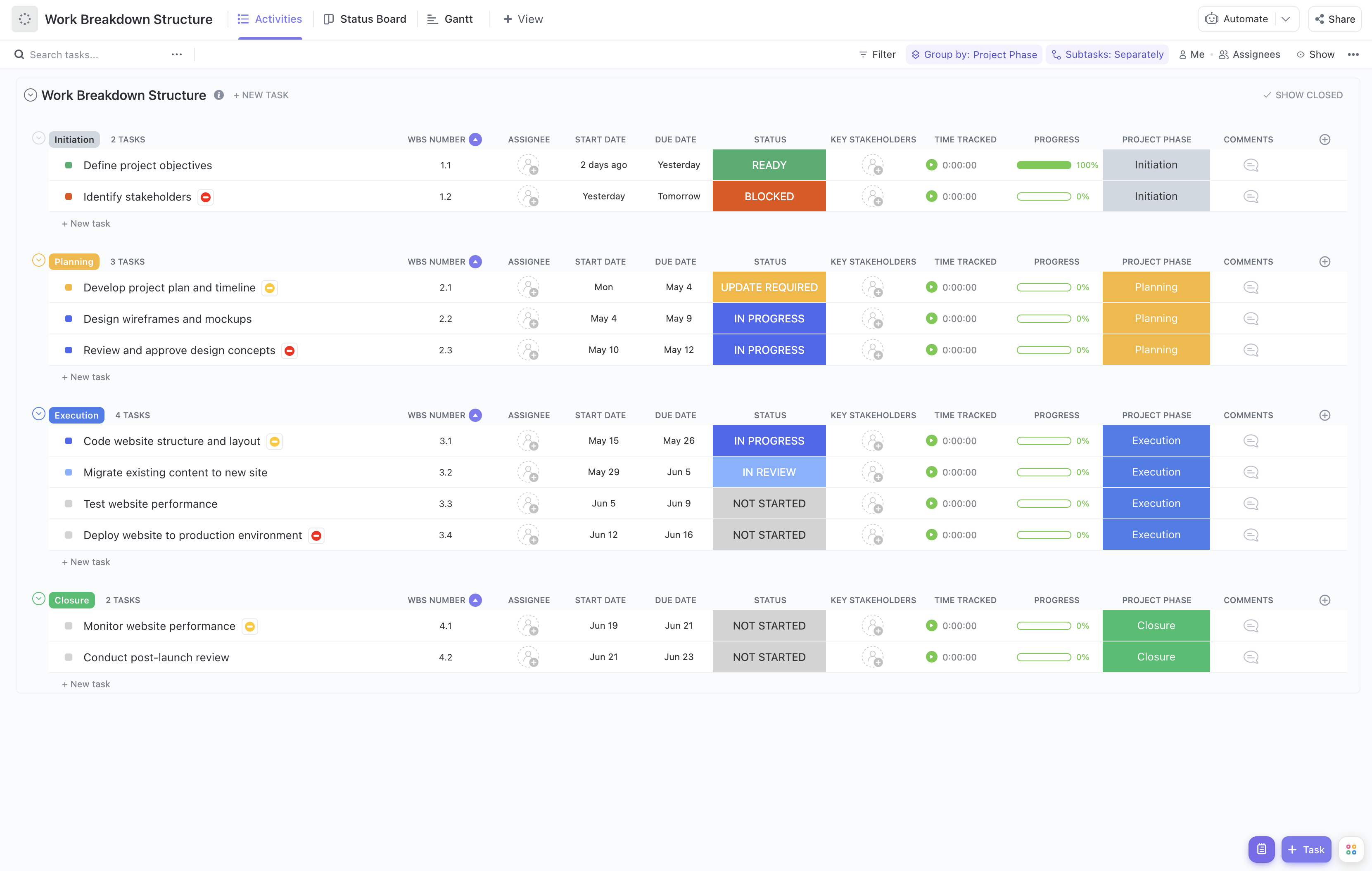


Implementing a returns handling process involves coordinating multiple teams, tasks, and deliverables to ensure customer satisfaction and operational efficiency. This Returns Handling Rollout Work Breakdown Structure (WBS) template helps you systematically break down the rollout project into manageable components, allowing for better oversight and execution.
Using this template, you can:
- Structure the rollout into clear phases such as planning, system setup, training, pilot testing, and full deployment
- Assign responsibilities to cross-functional teams including logistics, customer service, IT, and quality assurance
- Monitor progress with real-time updates to identify and address risks promptly
Best of all, this template requires no coding or special software skills—just ClickUp to get started and keep your returns handling rollout on track.
Benefits of a Returns Handling Rollout Work Breakdown Structure
Deploying a returns handling process can be complex, but a well-defined WBS template offers significant advantages:
- Clearly defines the project’s deliverables such as process documentation, system configurations, and training materials
- Clarifies roles and responsibilities across departments to avoid overlaps and gaps
- Enhances communication between stakeholders including supply chain, customer support, and IT teams
- Improves efficiency by identifying dependencies and streamlining task execution
Main Elements of the Returns Handling Rollout Work Breakdown Structure
This template organizes the rollout into key components:
- Project Initiation: Define objectives, scope, and key stakeholders for the returns handling rollout.
- Process Design: Develop the returns policy, workflows, and documentation aligned with company standards.
- System Configuration: Set up and test any software or tools needed for returns tracking and management.
- Training and Communication: Prepare training materials and conduct sessions for all involved teams to ensure readiness.
- Pilot Testing: Run a controlled pilot to validate processes and systems, gather feedback, and make necessary adjustments.
- Full Deployment: Roll out the returns handling process company-wide with ongoing monitoring and support.
- Project Closure: Review outcomes, document lessons learned, and formally close the project.
By leveraging this structured approach, your returns handling rollout will be organized, transparent, and aligned with business goals, ensuring a successful implementation that enhances customer satisfaction and operational performance.










