
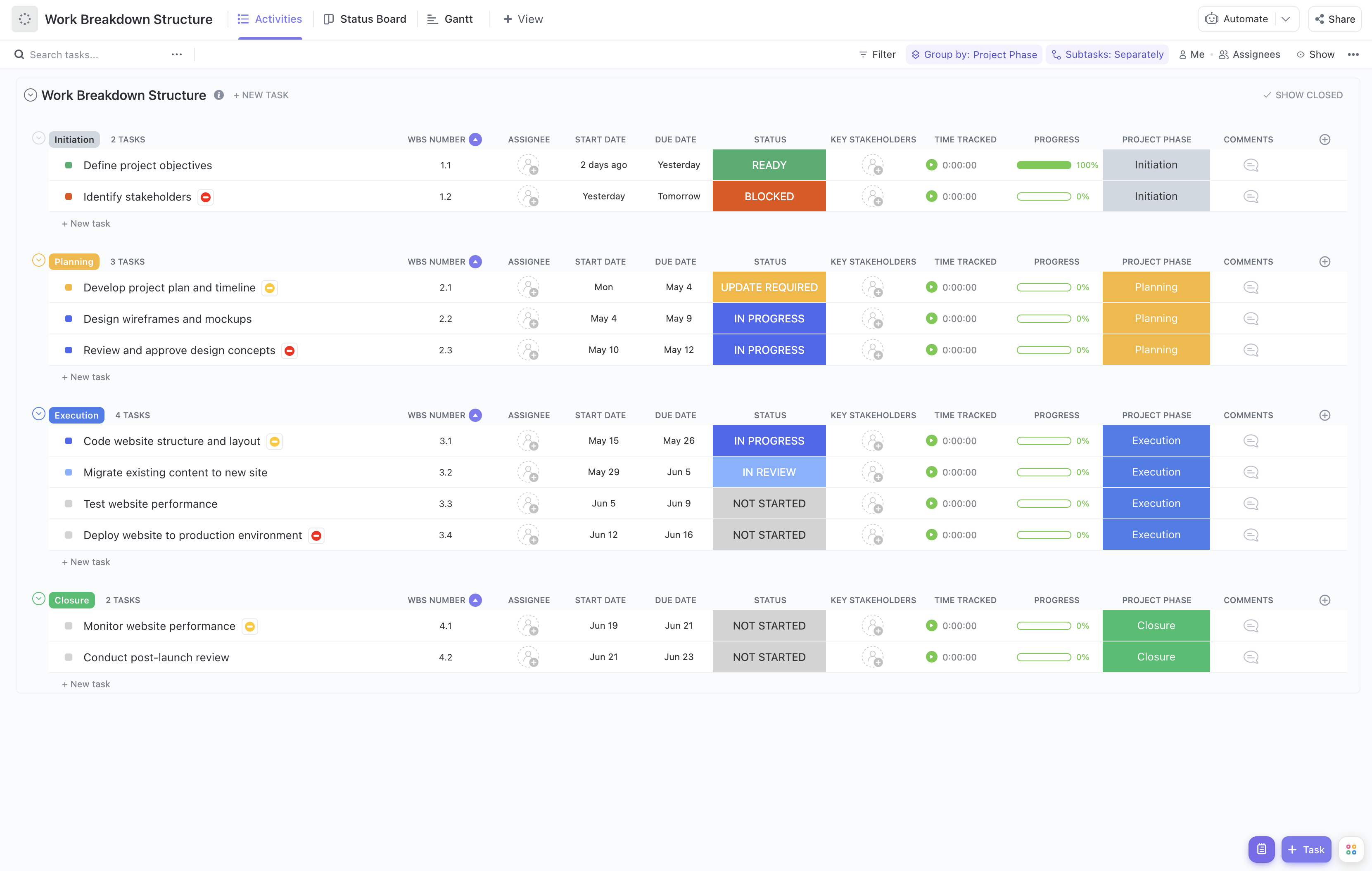


Setting up research operations involves coordinating multiple tasks, teams, and deliverables to ensure successful project outcomes. Managing these components can be complex and challenging. That's where this Research Operations Work Breakdown Structure Template comes in!
This specialized template helps you:
- Break down research projects into clear, manageable tasks and milestones for enhanced oversight
- Assign responsibilities to research team members and stakeholders efficiently, ensuring accountability
- Monitor progress in real-time with integrated status updates and customizable fields tailored for research workflows
Best of all, no coding skills or specialized software are required—simply use ClickUp to get started and bring structure to your research operations.
Benefits of a Research Operations Work Breakdown Structure Template
Utilizing a work breakdown structure tailored for research operations offers numerous advantages. It provides a visual and organized framework that helps research managers and teams:
- Define and organize research deliverables such as study protocols, data collection plans, and analysis reports
- Clarify roles and responsibilities across research coordinators, analysts, and principal investigators
- Enhance communication between research staff, collaborators, and stakeholders through transparent task tracking
- Improve efficiency by identifying dependencies and potential bottlenecks early in the research lifecycle
Main Elements of the Research Operations Work Breakdown Structure Template
This template is structured to support the unique demands of research projects, featuring:
- Research Phases: Segments for literature review, study design, data collection, analysis, and dissemination
- Task Breakdown: Detailed tasks under each phase, such as IRB submission, participant recruitment, data cleaning, and manuscript drafting
- Custom Fields: Fields for tracking WBS numbers, key stakeholders, project phases, and progress status tailored to research needs
- Status Tracking: Visual indicators for task statuses like not started, in progress, under review, and complete to maintain workflow visibility
- Collaboration Tools: Integration with communication channels and document repositories to centralize research materials and discussions
By leveraging this template, research teams can systematically manage complex projects, ensuring that every component from initial planning to final publication is accounted for and executed efficiently.










