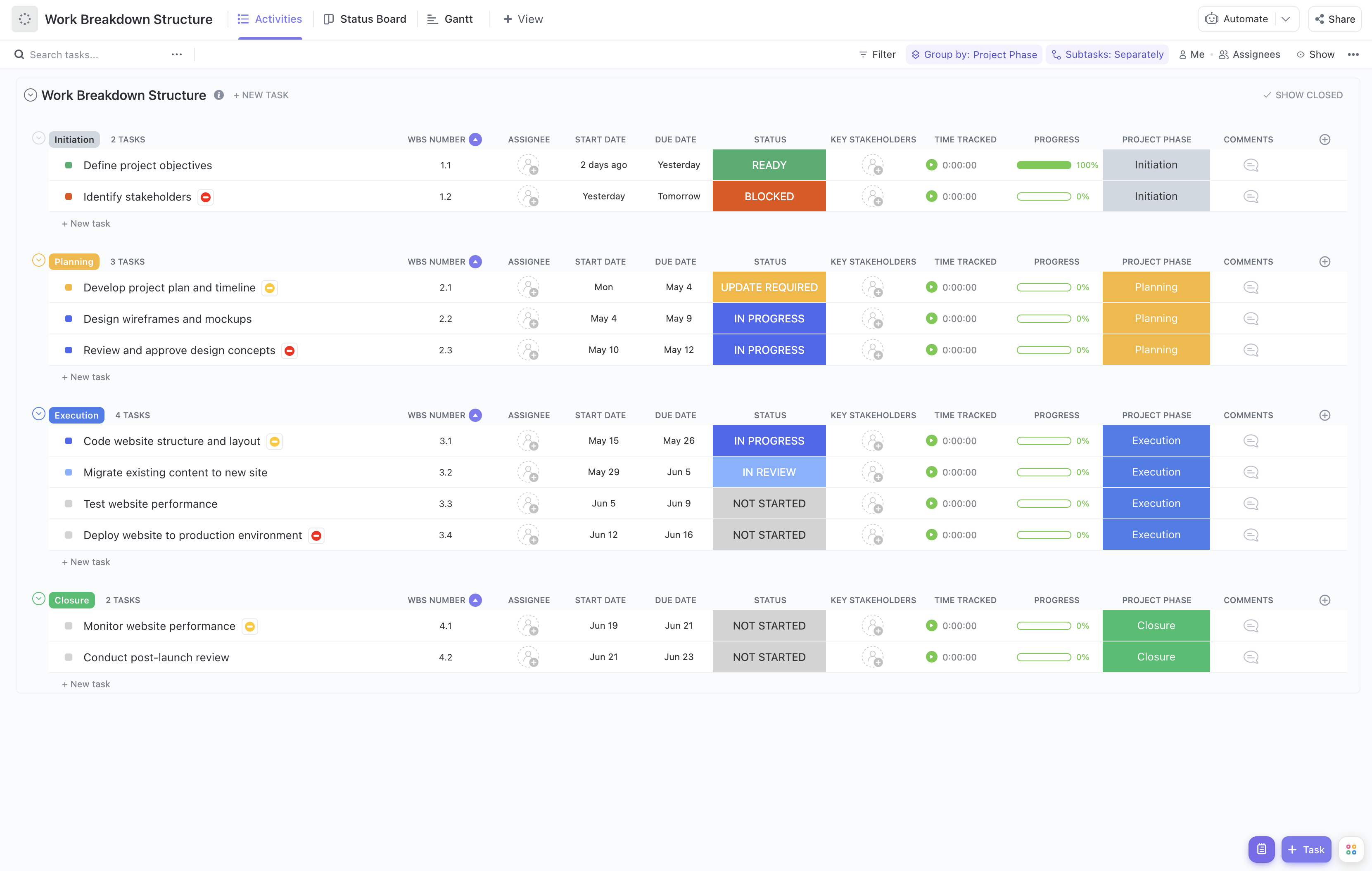
Managing research data involves intricate processes that require careful planning and coordination. Breaking down these complex data management tasks into manageable components is essential for successful research outcomes. Our Research Data Management Work Breakdown Structure Template provides a structured approach to organizing and overseeing your data-related activities.
This specialized template helps you:
- Segment research data tasks into clear, manageable sections for enhanced oversight
- Assign data stewardship roles and responsibilities efficiently among team members
- Monitor data collection, storage, analysis, and sharing progress with real-time updates
Best of all, this template is user-friendly and requires no coding skills—just use ClickUp to streamline your research data management workflow!
Benefits of a Research Data Management Work Breakdown Structure Template
Utilizing a WBS template tailored for research data management offers numerous advantages for research teams and project managers. It visually maps out the entire data management process, ensuring that critical tasks are completed on schedule and meet compliance standards. Key benefits include:
- Clearly defines and organizes deliverables such as data collection protocols, metadata documentation, and data archiving plans
- Clarifies roles for data stewards, analysts, and compliance officers, promoting accountability
- Enhances communication among researchers, data managers, and stakeholders to facilitate collaboration and transparency
- Improves efficiency by identifying dependencies and streamlining data workflows
Main Elements of the Research Data Management Work Breakdown Structure Template
This template is structured to cover all essential phases of research data management:
- Data Planning:
Define data management policies, ethical considerations, and compliance requirements.
- Data Collection:
Outline procedures for data acquisition, quality assurance, and documentation.
- Data Processing and Analysis:
Assign tasks for data cleaning, transformation, and statistical analysis.
- Data Storage and Backup:
Establish secure storage solutions, backup schedules, and access controls.
- Data Sharing and Publication:
Plan for data dissemination, repository submission, and licensing.
- Project Monitoring:
Track progress, manage risks, and update stakeholders regularly.
By following this comprehensive structure, research teams can ensure robust data management practices that support reproducibility, compliance, and successful project completion.