

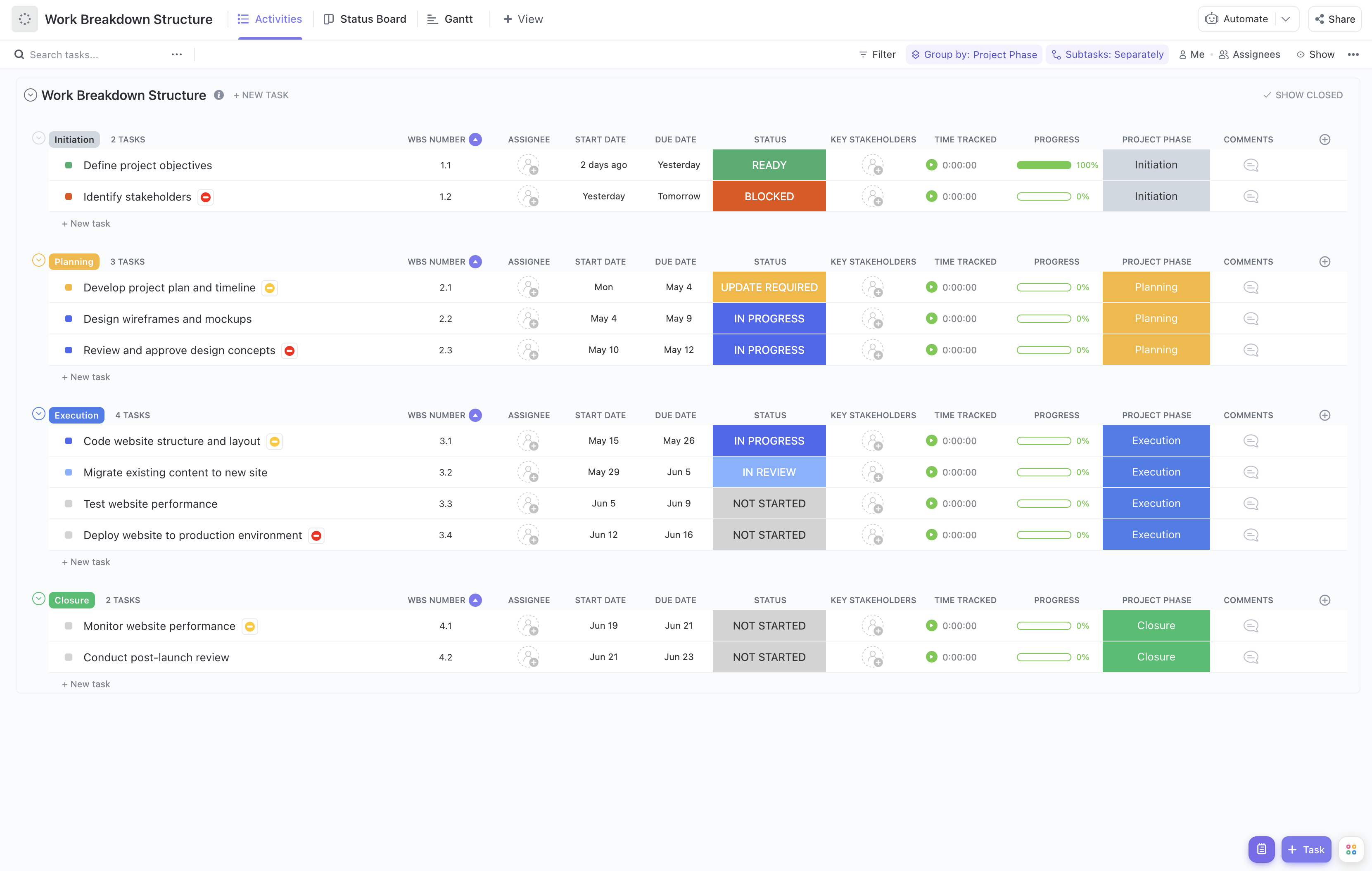


Managing the execution of public service eligibility can be a complex endeavor involving multiple departments, regulatory requirements, and detailed verification steps. To streamline this process and ensure accurate, timely decisions, our Public Service Eligibility Execution Work Breakdown Structure Template offers a clear, organized framework tailored to public sector needs.
This specialized template helps you:
- Break down the eligibility assessment process into clear, manageable tasks and phases
- Assign responsibilities to relevant teams such as case workers, auditors, and supervisors
- Monitor progress on application reviews, document verification, and decision-making in real-time
Best of all, this template requires no coding or complex software—just your ClickUp workspace to get started immediately on enhancing your public service delivery.
Benefits of a Public Service Eligibility Execution Work Breakdown Structure
Utilizing a WBS tailored for public service eligibility execution provides numerous advantages for government agencies and public organizations:
- Clarifies each step in the eligibility determination process, from initial application intake to final approval or denial
- Defines clear roles and responsibilities for case managers, eligibility specialists, and quality assurance teams
- Enhances communication and coordination between departments such as social services, legal, and finance
- Improves transparency and accountability by tracking progress and bottlenecks in real-time
- Supports compliance with regulatory standards and audit requirements through structured documentation and workflow
Main Elements of the Public Service Eligibility Execution Work Breakdown Structure
This template organizes the eligibility execution process into key components, including:
- Application Intake: Collecting and logging applicant information, verifying completeness
- Preliminary Screening: Initial eligibility checks based on criteria such as income, residency, or age
- Document Verification: Reviewing submitted documents for authenticity and sufficiency
- Detailed Assessment: In-depth evaluation by eligibility specialists, including interviews or home visits if applicable
- Decision Making: Approval, denial, or request for additional information, with documented rationale
- Notification and Appeals: Communicating decisions to applicants and managing any appeals or reconsiderations
- Reporting and Compliance: Generating reports for oversight bodies and ensuring adherence to policies
Each element is broken down into actionable tasks with assigned owners, deadlines, and status tracking to ensure smooth execution and accountability.
By adopting this structured approach, public service agencies can enhance operational efficiency, reduce errors, and improve service delivery outcomes for eligible citizens.










