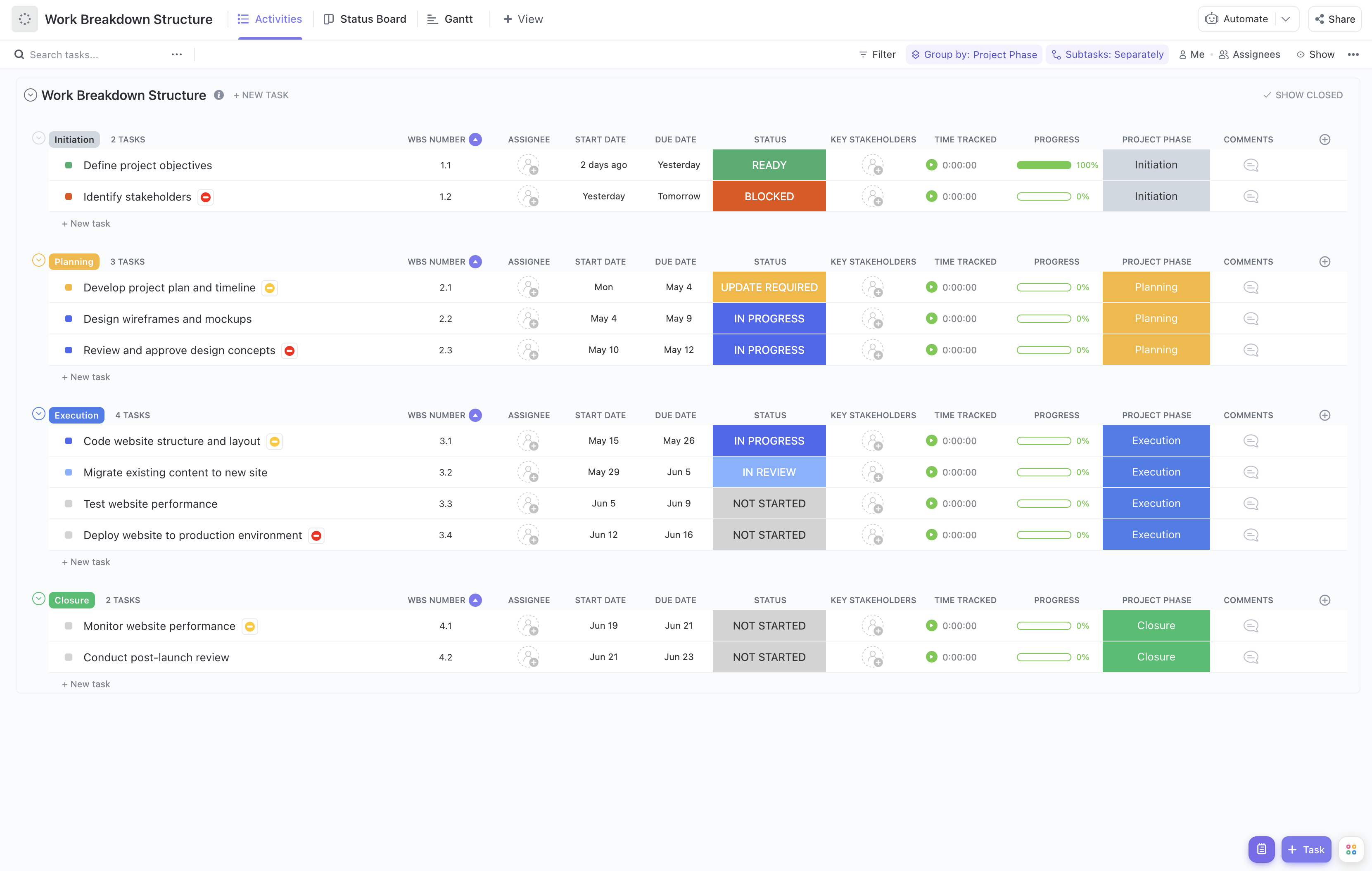
Implementing a public records rollout involves numerous coordinated activities, from policy development to system deployment and staff training. Managing these diverse tasks can be challenging without a clear structure. This Public Records Rollout Work Breakdown Structure (WBS) Template provides a comprehensive framework to decompose the rollout into manageable components, ensuring clarity and accountability at every stage.
This specialized template enables you to:
- Segment the public records rollout into distinct phases such as policy formulation, records inventory, system configuration, and public access implementation
- Assign responsibilities to relevant departments and stakeholders including legal, IT, and records management teams
- Monitor progress with real-time updates to keep the rollout on schedule and compliant with regulatory requirements
Best of all, this template requires no coding or specialized software knowledge—just use ClickUp to organize and track your public records rollout effectively.
Benefits of a Public Records Rollout Work Breakdown Structure Template
Using a WBS template tailored for public records rollout offers significant advantages for project managers and government officials alike. It provides a clear visual roadmap of the rollout process, helping to ensure timely completion and adherence to legal mandates. Key benefits include:
- Defines and organizes all deliverables related to public records compliance, system setup, and user training
- Clarifies roles and responsibilities across departments such as Records Management, IT, Legal, and Public Affairs
- Enhances communication among internal teams and external stakeholders, including regulatory bodies and the public
- Improves overall efficiency by identifying dependencies and potential bottlenecks early in the rollout
Main Elements of the Public Records Rollout Work Breakdown Structure Template
This template breaks down the public records rollout into key components, including:
- Project Initiation:
Establishing governance, defining objectives, and securing approvals
- Policy and Compliance Development:
Drafting and reviewing public records policies aligned with legal standards
- Records Inventory and Assessment:
Cataloging existing records and identifying gaps or risks
- System Configuration and Integration:
Setting up digital records management systems and ensuring interoperability
- Training and Change Management:
Preparing staff through training sessions and communication plans
- Public Access Implementation:
Launching portals or services for public records requests and access
- Monitoring and Evaluation:
Tracking rollout progress, compliance audits, and continuous improvement
By following this structured approach, your team can confidently navigate the complexities of public records rollout, ensuring transparency, compliance, and operational success.