
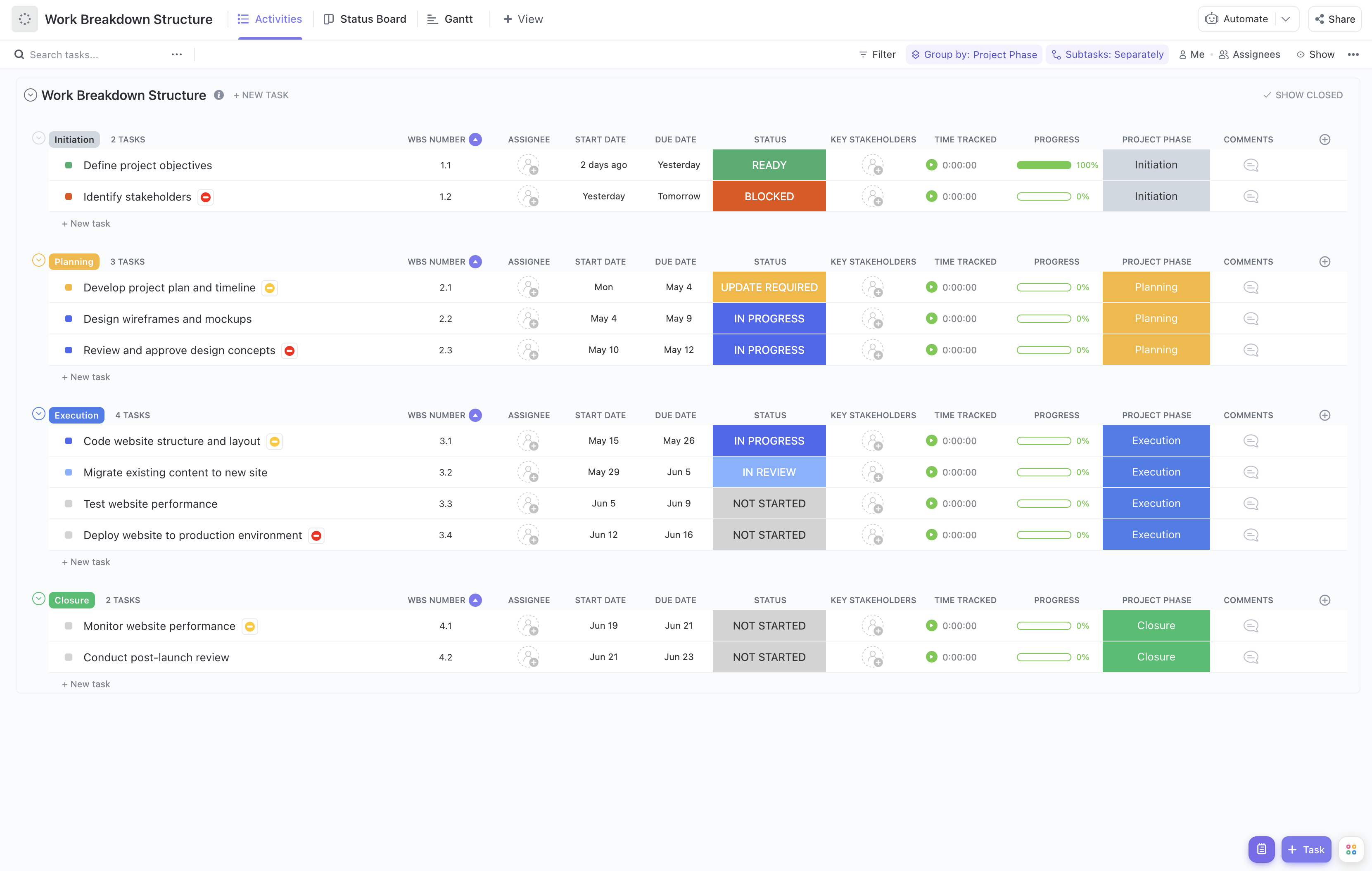


Managing public permit processing involves coordinating multiple stakeholders, regulatory requirements, and documentation. This specialized Work Breakdown Structure Template is designed to simplify and organize the entire permit workflow, from initial application to final approval.
This template enables you to:
- Segment the permit process into distinct phases such as application intake, review, public notification, and issuance
- Assign responsibilities to relevant departments and officials efficiently
- Monitor progress and deadlines with real-time updates to avoid bottlenecks
Best of all, this template requires no technical expertise—just use ClickUp to get started and keep your permit processing on track!
Benefits of Using a Public Permit Processing Work Breakdown Structure Template
Implementing a WBS for public permit processing offers numerous advantages:
- Clearly defines each step and deliverable in the permit lifecycle, reducing confusion and errors
- Clarifies roles and responsibilities among city planners, legal teams, inspectors, and public relations
- Enhances communication between departments and with applicants, improving transparency and trust
- Improves efficiency by identifying dependencies and streamlining task handoffs
Main Elements of the Public Permit Processing Work Breakdown Structure Template
This template breaks down the permit process into key components:
- Application Submission:
Collecting and logging permit applications, verifying completeness
- Initial Review:
Preliminary assessment for compliance and completeness
- Technical Review:
Detailed evaluation by specialists including environmental, zoning, and safety reviews
- Public Notification:
Publishing notices, scheduling hearings, and gathering public feedback
- Decision Making:
Final review meetings, approval or denial decisions, and documentation
- Permit Issuance:
Preparing and delivering permit documents to applicants
- Post-Issuance Monitoring:
Inspections, compliance checks, and record keeping
Each task can be assigned to specific team members with deadlines and status tracking to ensure smooth progress. Integration with communication tools allows for automated notifications and updates to stakeholders.
Using this WBS template, public agencies can reduce processing times, improve accountability, and provide better service to applicants, ultimately facilitating community development and regulatory compliance.










