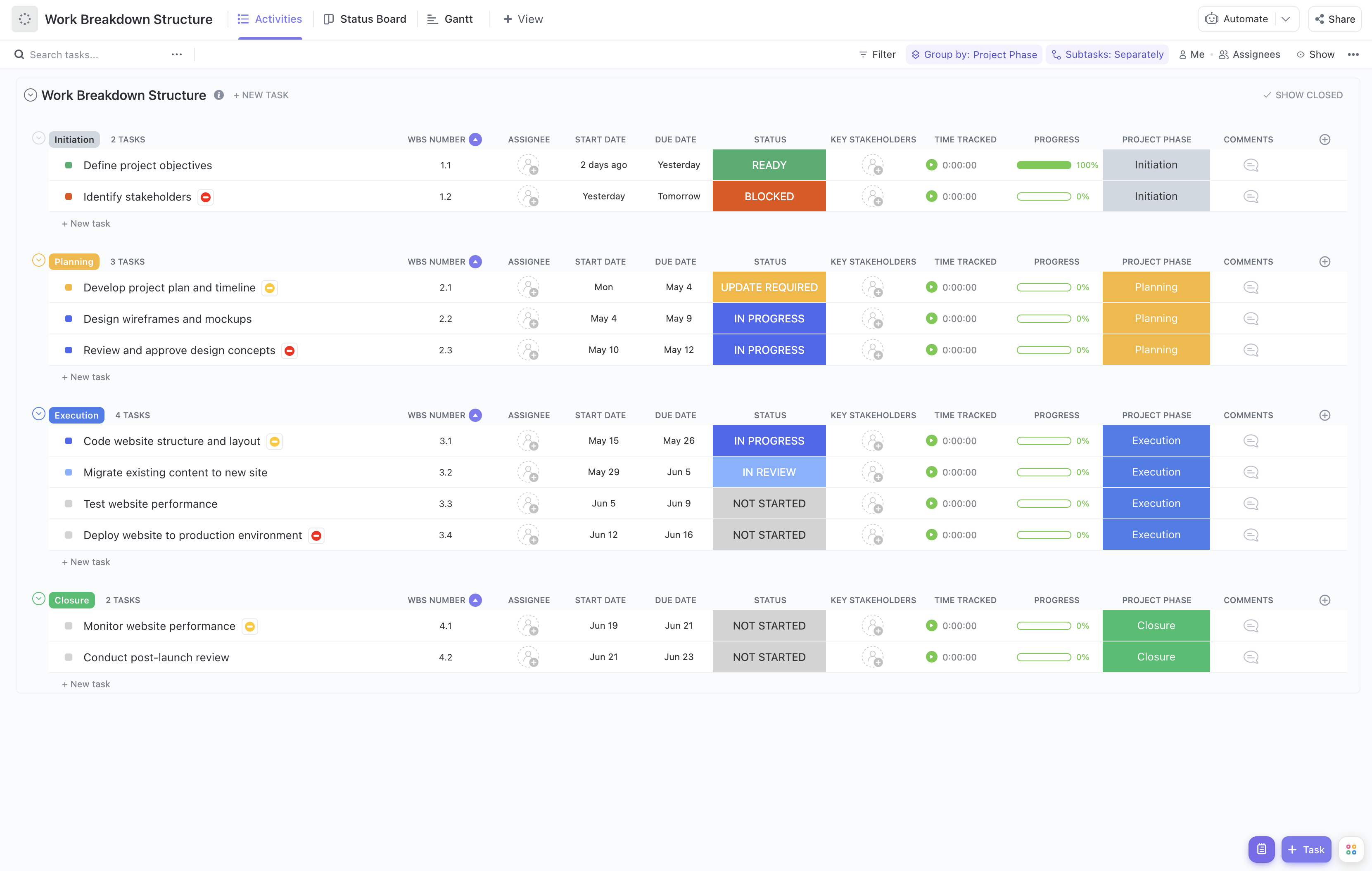
Implementing a production scheduling rollout involves coordinating multiple teams, tasks, and milestones to ensure seamless integration into existing operations. This specialized Work Breakdown Structure Template is crafted to help project managers dissect the rollout process into manageable components, providing clarity and control throughout the project lifecycle.
With this template, you can:
- Segment the rollout into clear phases such as system design, testing, training, and deployment for enhanced visibility
- Assign responsibilities to production planners, IT specialists, and operations staff efficiently
- Monitor real-time progress on key deliverables like software configuration, pilot runs, and full-scale implementation
Best of all, no advanced technical skills are needed to use this template—just ClickUp and your project data to get started on orchestrating a successful production scheduling rollout.
Benefits of a Production Scheduling Rollout Work Breakdown Structure Template
Using this WBS template tailored for production scheduling rollout offers numerous advantages for project managers and teams alike:
- Clearly defines and organizes all rollout deliverables, from initial planning to post-deployment support
- Provides transparency on roles and responsibilities, ensuring each team member understands their tasks within the rollout
- Enhances communication between production, IT, and management teams, reducing misunderstandings and delays
- Improves overall efficiency by enabling proactive identification and resolution of potential bottlenecks during rollout phases
Main Elements of the Production Scheduling Rollout Work Breakdown Structure Template
This template breaks down the rollout into essential components to guide your project execution:
- Project Initiation: Define scope, objectives, and key stakeholders involved in the rollout.
- System Configuration: Tasks related to customizing the scheduling software to meet production requirements.
- Testing & Validation: Pilot runs, data validation, and performance testing to ensure system readiness.
- Training & Documentation: Develop training materials and conduct sessions for end-users and support teams.
- Deployment: Rollout scheduling system across production lines with minimal disruption.
- Post-Deployment Support: Monitor system performance, address issues, and gather feedback for continuous improvement.
By following this structured approach, your production scheduling rollout will be organized, transparent, and aligned with your operational goals.