

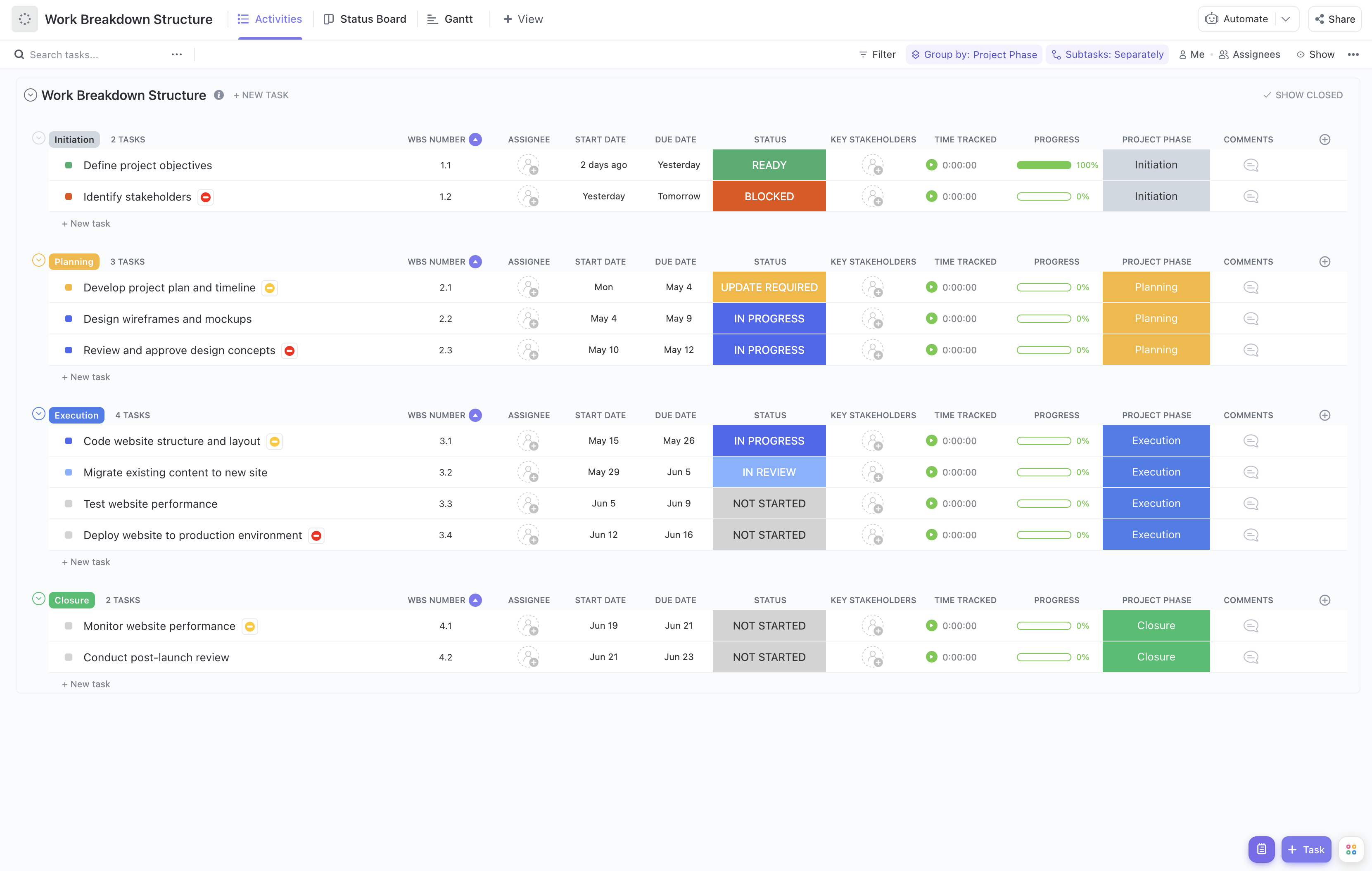


Product development projects often involve multiple stages, teams, and deliverables, making it challenging to maintain clarity and control. This Product Development Work Breakdown Structure Template is crafted to help you systematically decompose your product initiatives into actionable components, ensuring every detail is accounted for and progress is transparent.
With this template, you can:
- Segment product development phases such as ideation, design, prototyping, testing, and launch into manageable tasks
- Assign responsibilities to product managers, designers, engineers, QA, and marketing teams efficiently
- Monitor milestones and deliverables with real-time updates to keep your product on schedule
Best of all, this template requires no coding or specialized software—just ClickUp to get started breaking down your product development projects into success!
Benefits of a Product Development Work Breakdown Structure Template
Using a WBS tailored for product development empowers your team to:
- Clearly define and organize product features, technical tasks, and release goals
- Clarify roles and responsibilities across product, engineering, design, and QA teams
- Enhance communication between stakeholders, including product owners, developers, and marketing
- Improve efficiency by identifying dependencies and potential bottlenecks early
Main Elements of a Product Development Work Breakdown Structure Template
This template breaks down your product development into hierarchical levels, including:
- Product Vision and Strategy: Define overall goals, target market, and success criteria
- Requirements Gathering: Document user stories, technical specifications, and compliance needs
- Design and Prototyping: Wireframes, UI/UX design, and prototype iterations
- Development: Frontend and backend coding, integration, and unit testing
- Quality Assurance: Functional testing, bug tracking, and user acceptance testing
- Launch Preparation: Marketing campaigns, training materials, and deployment plans
- Post-Launch Support: Monitoring, feedback collection, and iterative improvements
Each task can be assigned to the appropriate team member with deadlines and progress tracking, allowing you to maintain full visibility over your product development lifecycle.
Leverage this structured approach to ensure your product development projects are delivered on time, within scope, and aligned with your business objectives.










