
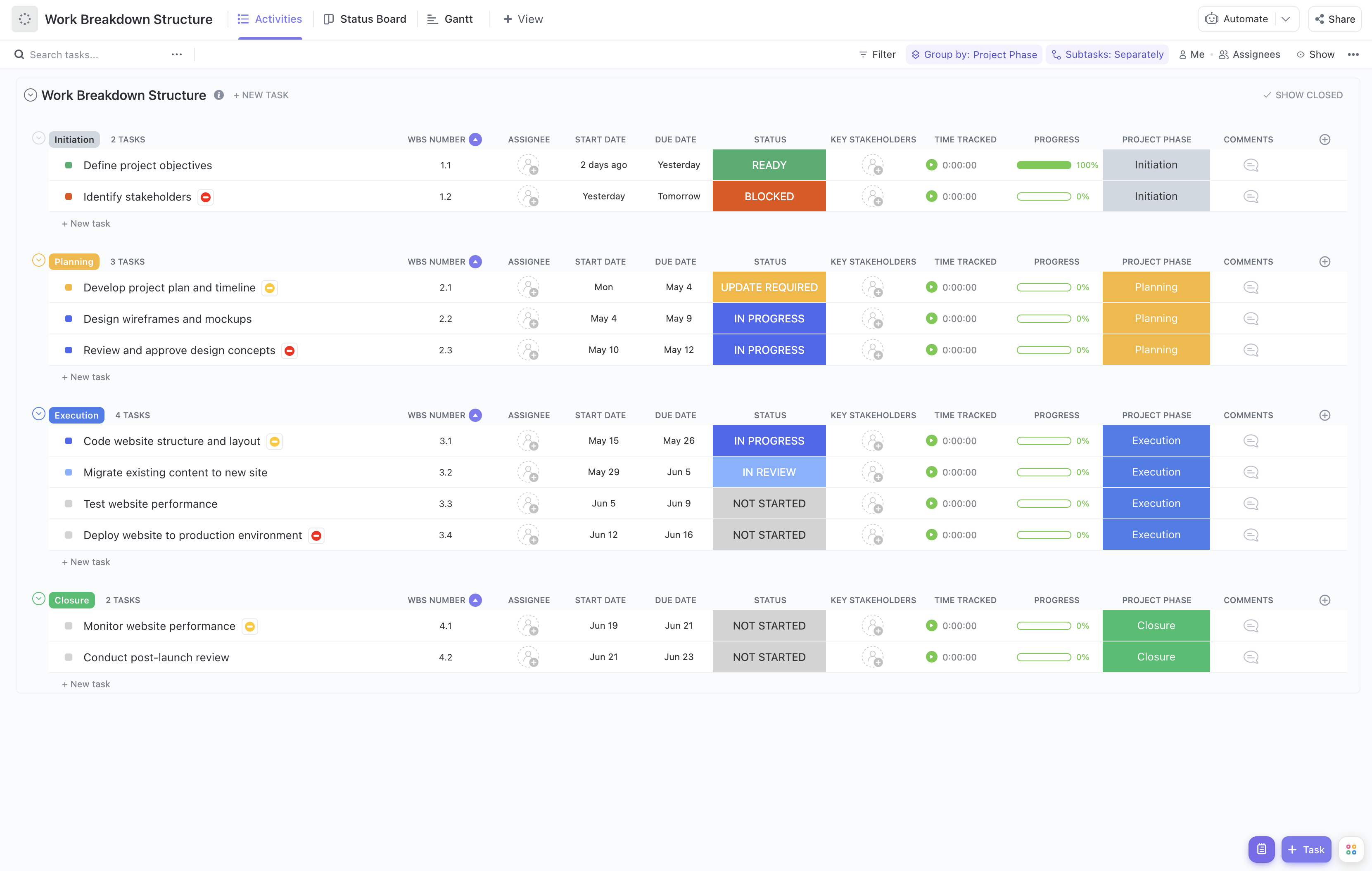


Improving business processes requires a clear, structured approach to identify inefficiencies and implement effective solutions. This Process Improvement Work Breakdown Structure Template is crafted to help you dissect your process enhancement projects into actionable components, enabling your team to focus on impactful improvements with precision.
With this template, you can:
- Systematically organize process improvement tasks into logical segments for enhanced manageability
- Assign responsibilities to team members based on expertise and process ownership
- Monitor progress with real-time updates to ensure timely completion of improvement milestones
Best of all, this template requires no specialized software or coding skills—just ClickUp to get started on transforming your processes efficiently.
Benefits of a Process Improvement Work Breakdown Structure Template
Utilizing a WBS tailored for process improvement empowers your team to:
- Clearly define process improvement goals and deliverables, such as reducing cycle times or enhancing quality metrics
- Break down complex process changes into manageable tasks, facilitating better planning and execution
- Clarify roles and responsibilities, ensuring accountability across process owners, analysts, and stakeholders
- Enhance communication among cross-functional teams, fostering collaboration and transparency
- Track progress against key performance indicators (KPIs) to measure the impact of improvements
- Identify potential risks and bottlenecks early, allowing proactive mitigation strategies
Main Elements of a Process Improvement Work Breakdown Structure Template
This template is structured to guide you through the essential phases of process improvement projects:
- Project Initiation:
Define the scope, objectives, and key stakeholders involved in the process improvement effort.
- Current Process Analysis:
Document existing workflows, collect data, and identify pain points or inefficiencies.
- Improvement Planning:
Develop improvement strategies, set measurable targets, and allocate resources.
- Implementation:
Execute process changes, conduct training, and deploy new tools or systems.
- Monitoring and Control:
Track performance metrics, gather feedback, and adjust plans as necessary.
- Project Closure:
Review outcomes, document lessons learned, and formalize process updates.
Each task within these phases can be assigned WBS numbers, key stakeholders, and progress statuses, enabling comprehensive oversight and efficient management of your process improvement initiatives.
By leveraging this template, your organization can foster continuous improvement culture, reduce waste, and enhance operational excellence with a clear roadmap and collaborative approach.










