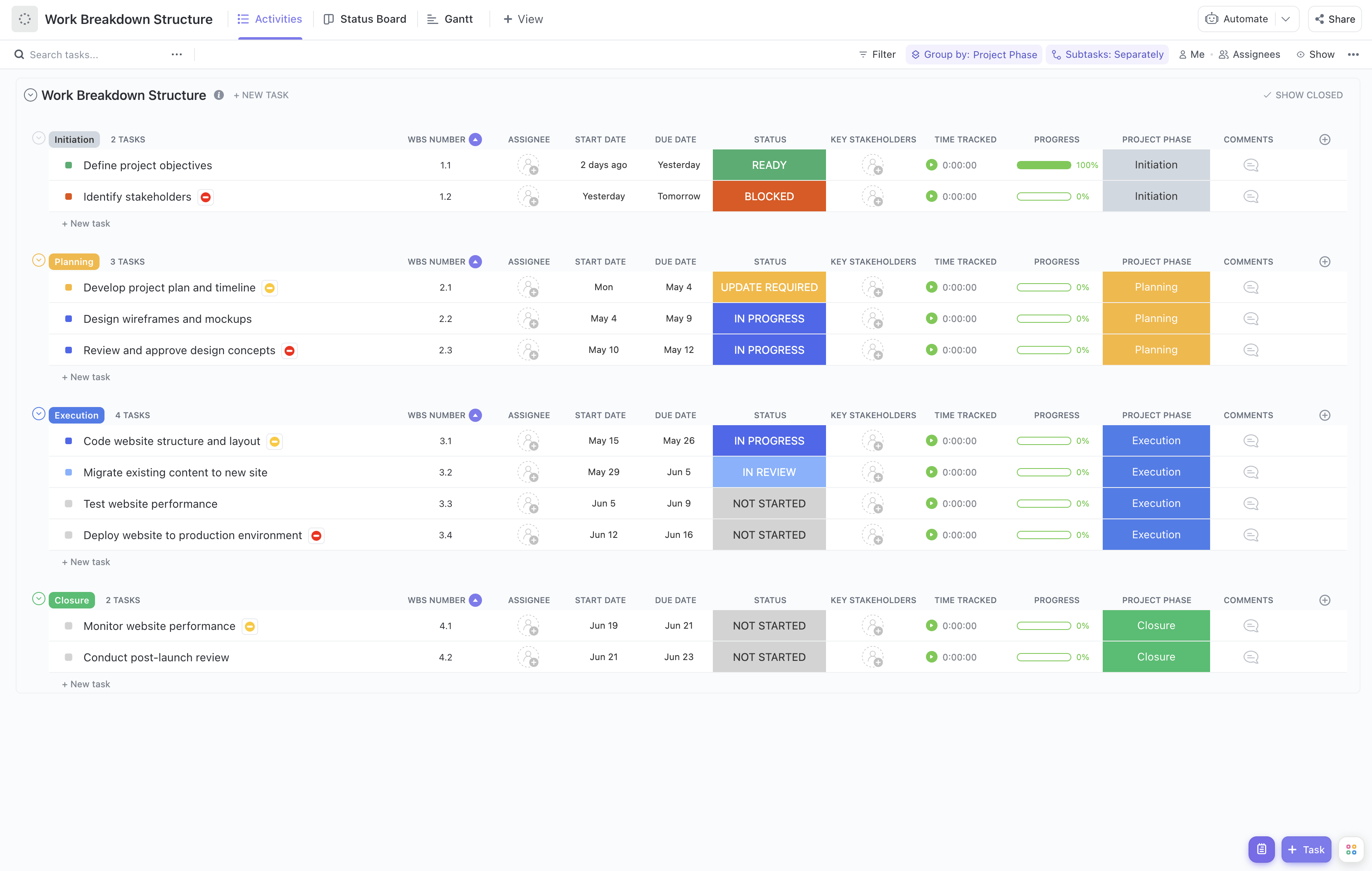
Ensuring that organizational processes are consistently enforced can be complex and challenging. Managing multiple enforcement activities, compliance checks, and corrective actions requires a structured approach. That's where our Process Enforcement Execution Work Breakdown Structure Template comes in!
This specialized template helps you:
- Organize enforcement tasks into clear, manageable sections for enhanced oversight
- Align compliance officers and team members to specific enforcement duties efficiently
- Track enforcement progress and compliance status with real-time updates
Best of all, you don't need any specialized software or coding skills to get started. Simply use ClickUp to break down your process enforcement initiatives into actionable steps and drive compliance success!
Benefits of a Process Enforcement Execution Work Breakdown Structure Template
Utilizing a work breakdown structure tailored for process enforcement execution offers numerous advantages for compliance managers and project leads. Key benefits include:
- Clearly defines and organizes enforcement activities, checkpoints, and corrective measures
- Provides transparency for team members regarding their enforcement responsibilities and deadlines
- Enhances communication between compliance teams, process owners, and stakeholders to promptly address issues
- Improves overall efficiency and effectiveness of process enforcement efforts, reducing risk of non-compliance
Main Elements of a Process Enforcement Execution Work Breakdown Structure Template
This template is designed to break down complex enforcement projects into structured components, including:
- Enforcement Phases: Segments such as Planning, Implementation, Monitoring, and Reporting ensure comprehensive coverage of the enforcement lifecycle.
- Task Hierarchy: Detailed tasks under each phase, such as scheduling audits, conducting inspections, documenting findings, and initiating corrective actions.
- Role Assignments: Clear designation of responsible individuals or teams for each enforcement task to ensure accountability.
- Progress Tracking: Real-time status updates and progress indicators to monitor enforcement activities and identify bottlenecks.
- Compliance Metrics: Integration of key performance indicators and compliance thresholds to measure enforcement effectiveness.
By leveraging this template, organizations can systematically enforce processes, maintain regulatory compliance, and foster a culture of accountability and continuous improvement.