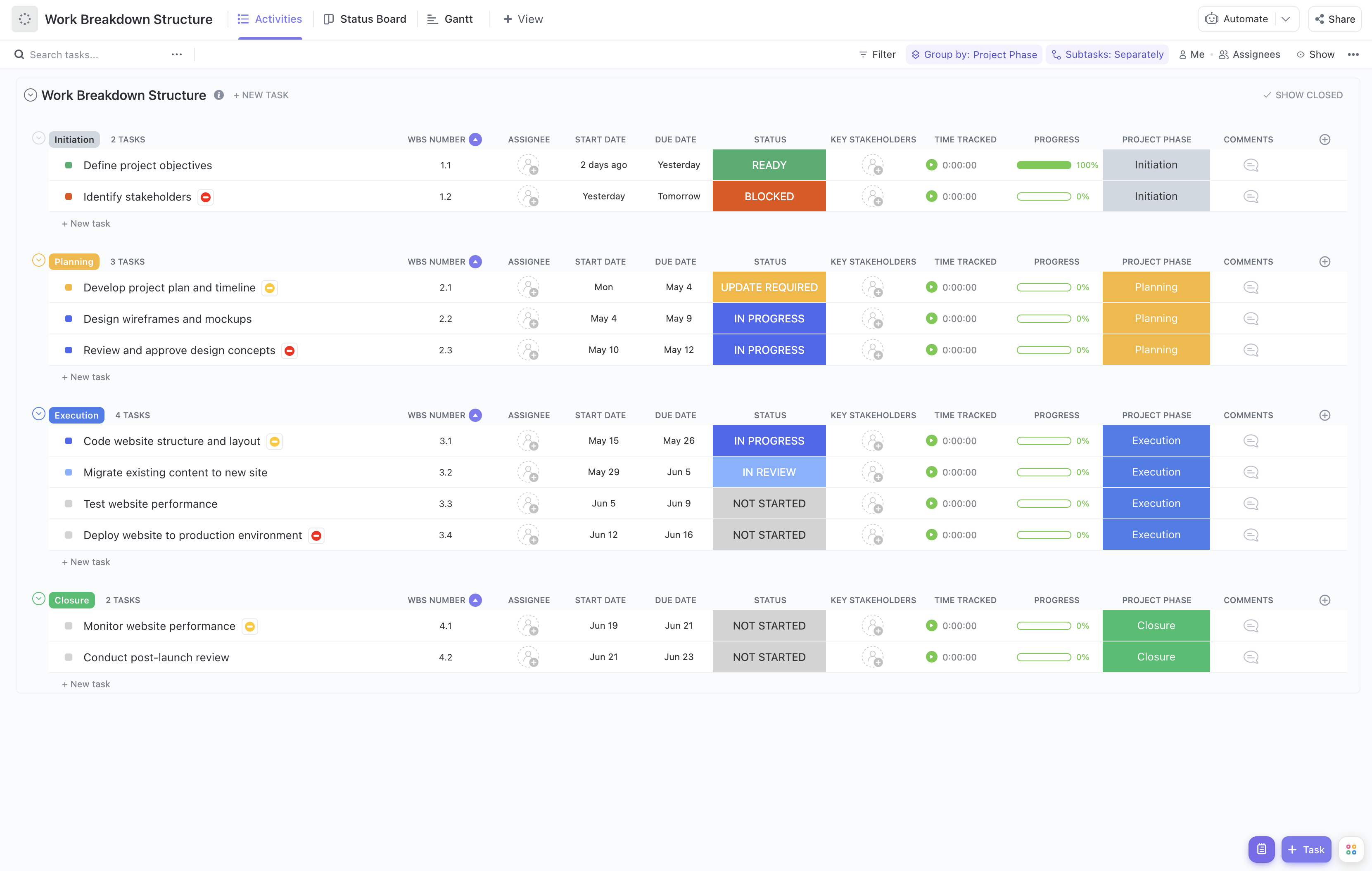
Executing a platform upgrade involves numerous interdependent tasks, teams, and milestones that require precise coordination. This Platform Upgrade Execution Work Breakdown Structure Template empowers project managers to decompose the upgrade process into manageable components, providing clear visibility and control over every phase.
This specialized template enables you to:
- Segment the platform upgrade into distinct phases such as assessment, planning, development, testing, deployment, and post-upgrade support
- Assign responsibilities to relevant teams including IT infrastructure, development, QA, and operations
- Track progress and identify potential risks with real-time status updates and customizable fields
Best of all, no advanced technical skills are required to use this template—just ClickUp and your project data to start managing your platform upgrade effectively.
Benefits of a Platform Upgrade Work Breakdown Structure Template
Utilizing a WBS template tailored for platform upgrades offers significant advantages for project success:
- Clearly defines upgrade deliverables, such as system backups, environment setup, code migration, and user acceptance testing
- Clarifies roles and responsibilities across teams to prevent overlap and ensure accountability
- Enhances communication between stakeholders, including IT leadership, vendors, and end-users, through transparent task tracking
- Improves efficiency by identifying dependencies and critical paths, reducing downtime and minimizing disruption
Main Elements of the Platform Upgrade Work Breakdown Structure Template
This template breaks down the upgrade project into hierarchical components, including:
- Project Phases:
Assessment, Planning, Development, Testing, Deployment, and Post-Upgrade Support
- Deliverables:
Detailed outputs for each phase, such as upgrade documentation, test plans, and rollback procedures
- Tasks and Subtasks:
Specific activities like environment provisioning, data migration, performance tuning, and training sessions
- Resource Assignments:
Allocation of team members and external vendors responsible for each task
- Progress Tracking:
Status indicators, due dates, and priority levels to monitor execution and identify bottlenecks
By leveraging this structured approach, your platform upgrade project can proceed with clarity, coordination, and confidence, ensuring a successful and timely implementation.