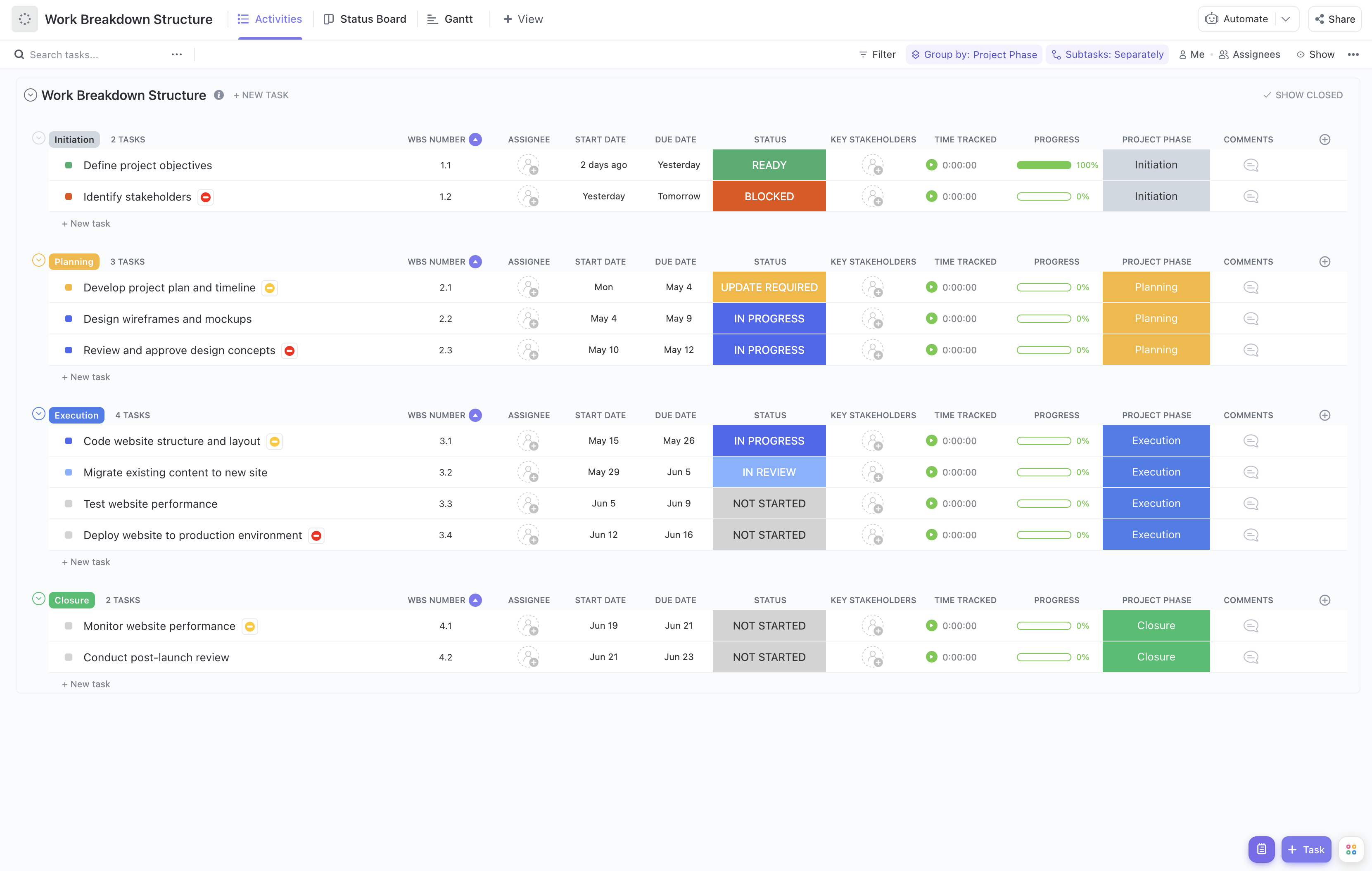
Executing a platform initiative involves coordinating diverse teams, technologies, and milestones. Breaking down this complexity into structured, manageable parts is essential for success. Our Platform Execution Framework Work Breakdown Structure Template is crafted to guide you through this process with clarity and precision.
This specialized template empowers you to:
- Segment platform execution into clear phases such as architecture design, development, integration, testing, and deployment
- Assign responsibilities to cross-functional teams including product managers, engineers, and operations
- Monitor progress with real-time updates to ensure timely delivery and quality standards
Best of all, no coding or specialized software skills are needed—just use ClickUp to organize and drive your platform projects to success.
Benefits of Using This Platform Execution Framework WBS Template
Applying a structured work breakdown approach to platform execution offers numerous advantages:
- Clarifies complex platform deliverables by decomposing them into actionable tasks and milestones
- Aligns diverse teams around shared goals and clear roles, reducing miscommunication
- Enhances stakeholder visibility into project status, risks, and dependencies
- Improves efficiency by enabling focused resource allocation and early identification of bottlenecks
Main Elements of the Platform Execution Framework WBS Template
This template includes key structural components tailored for platform projects:
- Platform Phases:
Define stages such as Requirements Gathering, Platform Architecture, Development Sprints, Integration Testing, User Acceptance Testing, and Deployment.
- Task Breakdown:
Each phase is broken down into detailed tasks like API development, data migration, security audits, and performance tuning.
- Team Assignments:
Assign tasks to specific roles including Platform Engineers, QA Analysts, DevOps, and Product Owners to ensure accountability.
- Progress Tracking:
Utilize status indicators and progress fields to monitor task completion and identify risks early.
- Stakeholder Communication:
Embed key stakeholder information and communication checkpoints to maintain alignment.
By leveraging this template, platform teams can systematically manage execution complexities, align cross-functional efforts, and deliver robust platform solutions on time and within scope.