
Executing operational reports requires meticulous planning and coordination across various departments and data sources. Managing these complex workflows can be challenging without a clear structure. That's where this Operational Reporting Execution Work Breakdown Structure Template comes in!
This specialized template helps you:
- Organize reporting tasks into clear, manageable sections for enhanced visibility and control
- Assign and align team members to specific reporting responsibilities quickly and effectively
- Monitor report generation progress and deadlines with real-time updates to ensure timely delivery
Best of all, no coding or specialized software skills are necessary—just use ClickUp to break down your operational reporting into actionable steps and drive success!
Benefits of an Operational Reporting Execution Work Breakdown Structure Template
Utilizing a work breakdown structure tailored for operational reporting execution offers significant advantages for operations managers and reporting teams. It provides a visual and organized approach to managing the entire reporting lifecycle, helping ensure accuracy and timeliness. Key benefits include:
- Clearly defines and organizes all reporting deliverables, from data collection to final report distribution
- Clarifies roles and responsibilities among data analysts, report writers, and reviewers
- Enhances communication between operational teams, IT, and stakeholders to resolve issues promptly
- Improves overall efficiency by identifying dependencies and streamlining workflows
Main Elements of the Operational Reporting Execution Work Breakdown Structure Template
This template is structured to cover all critical phases of operational reporting execution, including:
- Data Acquisition:
Tasks related to gathering data from various operational systems, ensuring data quality and completeness.
- Data Processing:
Steps for cleaning, transforming, and validating data to prepare it for reporting.
- Report Development:
Creating report templates, configuring dashboards, and defining key performance indicators (KPIs).
- Review and Validation:
Assigning reviewers to verify report accuracy and compliance with reporting standards.
- Distribution and Communication:
Scheduling report delivery, notifying stakeholders, and archiving reports for future reference.
By breaking down operational reporting into these components, teams can manage workloads effectively, track progress, and adapt quickly to changing business needs.
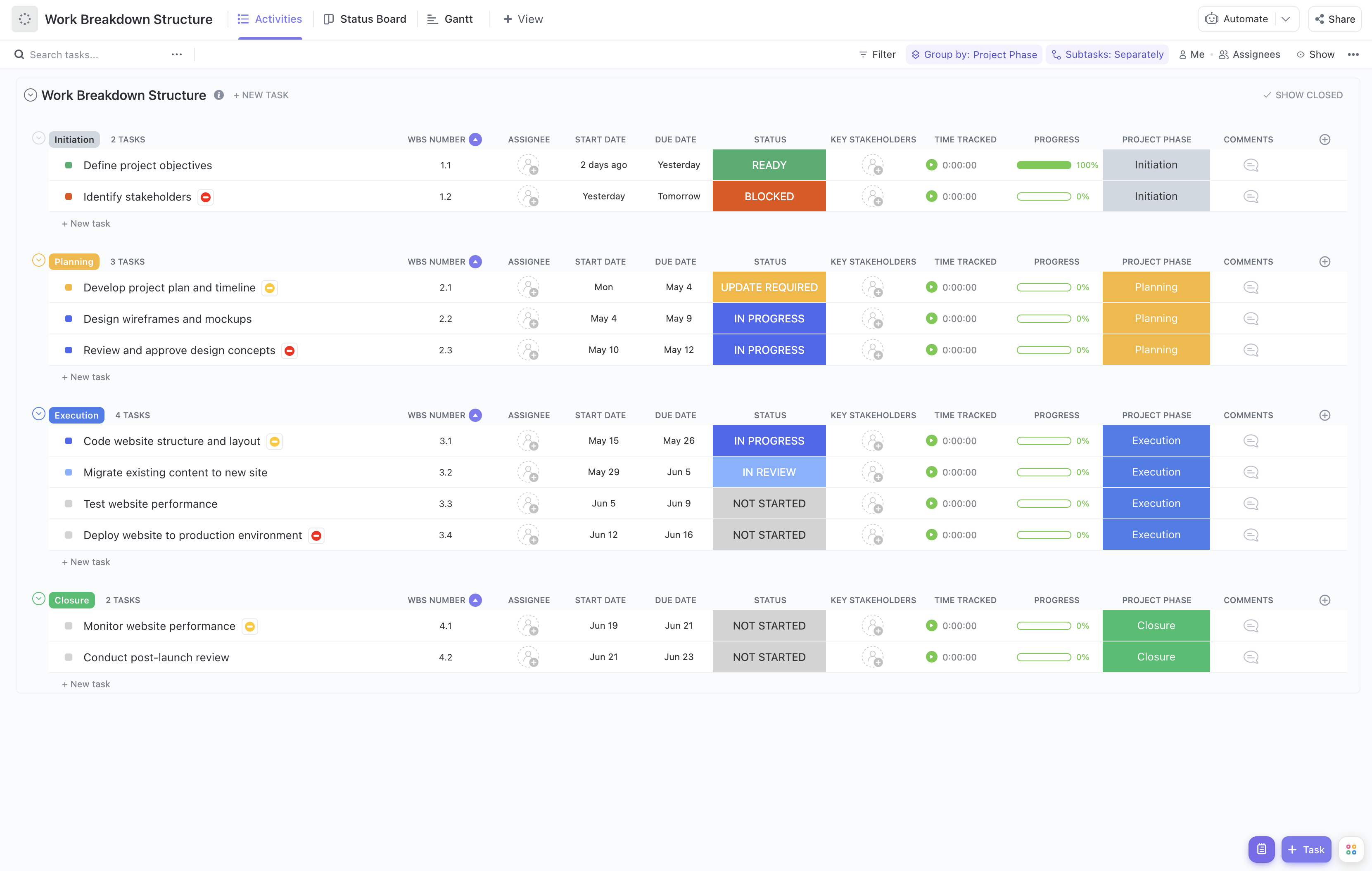


Implementing this template empowers your operational reporting teams to deliver consistent, accurate, and timely reports that support informed decision-making across your organization.










