

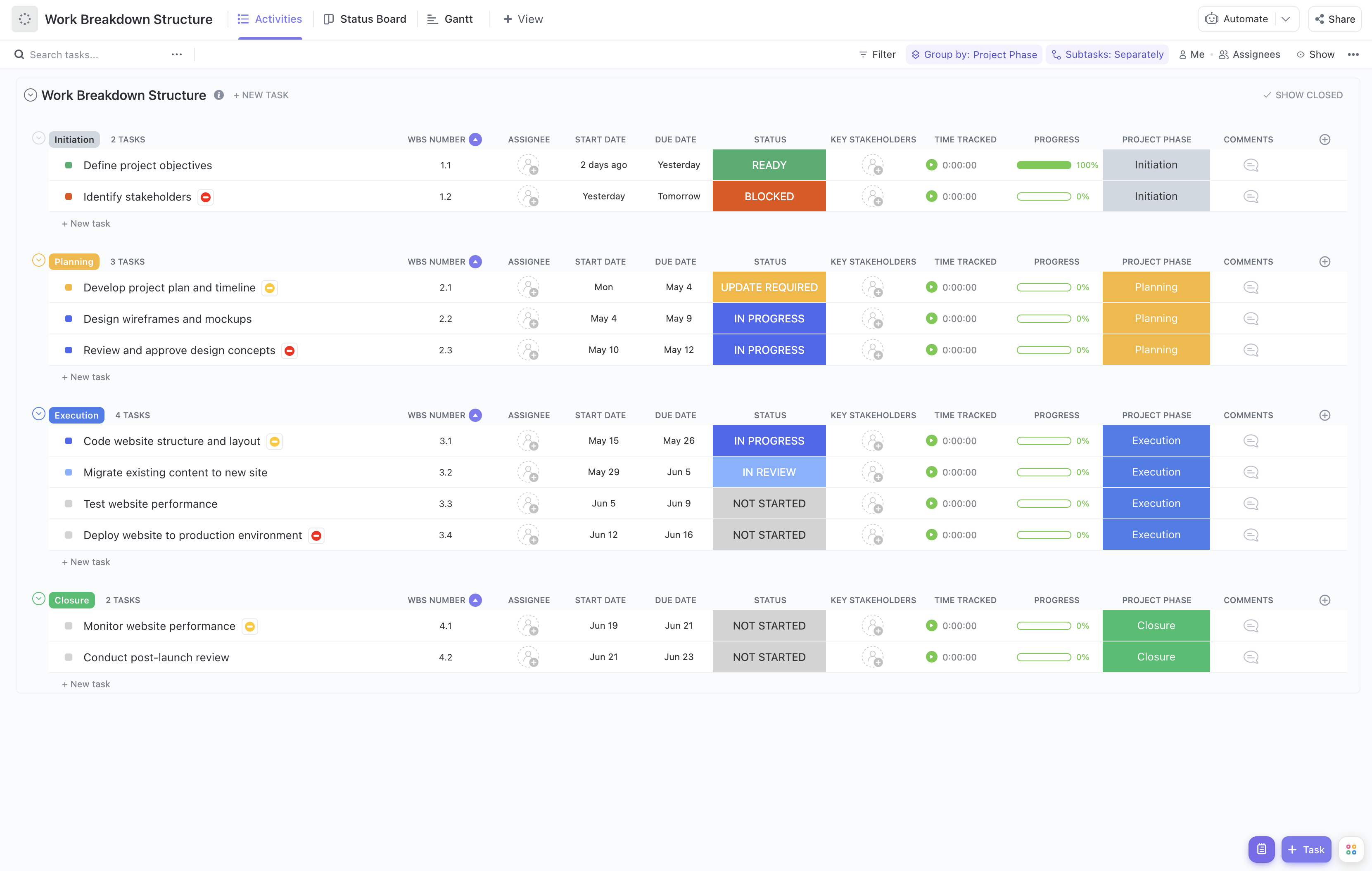


Managing operational escalations efficiently is critical to maintaining business continuity and customer satisfaction. This Operational Escalation Handling Work Breakdown Structure (WBS) template provides a structured approach to dissecting escalation processes into clear, actionable components.
This specialized template enables you to:
- Segment escalation workflows into distinct phases such as identification, assessment, resolution, and follow-up for enhanced clarity
- Assign responsibilities to the appropriate operational teams and stakeholders promptly
- Monitor escalation progress in real-time to ensure timely resolution and compliance with service level agreements (SLAs)
Best of all, this template requires no technical expertise—simply use ClickUp to organize and manage your escalation handling tasks effectively.
Benefits of an Operational Escalation Handling Work Breakdown Structure
Utilizing a WBS tailored for operational escalations offers numerous advantages, including:
- Clearly defining escalation triggers, response actions, and resolution criteria to minimize confusion during critical incidents
- Providing transparency on roles and responsibilities, ensuring each team member knows their part in the escalation process
- Enhancing communication between frontline staff, management, and support teams to facilitate swift issue resolution
- Improving operational resilience by systematically addressing and learning from escalated incidents
Main Elements of the Operational Escalation Handling WBS Template
This template is structured to cover all essential components of escalation management:
- Escalation Identification: Documenting incident detection methods, initial reporting, and categorization criteria.
- Assessment and Prioritization: Evaluating the severity and impact of the issue to determine escalation level and urgency.
- Response Coordination: Assigning tasks to relevant teams, communicating action plans, and mobilizing resources.
- Resolution Execution: Implementing corrective actions, monitoring progress, and updating stakeholders.
- Post-Escalation Review: Conducting root cause analysis, documenting lessons learned, and updating escalation protocols.
By leveraging this detailed WBS template, your organization can enhance operational escalation handling, reduce downtime, and foster continuous improvement in incident management processes.










