
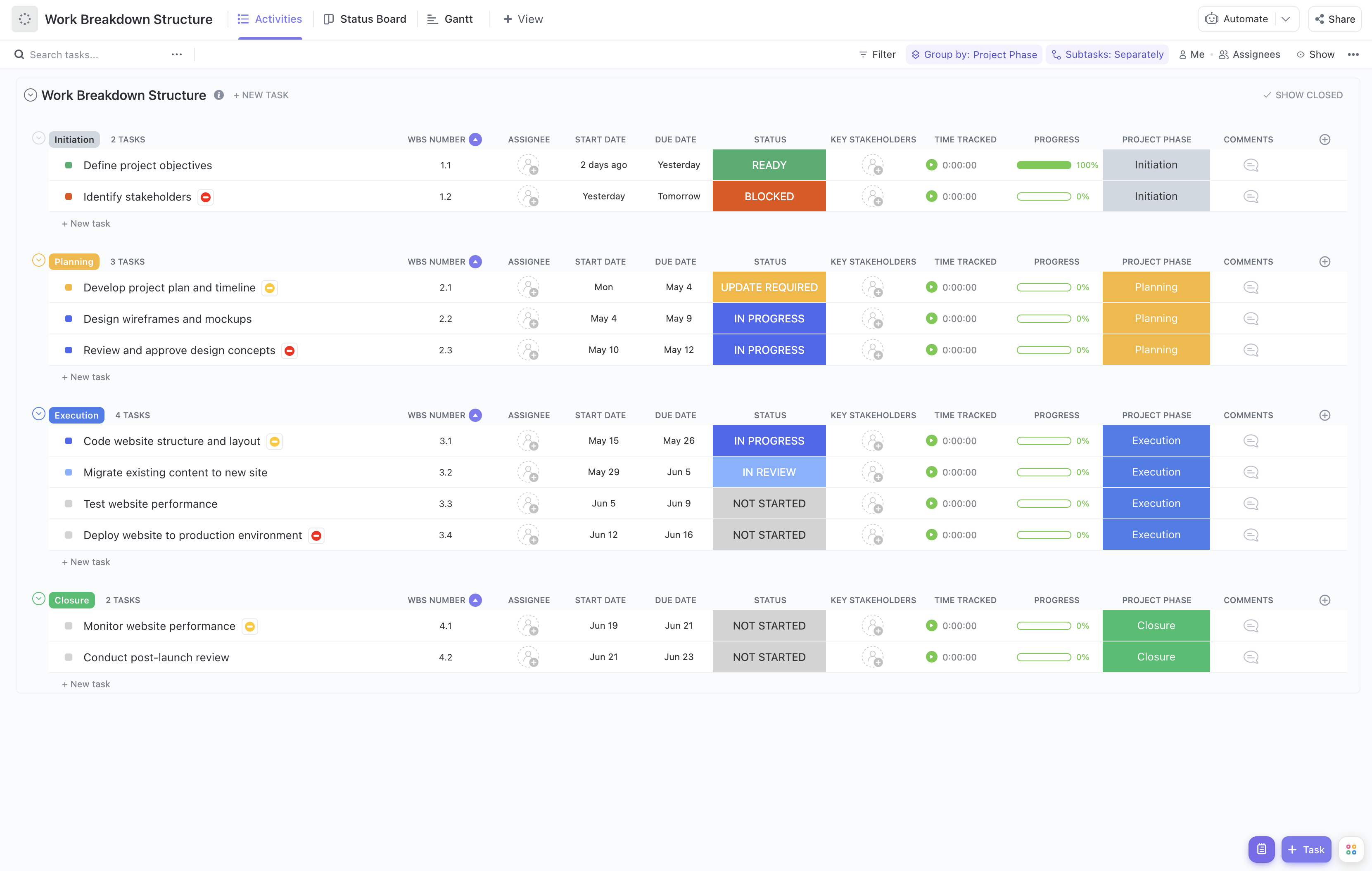


Effectively managing learning resources requires breaking down complex administrative tasks into clear, manageable segments. This Learning Resources Administration Work Breakdown Structure Template is your solution to streamline the organization and oversight of educational materials and programs.
This specialized template enables you to:
- Segment learning resource management tasks into structured sections for enhanced clarity
- Assign responsibilities to team members such as curriculum developers, librarians, and educators efficiently
- Monitor progress of resource acquisition, content development, and distribution with real-time updates
Best of all, no technical expertise is needed—just use ClickUp to start organizing your learning resources administration effectively!
Benefits of a Learning Resources Administration Work Breakdown Structure Template
Utilizing this WBS template tailored for learning resources administration offers numerous advantages:
- Clearly defines and organizes deliverables such as course materials, digital libraries, and training modules
- Clarifies roles and responsibilities for staff involved in resource procurement, content curation, and quality assurance
- Enhances communication among educators, administrators, and stakeholders to ensure alignment on resource needs and timelines
- Improves efficiency by providing a transparent framework to track progress and address bottlenecks promptly
Main Elements of the Learning Resources Administration Work Breakdown Structure Template
This template is structured to include key components essential for managing learning resources:
- Resource Identification:
Cataloging all required learning materials, including textbooks, digital content, and supplementary aids.
- Procurement and Acquisition:
Tasks related to sourcing, purchasing, and licensing educational resources.
- Content Development and Customization:
Developing or adapting materials to meet curriculum standards and learner needs.
- Distribution and Access:
Organizing the delivery of resources to learners, whether physical or digital.
- Quality Assurance and Feedback:
Reviewing resources for effectiveness and gathering feedback for continuous improvement.
By following this structured approach, educational administrators can ensure comprehensive management of learning resources, leading to enhanced educational outcomes and streamlined operations.










