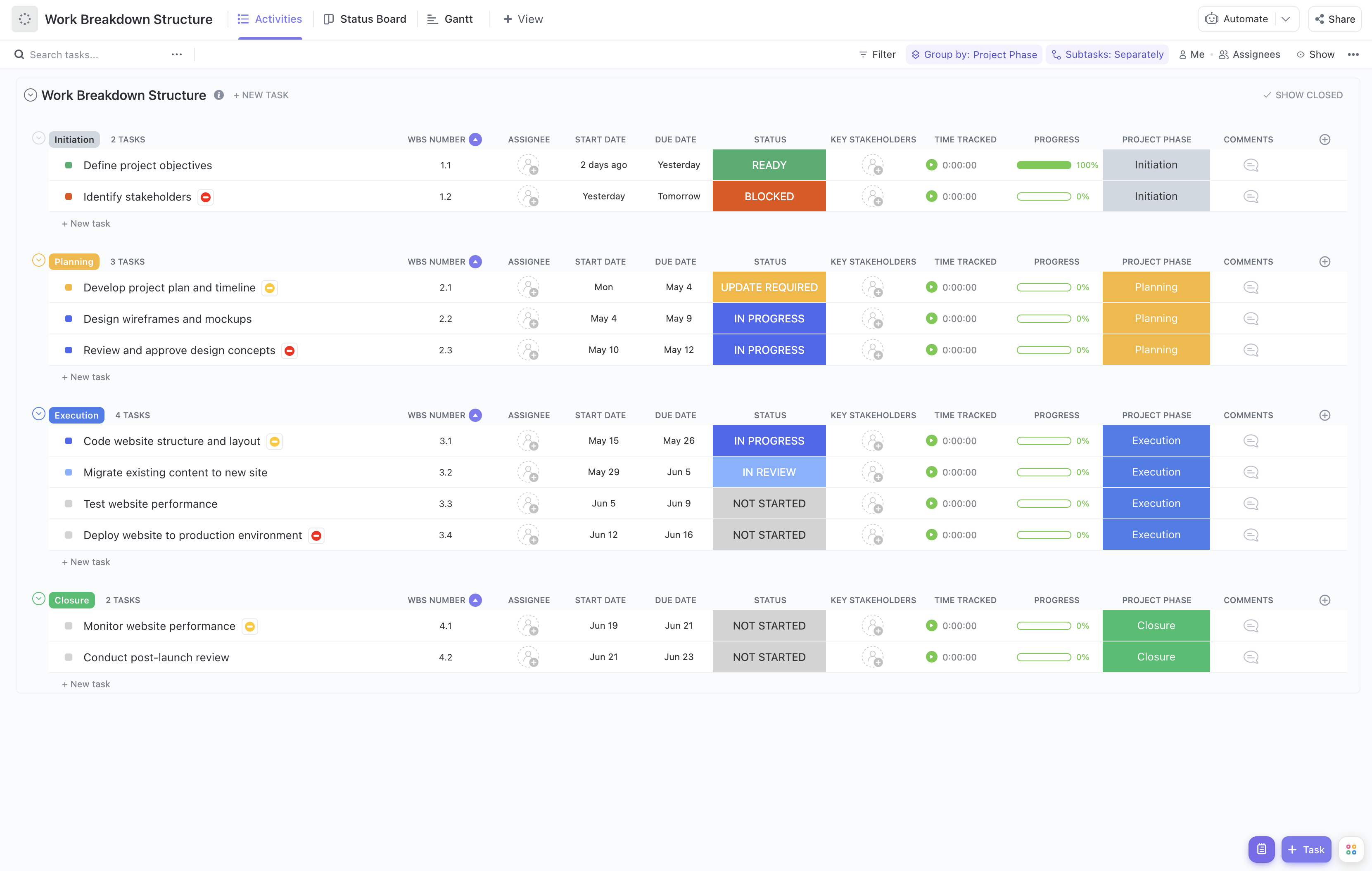
Managing learning operations involves coordinating multiple training programs, content development, and learner engagement activities. Breaking down these complex initiatives into manageable components is essential for effective execution. That's where our Learning Operations Work Breakdown Structure Template comes in!
This specialized template helps you:
- Organize learning projects into clear, actionable tasks for better oversight
- Align instructional designers, trainers, and stakeholders to their responsibilities quickly and efficiently
- Track progress of course development, deployment, and learner feedback with real-time updates
Best of all, no technical expertise is required to get started—just use ClickUp to begin structuring your learning operations for success!
Benefits of a Learning Operations Work Breakdown Structure Template
For learning and development managers, this WBS template provides a visual framework to ensure training initiatives are delivered on time and within scope. Key benefits include:
- Clearly defines and organizes learning deliverables such as course modules, assessments, and learner support materials
- Provides clarity for team members on their roles, from content creation to learner engagement and evaluation
- Enhances communication between instructional designers, facilitators, and stakeholders to keep everyone aligned
- Improves overall efficiency by identifying dependencies and streamlining workflows in learning projects
Main Elements of the Learning Operations Work Breakdown Structure Template
This template breaks down learning projects into hierarchical components, including:
- Learning Program Phases:
Needs analysis, design, development, implementation, and evaluation
- Task Groups:
Content creation, technology setup, trainer preparation, learner communication, and feedback collection
- Deliverables:
Course materials, assessments, facilitator guides, and learner resources
- Stakeholder Assignments:
Roles assigned to team members such as instructional designers, LMS administrators, and trainers
- Progress Tracking:
Status updates and milestones to monitor execution and ensure timely completion
By leveraging this structured approach, learning teams can efficiently manage complex operations, reduce bottlenecks, and deliver impactful educational experiences.