

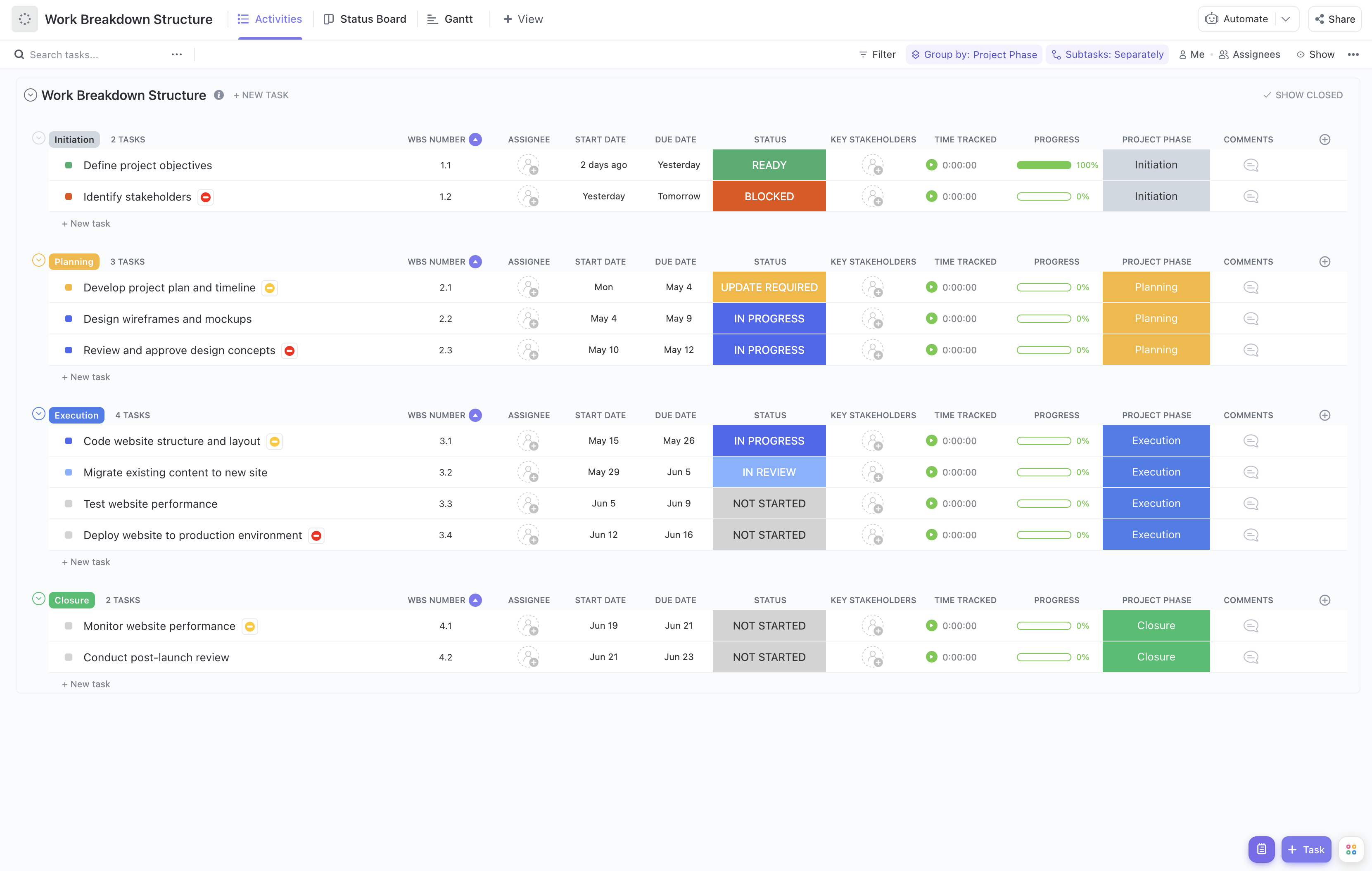


Effectively managing organizational knowledge is essential for fostering collaboration, innovation, and informed decision-making. However, the challenge lies in structuring vast amounts of information so that it remains accessible and useful. That's where our Knowledge Repository Structure Template comes in!
This comprehensive template empowers your team to:
- Systematically organize knowledge assets into clear, hierarchical categories for improved discoverability
- Assign ownership and responsibilities to ensure content accuracy and relevance
- Track updates and revisions in real-time to maintain an up-to-date knowledge base
Best of all, you don't need any specialized software or technical skills to get started—just use this template within your existing ClickUp workspace to build a dynamic knowledge repository tailored to your organization's needs.
Benefits of a Knowledge Repository Structure Template
A well-structured knowledge repository is vital for any organization aiming to leverage its collective expertise. This template offers several advantages, including:
- Clarifies and organizes knowledge domains and topics, making information easier to find and use
- Defines roles and responsibilities for content creation, review, and maintenance, promoting accountability
- Enhances communication and knowledge sharing among team members and stakeholders, reducing silos
- Improves operational efficiency by minimizing redundant work and accelerating onboarding processes
Main Elements of a Knowledge Repository Structure Template
This template is designed to break down your knowledge base into manageable components, including:
- Knowledge Domains: High-level categories representing broad areas of expertise or business functions
- Topics and Subtopics: Detailed classifications under each domain to organize specific knowledge articles, documents, or resources
- Content Items: Individual knowledge assets such as articles, FAQs, manuals, or best practices, each with metadata for easy tracking
- Ownership and Roles: Clear assignment of content owners, reviewers, and contributors to maintain quality and relevance
- Version Control and Updates: Mechanisms to track changes, review cycles, and ensure the repository remains current
By implementing this Knowledge Repository Structure Template, your organization can create a living knowledge ecosystem that supports continuous learning and drives business success.










