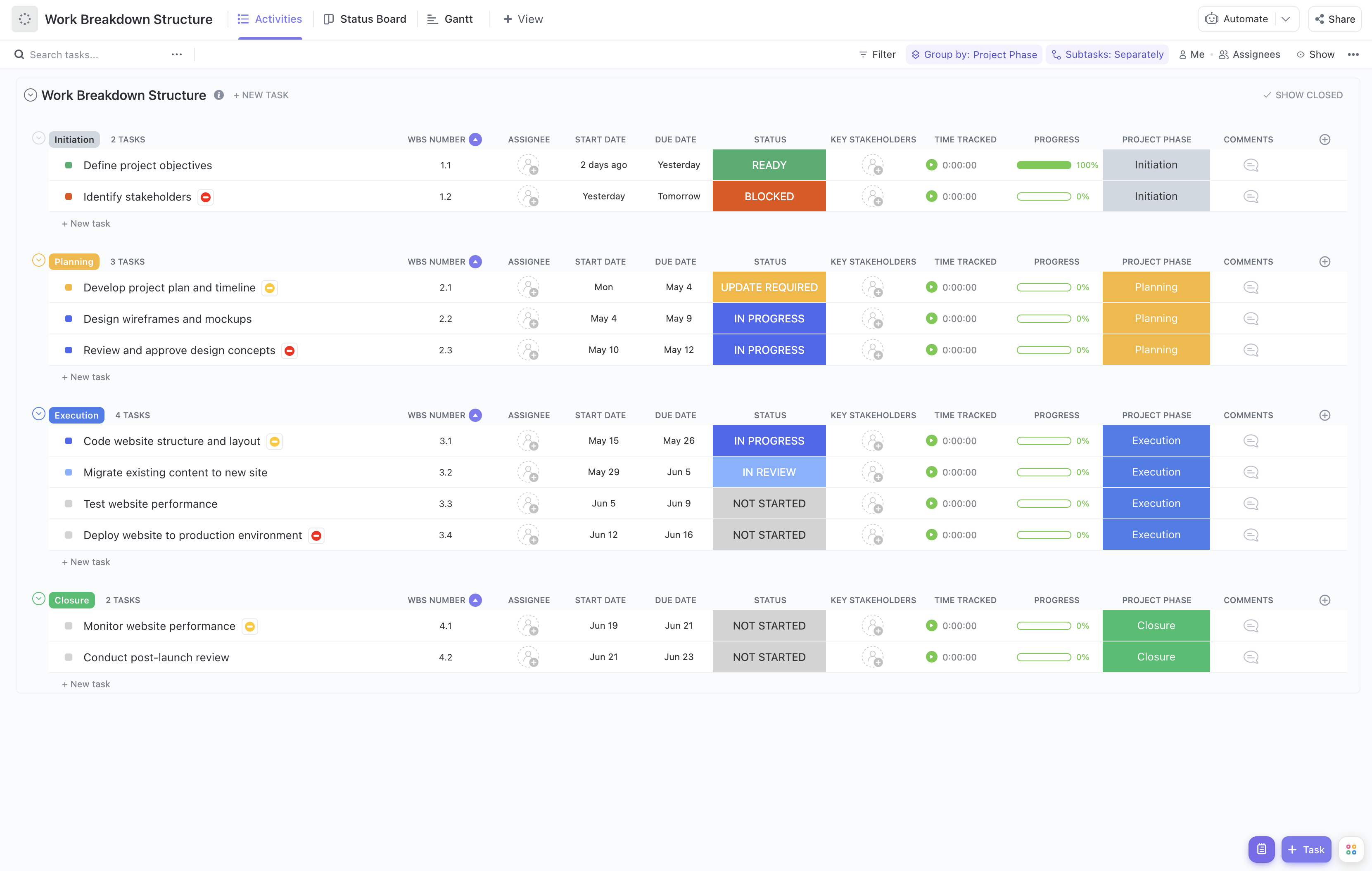
Executing IT asset projects involves numerous detailed tasks, from acquisition to deployment and eventual retirement. Managing these activities efficiently is crucial to maintaining organizational technology infrastructure and budget control. This IT Asset Execution Work Breakdown Structure Template is crafted to help you break down these complex processes into manageable, actionable components.
This specialized template enables you to:
- Segment IT asset execution tasks into clear phases such as procurement, configuration, deployment, and decommissioning for enhanced oversight
- Assign responsibilities to IT team members, vendors, and stakeholders to ensure accountability and timely completion
- Monitor progress with real-time updates and track milestones critical to asset lifecycle management
Best of all, no coding or specialized software skills are required—simply use ClickUp to streamline your IT asset execution projects effectively.
Benefits of an IT Asset Execution Work Breakdown Structure Template
Utilizing a WBS tailored for IT asset execution offers several advantages:
- Clearly defines and organizes deliverables such as hardware procurement, software installation, and asset tagging
- Clarifies roles and responsibilities among IT staff, procurement teams, and external vendors
- Enhances communication between project stakeholders, ensuring alignment on timelines and resource allocation
- Improves efficiency by providing a structured approach to managing complex IT asset workflows and reducing project risks
Main Elements of the IT Asset Execution Work Breakdown Structure Template
This template is structured to cover all critical components of IT asset execution:
- Project Phases: Divides the project into stages such as Planning, Procurement, Configuration, Deployment, and Decommissioning.
- Task Breakdown: Each phase is broken down into detailed tasks like vendor selection, purchase order creation, asset imaging, and installation.
- Resource Assignment: Assigns tasks to specific team members or external partners, ensuring clear ownership.
- Progress Tracking: Real-time status updates and progress indicators help monitor task completion and identify bottlenecks.
- Key Stakeholders: Identifies individuals responsible for approvals, oversight, and communication throughout the asset lifecycle.
By leveraging this template, IT project managers can confidently oversee asset execution projects, maintain budget control, and ensure timely delivery of technology resources essential for business operations.