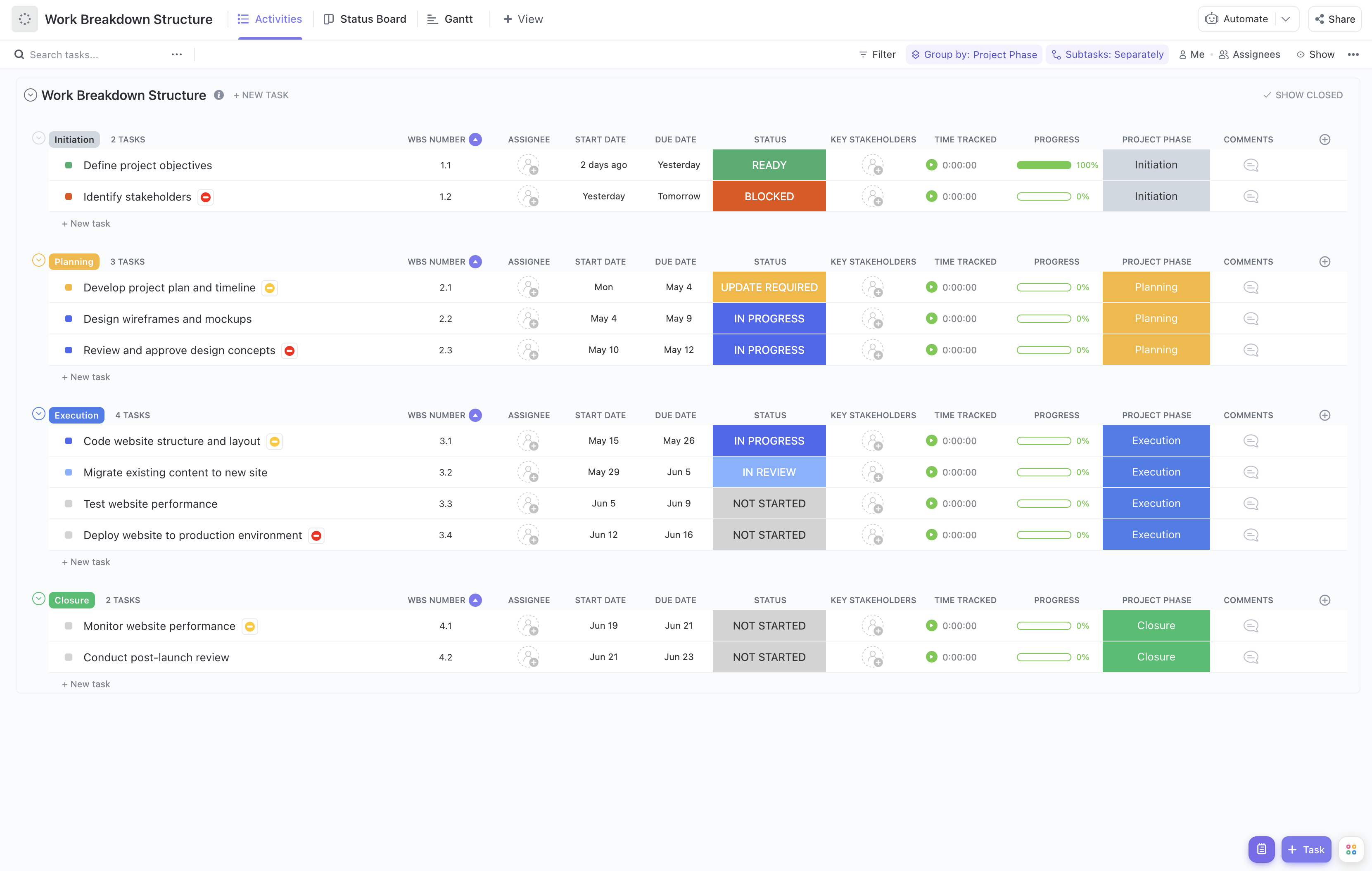
Managing intellectual property (IP) projects involves navigating a complex landscape of legal filings, renewals, enforcement actions, and strategic planning. To ensure success, breaking down these multifaceted tasks into manageable components is essential. That's where our Intellectual Property Management Work Breakdown Structure Template comes in!
This tailored template helps you:
- Organize IP-related tasks such as patent applications, trademark registrations, and IP audits into clear, manageable sections for enhanced visibility
- Align legal teams, patent agents, and stakeholders to the right tasks quickly and efficiently, ensuring accountability and timely execution
- Track progress and key milestones like filing deadlines, office actions, and renewal dates with real-time updates to avoid costly oversights
The best part? No specialized software or coding knowledge is required—just use ClickUp to break down your IP projects into actionable steps and drive them to completion!
Benefits of an Intellectual Property Management Work Breakdown Structure Template
Utilizing a WBS template specifically designed for IP management provides several advantages:
- Clearly defines and organizes deliverables such as patent filings, trademark oppositions, and licensing agreements, ensuring nothing is overlooked
- Provides clarity for IP teams and external counsel on roles and responsibilities, facilitating smooth collaboration
- Enhances communication between legal, R&D, and business units, aligning IP strategy with organizational goals
- Improves overall efficiency by enabling proactive tracking of deadlines and resource allocation, reducing risks of IP loss or infringement
Main Elements of the Intellectual Property Management Work Breakdown Structure Template
This template breaks down IP projects into key components, including:
- IP Portfolio Assessment: Conduct audits to identify existing IP assets, evaluate their status, and prioritize management efforts.
- Filing and Prosecution: Manage patent and trademark application processes, including drafting, submission, office action responses, and prosecution timelines.
- Maintenance and Renewals: Track renewal deadlines and maintenance fees to keep IP rights active and enforceable.
- Enforcement and Litigation: Monitor potential infringements, coordinate enforcement actions, and manage litigation workflows.
- Licensing and Commercialization: Oversee licensing agreements, royalty tracking, and commercialization strategies for monetizing IP assets.
- Stakeholder Management: Assign responsibilities to internal teams, external counsel, and business partners, ensuring clear communication and accountability.
By leveraging this structured approach, IP managers can maintain comprehensive oversight of their intellectual property projects, mitigate risks, and maximize the value of their IP portfolio.