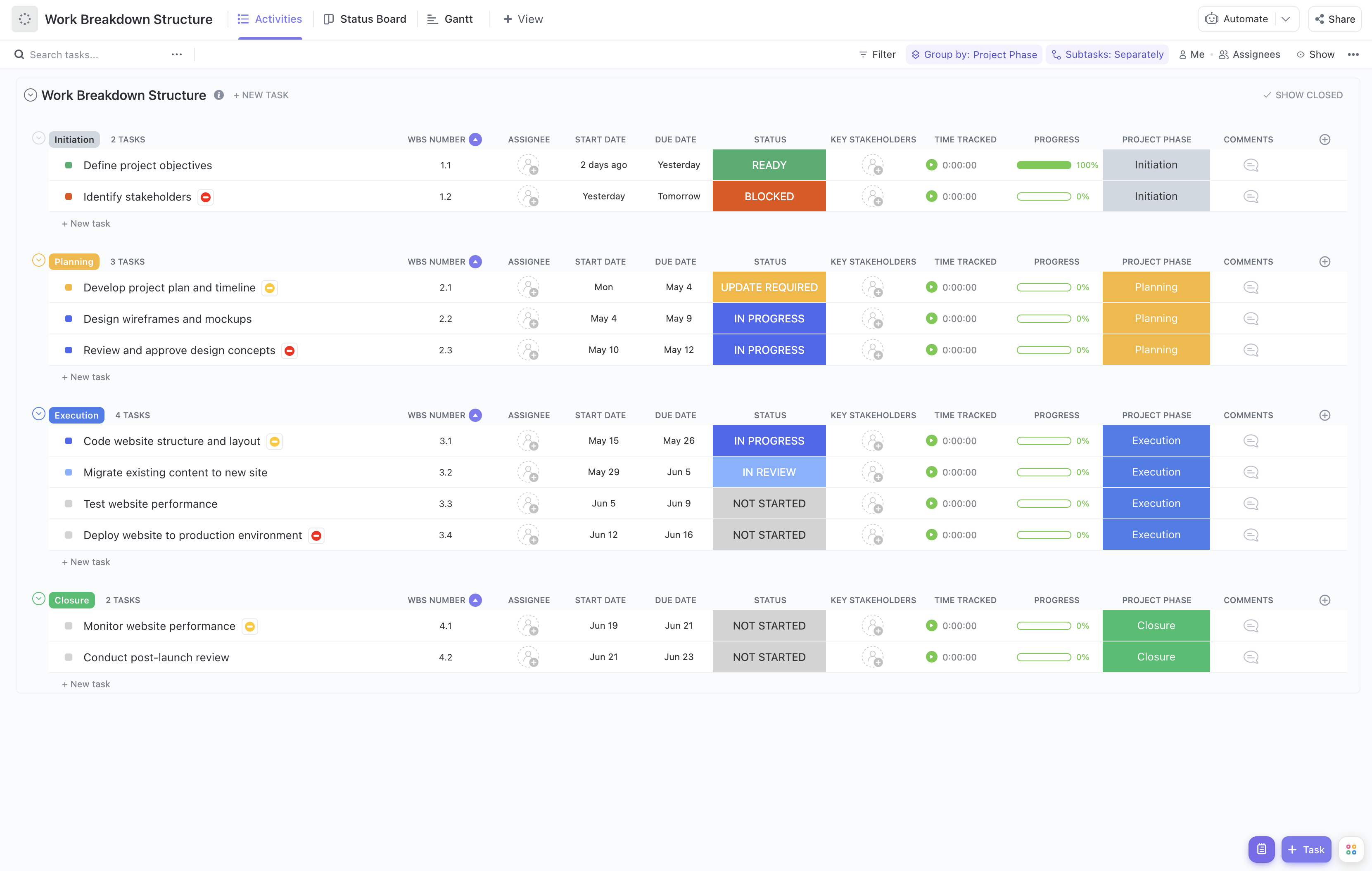
Implementing an effective information governance program requires meticulous planning and coordination across multiple departments and stakeholders. This Information Governance Rollout Work Breakdown Structure template provides a comprehensive framework to break down the rollout into manageable components, ensuring clarity and accountability throughout the project lifecycle.
With this template, you can:
- Organize governance tasks into clear phases such as policy development, training, technology deployment, and compliance monitoring
- Assign responsibilities to relevant teams including legal, IT, compliance, and records management
- Track progress in real-time to identify bottlenecks and maintain momentum toward governance goals
Best of all, this template requires no specialized software knowledge—just use ClickUp to streamline your information governance rollout efficiently.
Benefits of an Information Governance Rollout Work Breakdown Structure
Utilizing this WBS template for your information governance rollout offers several advantages:
- Clearly defines deliverables such as policy documents, training materials, and compliance reports
- Provides transparency on roles and responsibilities, reducing overlap and confusion among departments
- Enhances communication between stakeholders including executives, IT teams, and compliance officers through structured task visibility
- Improves project efficiency by enabling proactive risk management and timely adjustments to rollout plans
Main Elements of the Information Governance Rollout WBS Template
This template is structured to cover all critical aspects of an information governance rollout:
- Project Initiation:
Define scope, objectives, and key stakeholders to set a solid foundation.
- Policy Development:
Draft, review, and approve governance policies aligned with regulatory requirements.
- Technology Implementation:
Deploy necessary tools for data classification, retention, and access controls.
- Training & Awareness:
Develop and deliver training programs to educate employees on governance practices.
- Compliance Monitoring:
Establish audit schedules and reporting mechanisms to ensure adherence.
- Continuous Improvement:
Collect feedback and update governance frameworks as needed.
By following this structured approach, your organization can effectively manage the complexities of information governance rollout, ensuring compliance, reducing risks, and fostering a culture of responsible data management.