
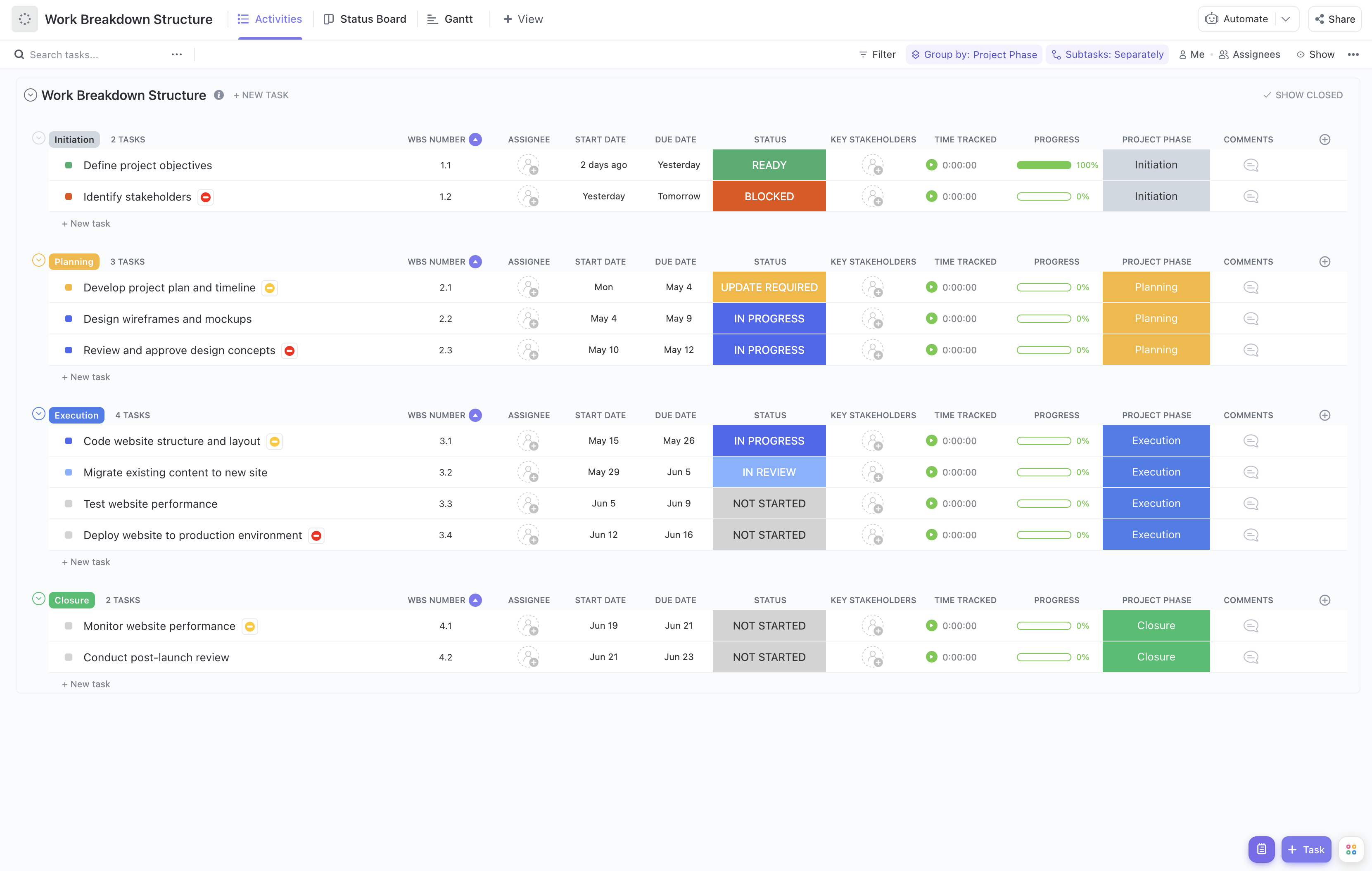


Implementing a comprehensive information governance program involves multiple interrelated tasks, from policy development to compliance monitoring. Managing these activities can be challenging without a clear structure. This Information Governance Program Work Breakdown Structure Template provides a strategic framework to decompose your governance initiatives into manageable components, facilitating clear oversight and execution.
This specialized template helps you:
- Segment the information governance program into distinct phases such as policy creation, data classification, compliance audits, and training initiatives for better clarity
- Assign responsibilities to compliance officers, IT teams, and data stewards to ensure accountability and efficient collaboration
- Monitor progress on key deliverables like risk assessments, data retention schedules, and incident response plans with real-time updates
Best of all, no advanced technical skills are required to utilize this template—simply use ClickUp to break down your information governance program into actionable tasks and milestones.
Benefits of an Information Governance Program Work Breakdown Structure Template
Using this tailored WBS template empowers your organization to:
- Clearly define and organize program deliverables such as governance frameworks, compliance checklists, and training materials
- Clarify roles and responsibilities across departments, ensuring that data owners, custodians, and users understand their obligations
- Enhance communication between stakeholders including legal, IT, and business units to foster alignment and transparency
- Increase overall program efficiency by identifying dependencies and streamlining workflows for timely completion
Main Elements of the Information Governance Program Work Breakdown Structure Template
This template is structured to cover all critical components of an information governance program, including:
- Program Initiation:
Define scope, objectives, and key stakeholders to establish a solid foundation
- Policy Development:
Create and approve data governance policies, standards, and procedures
- Data Classification and Inventory:
Catalog data assets and classify them according to sensitivity and compliance requirements
- Risk Assessment and Compliance:
Conduct regular audits, identify gaps, and implement remediation plans
- Training and Awareness:
Develop and deliver training programs to educate employees on governance policies and best practices
- Monitoring and Reporting:
Track compliance metrics, incident reports, and continuous improvement initiatives
By leveraging this comprehensive WBS template, your organization can systematically manage the complexities of information governance, ensuring data integrity, regulatory compliance, and operational excellence.










