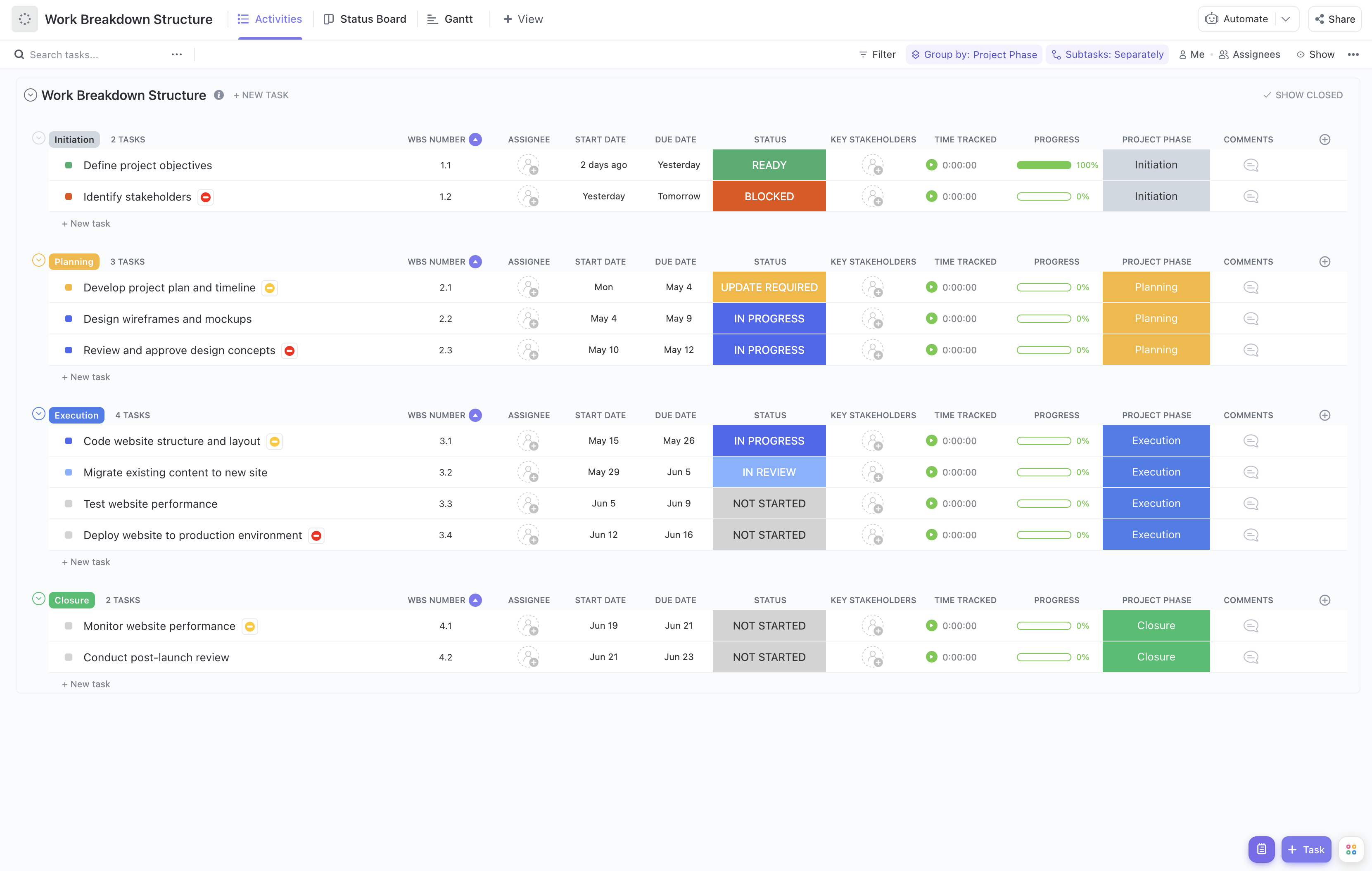
Rolling out an incident response plan involves coordinating multiple teams, tasks, and timelines to ensure organizational readiness against cyber threats. Managing this complex process requires a structured approach to break down the rollout into actionable components. Our Incident Response Rollout Work Breakdown Structure Template is designed to help you achieve just that.
This specialized template enables you to:
- Organize the incident response rollout into clear phases such as preparation, detection, analysis, containment, eradication, recovery, and post-incident review.
- Assign responsibilities to cybersecurity analysts, IT staff, communication teams, and management for each task to ensure accountability.
- Track progress with real-time updates, allowing you to monitor milestones like policy development, tool deployment, training sessions, and simulation exercises.
Best of all, this template requires no coding skills or complex software—just ClickUp to get started and maintain control over your incident response rollout.
Benefits of Using This Incident Response Rollout Work Breakdown Structure Template
Implementing an incident response plan can be overwhelming without clear structure. This template offers several advantages:
- Defines and organizes critical deliverables such as incident response policies, communication protocols, and training programs.
- Clarifies roles and responsibilities across cross-functional teams to enhance coordination during rollout.
- Improves communication between cybersecurity teams, IT departments, and stakeholders, ensuring everyone stays informed.
- Boosts efficiency by providing a visual roadmap of tasks, deadlines, and dependencies, helping to avoid delays and overlaps.
Main Elements of the Incident Response Rollout Work Breakdown Structure Template
This template breaks down the rollout into key components, including:
- Project Phases: Preparation, Detection, Analysis, Containment, Eradication, Recovery, and Post-Incident Review.
- Deliverables: Incident response plan documentation, communication plans, training materials, and simulation exercises.
- Tasks and Subtasks: Assignable activities such as policy drafting, tool configuration, staff training, and tabletop exercises.
- Roles and Stakeholders: Clear assignment of responsibilities to incident response team members, IT support, legal, and executive sponsors.
- Progress Tracking: Status updates and milestones to monitor rollout phases and task completion.
By leveraging this template, your organization can systematically manage the complexities of incident response rollout, ensuring preparedness and resilience against cyber incidents.