

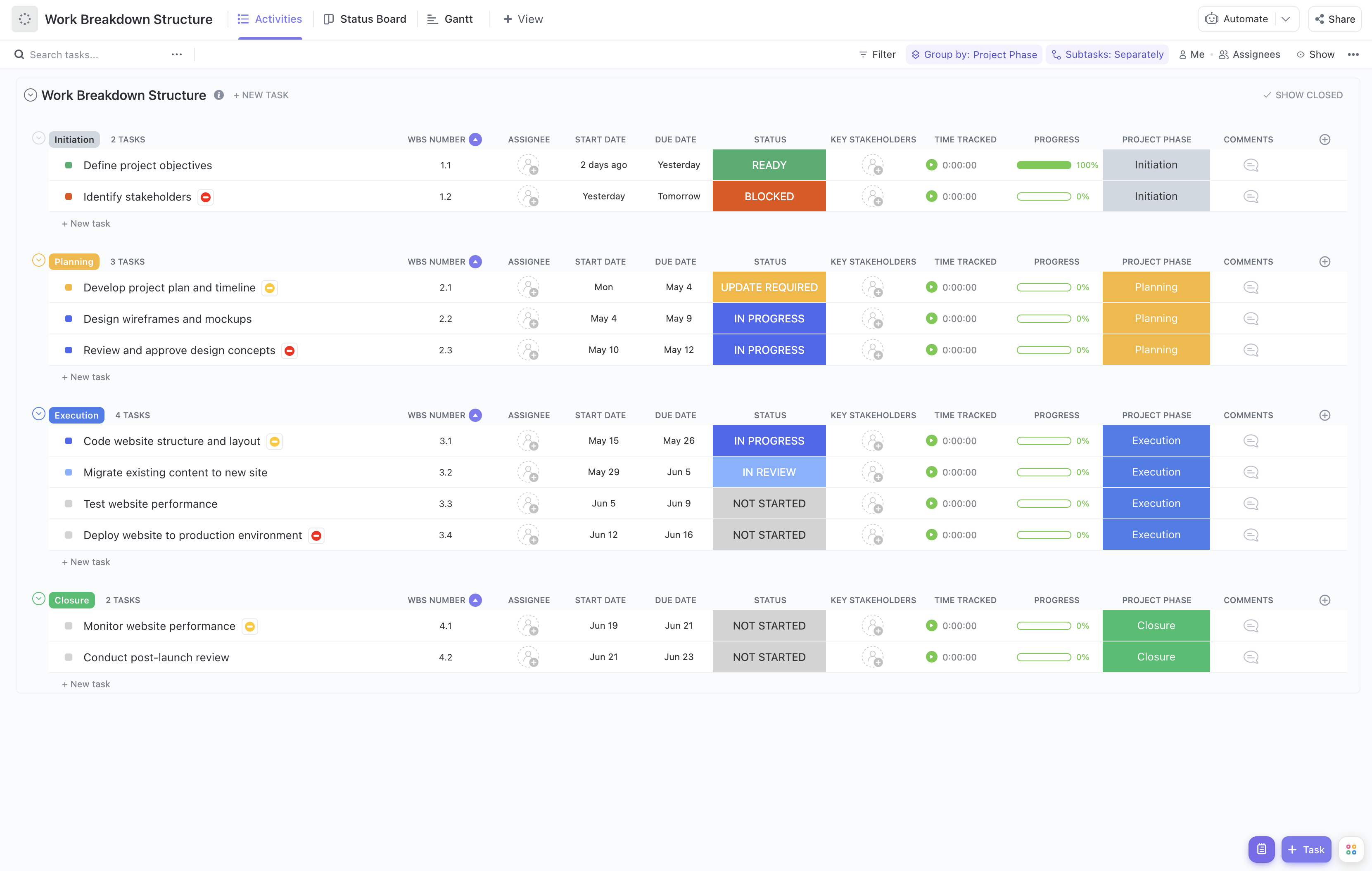


Effectively managing incident handling execution requires a clear, organized approach to ensure swift identification, containment, and resolution of incidents. This Incident Handling Execution Work Breakdown Structure Template helps you systematically decompose the incident response process into actionable tasks, enabling your team to respond efficiently and minimize impact.
With this template, you can:
- Segment incident response activities into well-defined phases such as detection, analysis, containment, eradication, and recovery
- Assign specific responsibilities to team members to ensure accountability and rapid action
- Monitor progress in real-time to keep stakeholders informed and adjust strategies as needed
Best of all, this template requires no specialized software or coding skills—just ClickUp to get started and keep your incident handling process on track.
Benefits of an Incident Handling Execution Work Breakdown Structure Template
Utilizing a work breakdown structure tailored for incident handling execution offers numerous advantages for your incident response team:
- Clarifies and organizes the critical deliverables and milestones within the incident response lifecycle
- Defines clear roles and responsibilities, reducing confusion during high-pressure situations
- Enhances communication between responders, management, and stakeholders through transparent task tracking
- Improves overall efficiency and effectiveness of incident resolution, minimizing downtime and damage
Main Elements of an Incident Handling Execution Work Breakdown Structure Template
This template is structured around the key phases of incident handling, each broken down into detailed tasks and sub-tasks:
- Preparation: Establishing incident response policies, training, and tools to ensure readiness.
- Identification: Detecting and reporting incidents promptly through monitoring and alerts.
- Containment: Implementing short-term and long-term containment strategies to limit incident impact.
- Eradication: Removing the root cause and affected components to prevent recurrence.
- Recovery: Restoring systems and services to normal operation with validation and testing.
- Lessons Learned: Conducting post-incident analysis to improve future response efforts.
Each phase includes task assignments, progress tracking, and documentation fields to ensure comprehensive management of the incident handling process. This structured approach empowers your team to respond decisively and maintain control during incidents.
By leveraging this Incident Handling Execution Work Breakdown Structure Template, your organization can enhance its incident response capabilities, reduce resolution times, and strengthen overall security posture.










